Omanghana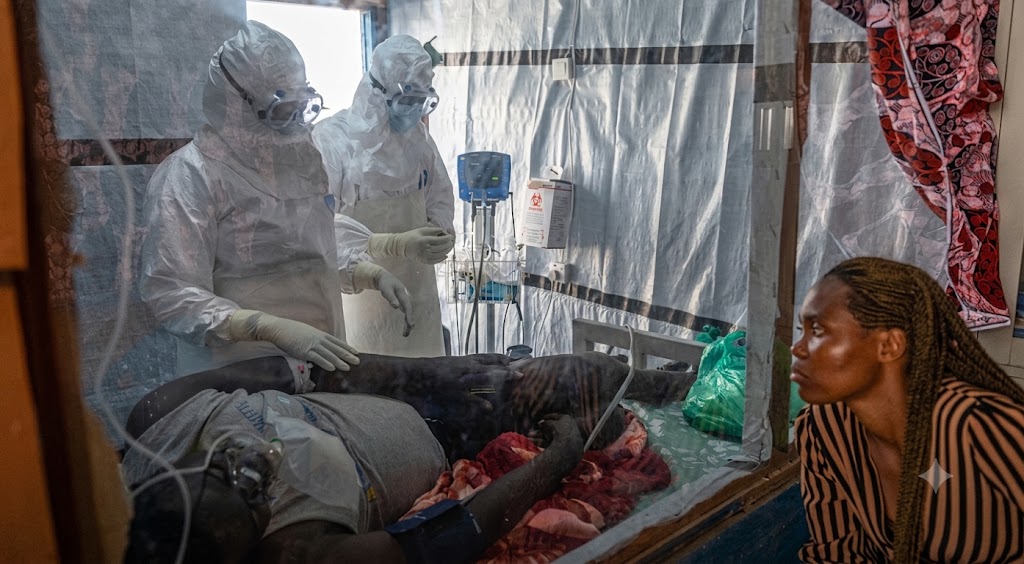
The United Nations Development Programme (UNDP) has warned that the ongoing Ebola outbreak in Central Africa could inflict economic losses of up to $3.6 billion if the virus spreads beyond its current hotspots, threatening years of development gains across the continent.
In a new economic assessment, the UNDP said the health emergency is rapidly evolving into a broader development crisis, with the potential to eliminate 328,000 jobs across Africa under the worst-case scenario.
The warning comes as health authorities continue to battle the rare Bundibugyo strain of the Ebola virus, which remains particularly challenging because there are currently no approved vaccines or targeted treatments specifically designed to combat it.
Ebola Outbreak Continues to Spread
The current outbreak was officially declared on May 15, 2026, with its epicenter in Ituri Province in the Democratic Republic of the Congo (DRC).
Health officials have reported:
- 1,307 confirmed infections
- 377 confirmed deaths
- Active transmission in four provinces of the DRC
- A small cluster of cases confirmed across the border in Uganda
Health experts continue to monitor the situation closely amid concerns that additional cross-border transmission could further complicate containment efforts.
UNDP Outlines Two Economic Scenarios
The UNDP report models the potential economic consequences based on how effectively the outbreak is contained over the coming months.
Best-Case Scenario
If the outbreak remains largely confined to the DRC and Uganda, the UNDP estimates the epidemic would still reduce the DRC’s economic output by approximately $1 billion.
Under this scenario, the country could lose an estimated 55,000 jobs, underscoring the significant economic impact of even a localized health emergency.
Worst-Case Scenario
Should the virus spread into neighboring countries such as South Sudan, Rwanda, and Angola, the economic consequences would become far more severe.
Combined with broader global economic pressures—including elevated fuel prices linked to ongoing geopolitical tensions involving Iran—the outbreak could reduce Africa’s gross domestic product by $3.6 billion while eliminating approximately 328,000 jobs across the continent.
Humanitarian Crisis Deepens
Beyond its economic impact, the outbreak is worsening existing humanitarian challenges throughout affected communities.
According to the UNDP, movement restrictions, quarantines, and disruptions to cross-border trade are severely affecting local economies and could push an additional 985,000 people into poverty, with women expected to bear a disproportionate share of the economic burden.
Food insecurity has also become a major obstacle to controlling the outbreak.
More than 150 patients reportedly fled Ebola treatment centers in the DRC in search of food, highlighting the difficult conditions facing affected communities.
Meanwhile, the World Food Programme (WFP) is facing a $175 million funding shortfall, limiting its ability to provide food assistance to people living in quarantine and isolation zones.
Public Health Measures Face Resistance
To slow transmission of the virus, the DRC government has prohibited public gatherings across four affected provinces, citing the role of close personal contact—particularly during traditional multi-day funeral ceremonies—in spreading Ebola.
However, the restrictions have drawn criticism from some opposition groups, which argue that the measures are politically motivated ahead of planned constitutional reform demonstrations.
The debate has added another layer of complexity to efforts aimed at containing the outbreak while maintaining public trust.
Search for Effective Treatments Continues
With no licensed vaccine specifically targeting the Bundibugyo strain, African and international health agencies are accelerating research into potential treatment options.
The Africa Centres for Disease Control and Prevention (Africa CDC) has appealed for additional international funding to support urgent clinical research.
Scientists are currently evaluating several antiviral therapies, including Gilead Sciences’ oral obeldesivir, as well as remdesivir and MBP134, to determine whether they can improve survival rates among patients infected with the Bundibugyo strain.
Health experts stress that rapid international support, expanded surveillance, strengthened healthcare systems, and continued research will be critical to containing the outbreak and preventing a wider humanitarian and economic crisis across Central Africa.
Source: Omanghana