Omanghana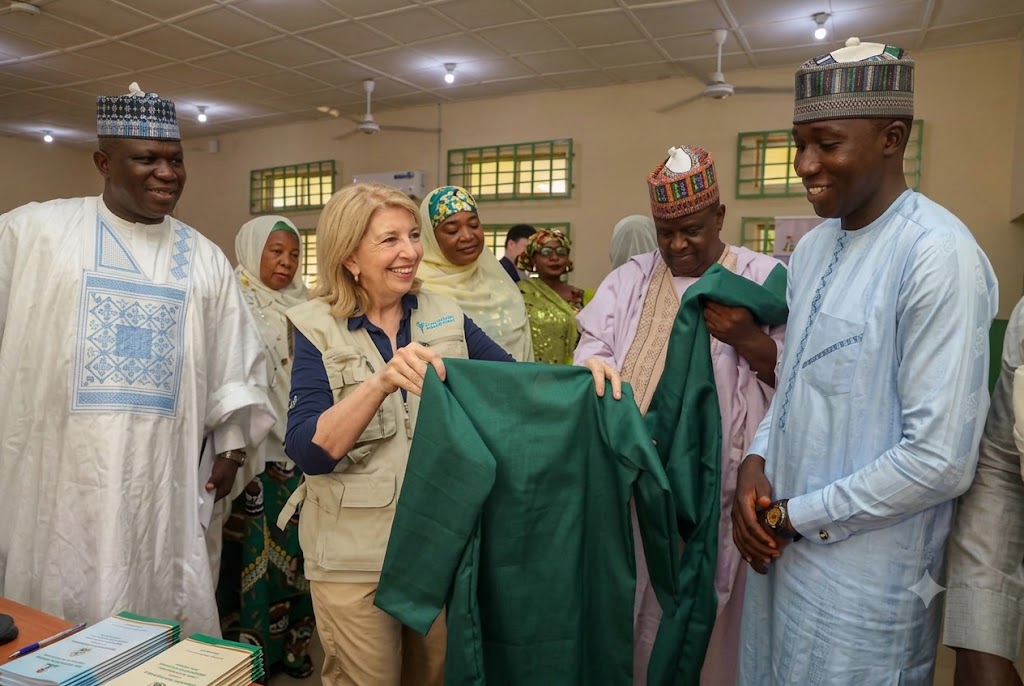
UNICEF Executive Director Catherine Russell has concluded an official mission to Nigeria with a strong call for urgent action to protect and invest in the country’s children as insecurity, displacement, and economic pressures continue to threaten millions of young lives.
During her visit, Russell warned that Nigerian children cannot afford to lose critical years of development because of conflict and instability. She called for stronger protection of essential services, including healthcare, nutrition, education, and child safety across the country.
Nigeria’s Children Represent a Major Future Opportunity
UNICEF highlighted Nigeria’s enormous youth population as both a challenge and an opportunity.
The country is home to nearly 105 million children and adolescents, representing about half of the total population. Russell described this young generation as one of Nigeria’s greatest economic assets, but emphasized that their potential depends on sustained investment in education, healthcare, and social protection.
She stressed that maintaining stable public funding for children’s services is essential to ensuring that millions of young Nigerians can contribute meaningfully to the country’s future development.
UNICEF Launches $210.8 Million Humanitarian Appeal
To address growing vulnerabilities in crisis-affected communities, UNICEF has launched a $210.8 million funding appeal for Nigeria in 2026.
The initiative aims to provide critical assistance to approximately 4.5 million people, including 2.3 million children facing severe humanitarian challenges.
The funding will support programs focused on:
- Emergency healthcare
- Nutrition support
- Child protection
- Education access
- Water and sanitation services
- Assistance for displaced families
UNICEF warned that without additional resources, vulnerable children in conflict-affected regions risk falling further behind.
Field Visit Highlights Nutrition Emergency
During her multi-day mission, Russell traveled to affected communities and assessed humanitarian conditions firsthand.
In Sokoto State, located in northwestern Nigeria, she visited the Rumbukawa Primary Health Center, where she met with mothers and healthcare workers providing essential services.
The UNICEF chief emphasized the urgent need to expand local treatment programs for severe child malnutrition and improve maternal healthcare services.
Millions of Children at Risk From Malnutrition
UNICEF estimates that around 3 million children in Nigeria require life-saving treatment for acute malnutrition and severe wasting.
The crisis has been worsened by rising food prices, regional inflation, displacement, and broader global economic pressures that have made nutritious food increasingly difficult for many families to access.
The agency warned that untreated malnutrition can cause long-term physical and cognitive development challenges for children.
Meeting With Nigeria’s First Lady
In Abuja, Russell held a high-level meeting with Nigeria’s First Lady, Senator Oluremi Tinubu, where discussions focused on child protection, education, and humanitarian challenges.
During the meeting, Russell welcomed the rescue of 39 pupils and five teachers abducted in Oyo State, praising the security operation that brought them home safely.
She used the opportunity to call for stronger measures to end school kidnappings and ensure that children can learn in safe environments.
UNICEF Highlights Success Stories Amid Crisis
Despite ongoing insecurity in parts of Nigeria, Russell pointed to successful community-based programs demonstrating the impact of targeted investment.
One example is UNICEF’s Digital Village initiative, which has helped reconnect out-of-school teenage girls with education and economic opportunities.
Through digital literacy training, vocational skills, and marketing education, participants are gaining tools to improve their financial independence and build more secure futures.
Call for Immediate Action
At the conclusion of her mission, Russell emphasized that protecting Nigeria’s children must remain a national and international priority.
She warned that conflict, displacement, and economic hardship are placing millions of children at risk of losing opportunities that cannot easily be recovered.
UNICEF said continued investment in children’s health, education, and protection will not only address today’s humanitarian challenges but also determine Nigeria’s long-term social and economic progress.
Source: Omanghana