Omanghana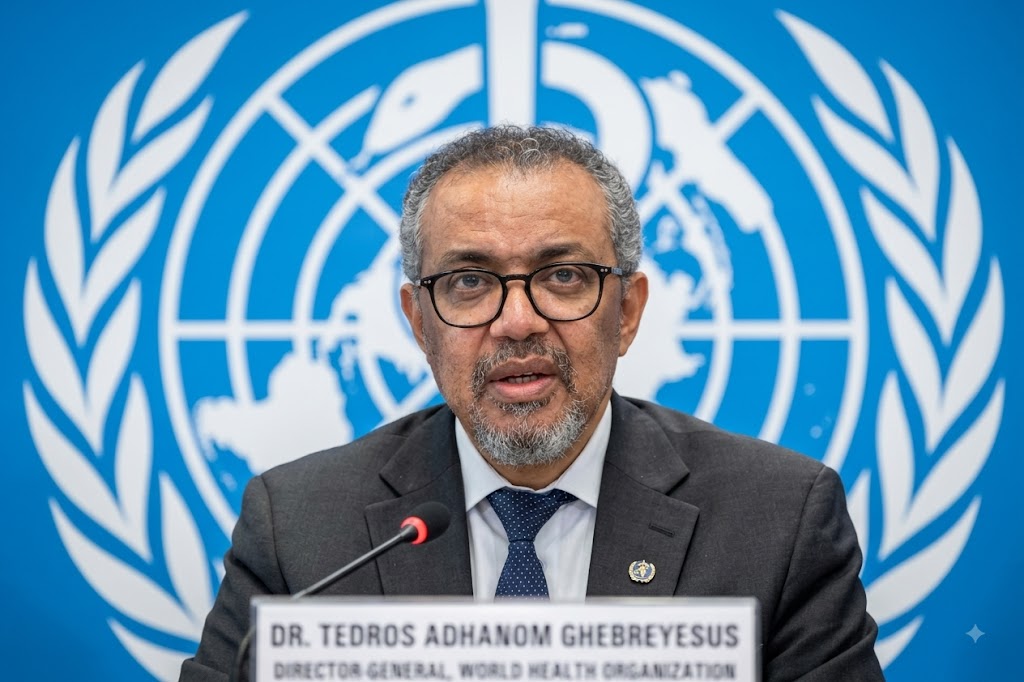
World Health Organization Director-General Tedros Adhanom Ghebreyesus has warned that the Ebola outbreak in the Democratic Republic of the Congo is spreading at an unprecedented pace and could become the deadliest ever recorded if its current trajectory continues.
The epidemic, declared in mid-May 2026, is concentrated mainly in the eastern provinces of Ituri and North Kivu, with cases also reported in neighboring Uganda. More than 4,300 infections and over 2,000 deaths have reportedly been recorded, making it the second-largest Ebola outbreak in history and the fastest-growing on record.
Tedros cautioned that the crisis could eventually surpass the devastating 2014–2016 West Africa epidemic, which remains the world’s deadliest Ebola outbreak.
Unlike many recent outbreaks caused by the Zaire ebolavirus, the current epidemic involves the less common Bundibugyo virus. The strain presents a major challenge because there are no approved vaccines or specifically targeted treatments currently available for it.
Genetic sequencing indicates that the virus may have circulated undetected for several months before the outbreak was identified. This delayed discovery has forced health authorities to respond to transmission networks that are already deeply established within affected communities.
According to the WHO, between 60% and 70% of newly detected infections involve people who were not included on existing contact-tracing lists. The trend suggests that significant community transmission is occurring beyond the reach of surveillance teams.
Efforts to contain the outbreak are also being complicated by armed conflict, damaged infrastructure and insecurity in eastern DRC. Many affected communities are located in remote areas that medical personnel cannot reach easily or safely.
Healthcare worker strikes have created an additional obstacle, particularly in Ituri province. Medical workers demanding the payment of outstanding wages have left some clinics understaffed at a time when the region urgently needs additional personnel and treatment capacity.
Under a moderate projection, WHO officials expect infections to reach their peak within six months. However, the epidemic could continue for nine to 12 months if uncontrolled community transmission, insecurity and shortages of resources persist.
International emergency operations are now shifting toward accelerating clinical trials for possible Bundibugyo vaccines. Response teams are also deploying rapid point-of-care diagnostic tools and strengthening community-led surveillance to identify infections earlier.
Health authorities say rebuilding public trust and improving cooperation with local leaders will be essential to containing the disease. Without greater access, sufficient funding and stronger contact tracing, officials fear the outbreak could continue expanding across eastern DRC and into neighboring countries.
Source: Omanghana