Omanghana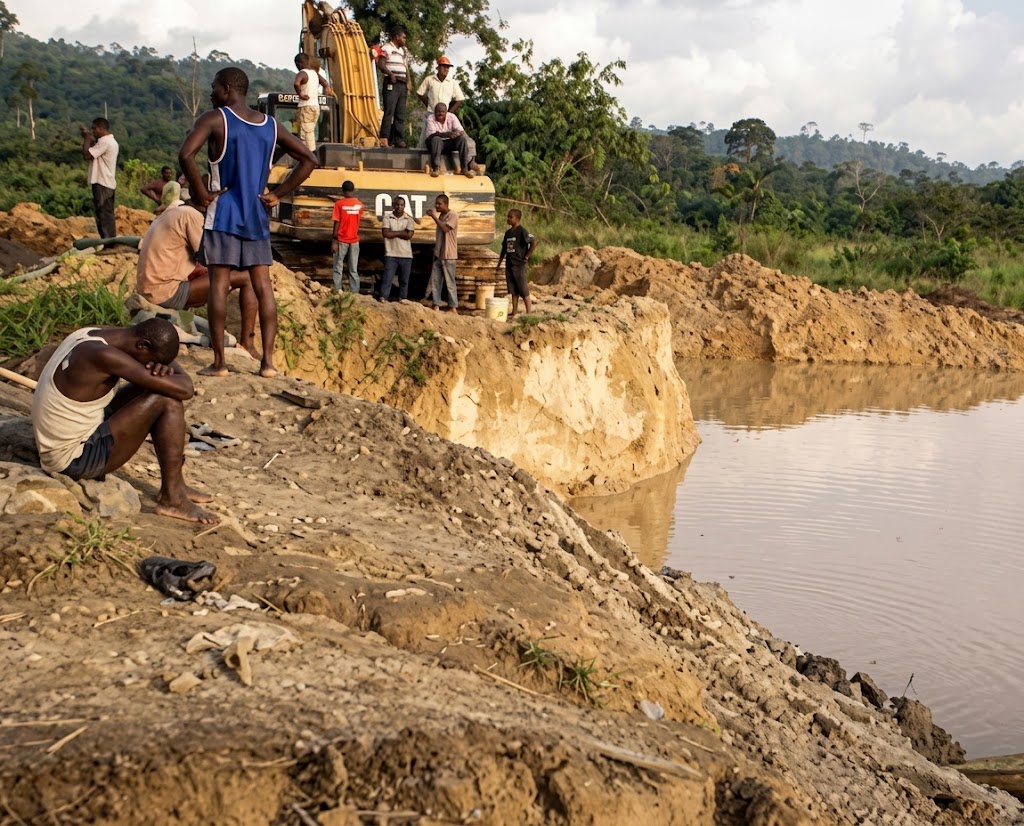
The fatalities highlight the growing public safety and environmental consequences of unregulated artisanal mining, locally known as galamsey. Excavated pits are frequently left uncovered and without warning signs, exposing residents to drowning, cave-ins and other potentially fatal accidents.
Many of the abandoned trenches become filled with water during the rainy season, transforming former mining sites into dangerous ponds that can be difficult to distinguish from shallow pools.
The victims reportedly include children, students and farmers who accidentally fell into waterlogged pits or were trapped when unstable walls collapsed.
Some residents encounter the abandoned pits while walking to farms, schools or neighboring communities. In locations where established roads and footpaths have been damaged by mining, people may have little choice but to travel close to the excavation sites.
Several mining districts have recorded widespread concentrations of uncovered pits. Areas of particular concern include Amansie South, with Manso Adubia as its capital, Amansie West, whose capital is Manso Nkwanta, and Amansie Central.
Other affected areas include Akrofuom, Bekwai and Adansi North, where both authorized and illegal mining activities have altered large sections of farmland and forest.
The risk becomes more severe during periods of heavy rainfall. Water collects rapidly in deep trenches, while saturated soil increases the likelihood of pit walls collapsing without warning.
Some water-filled craters effectively become small reservoirs or “mini-dams.” Their depth may be difficult to determine from the surface, making them especially dangerous to children and other residents unfamiliar with the affected land.
Beyond the immediate risk of drowning, stagnant water in abandoned mining pits can provide breeding grounds for mosquitoes and contribute to the spread of water-related diseases.
Mining activity may also contaminate collected water with sediment, fuel, chemicals and heavy metals, creating additional health risks for people and livestock.
The Ashanti Regional Security Council is working with metropolitan, municipal and district assemblies, as well as the Minerals Commission, to address the threat.
Authorities have intensified calls for emergency reclamation exercises in communities with large numbers of abandoned pits. The proposed measures include draining dangerous trenches where appropriate, backfilling excavated areas and restoring damaged farmland.
Officials have also called for hazard mapping to identify pits located near settlements, schools, farms, roads and frequently used footpaths.
In areas where immediate reclamation is not possible, authorities may need to erect barriers and warning signs to prevent residents from entering dangerous sites.
The regional administration is also pushing for stronger enforcement of reclamation requirements against miners and concession holders.
Under Ghana’s mining regulations, operators are expected to rehabilitate land affected by their activities. However, illegal miners often abandon sites without carrying out restoration, leaving the financial and safety burden on communities and the state.
Authorities want individual miners, concession holders and financiers to be held responsible for failing to backfill pits and restore degraded land.
There are also calls for mining licenses and operational permissions to be tied more firmly to enforceable reclamation plans and financial guarantees.
Traditional authorities have been urged to support the intervention by preventing the unauthorised allocation of land to illegal miners.
Regional leaders say chiefs and community elders can help security agencies identify active illegal mining locations, financiers and hazardous abandoned pits.
Community task forces may also support public education and report operators who attempt to leave excavation sites without undertaking the required restoration.
Residents have been advised to keep children away from abandoned mining areas and avoid using water collected in former mining pits for swimming, drinking or domestic activities.
The deaths have intensified demands for land reclamation to be treated as an immediate public safety operation rather than only an environmental program.
Authorities now face pressure to secure dangerous locations quickly, prosecute responsible operators and prevent additional fatalities in mining communities across the Ashanti Region.
Source: Omanghana