Omanghana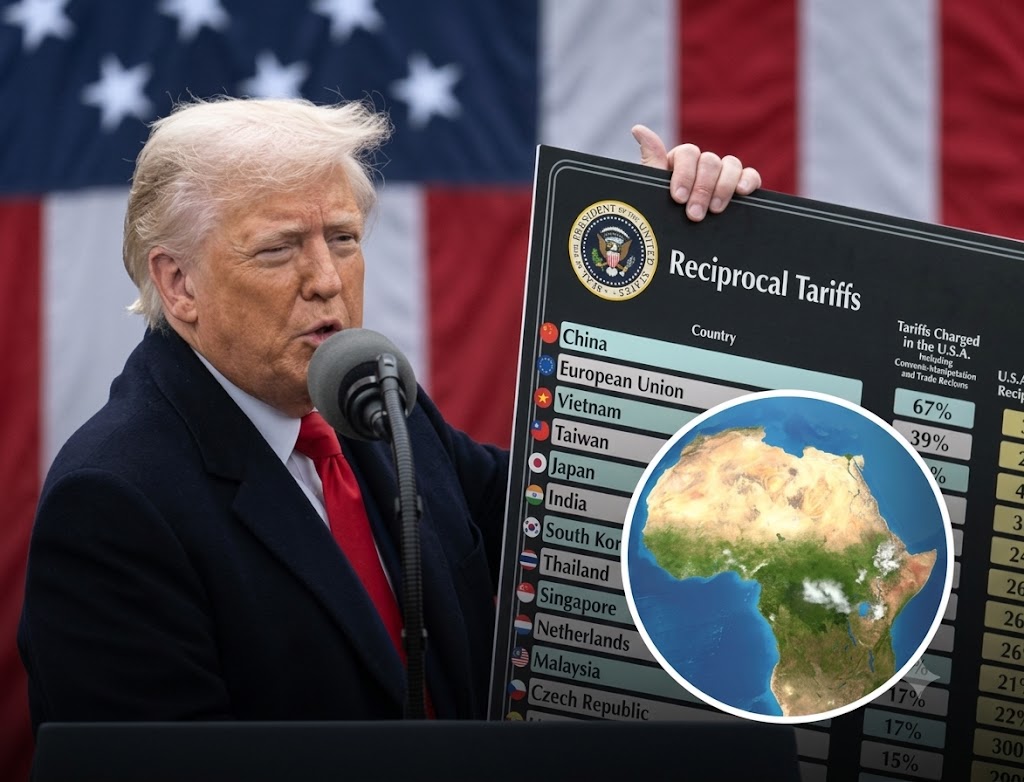
African economies with billions of dollars in exports to the United States are facing growing uncertainty as President Donald Trump’s July 31 trade deadline approaches, raising concerns over the potential impact of new tariffs on key industries across the continent.
The deadline follows the U.S. administration’s reciprocal trade policy announced on April 2, which aims to reduce the country’s trade deficit by imposing tariffs on trading partners unless new agreements are reached.
After an initial 90-day suspension that maintained a baseline 10% tariff, the temporary grace period is set to expire at the end of July, leaving several African exporters awaiting clarity on future trade arrangements.
Nine African Economies Most at Risk
While the White House has indicated that countries making progress in trade negotiations could receive exemptions, no continent-wide agreement has been reached.
Among the African nations considered most exposed are:
- South Africa, with significant exports in the automotive, metals, and agricultural sectors.
- Nigeria, where energy exports account for a substantial share of trade with the United States.
- Egypt, Morocco, Algeria, Ghana, Côte d’Ivoire, Angola, Kenya, and Ethiopia, which rely on exports including textiles, cocoa, minerals, and other manufactured and agricultural products.
Collectively, these countries account for a significant portion of Africa’s estimated US$43 billion export market to the United States.
Trade Tensions Continue to Rise
The approaching deadline comes amid broader global trade tensions and follows recent U.S. trade actions involving Canada, fueling speculation that Washington could pursue a more unilateral approach toward international trade.
At the same time, businesses are closely watching the future of the African Growth and Opportunity Act (AGOA), the U.S. trade preference program that provides eligible African countries with duty-free access for thousands of products.
AGOA is scheduled to expire in 2026, and policymakers are expected to consider revisions that could reshape the framework and place greater emphasis on advancing U.S. economic interests.
Key Industries Could Feel the Impact
If no exemptions or new trade agreements are reached before the July 31 deadline, several major export sectors could face increased costs from potential tariffs.
Industries considered most vulnerable include:
- Manufacturing, particularly automotive production, steel, and textiles.
- Agriculture, including cocoa and other agricultural commodities.
- Energy and mining, with exports of crude oil, minerals, and other natural resources potentially affected.
Higher tariffs could reduce the competitiveness of African exports in the U.S. market, placing additional pressure on producers, exporters, and national economies that depend heavily on international trade.
As negotiations continue, governments and businesses across the continent are monitoring developments closely, hoping for exemptions or new agreements that would preserve market access and protect one of Africa’s most valuable export destinations.
Source: Omanghana