Omanghana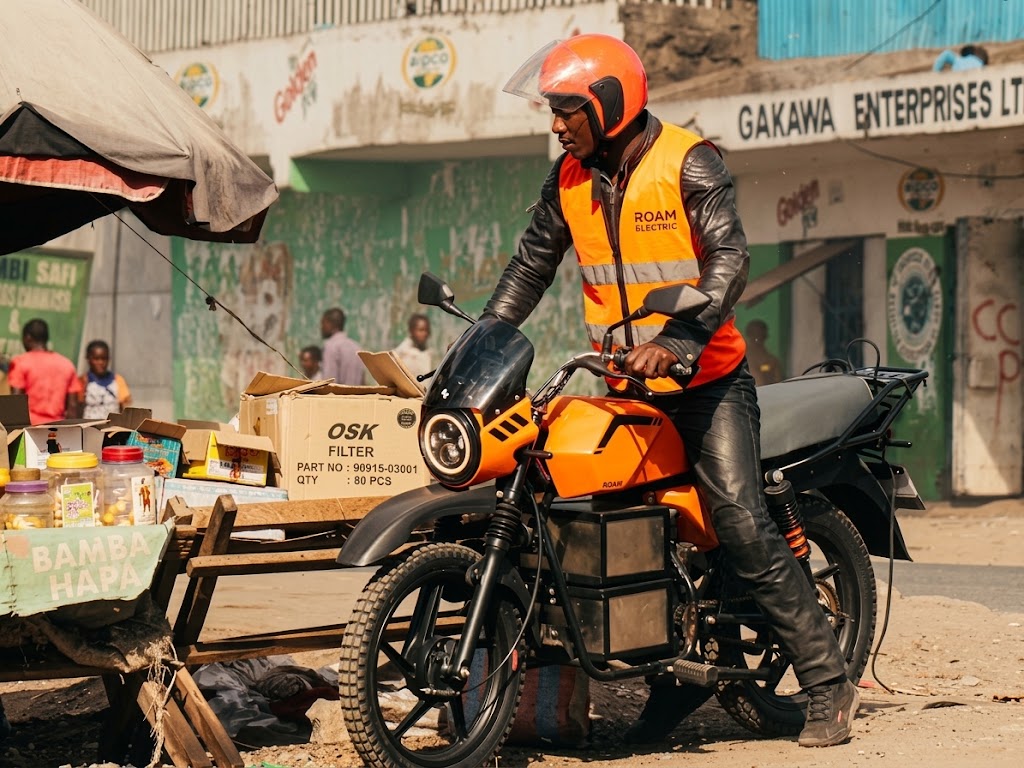
Africa’s imports of electric motorcycles and three-wheelers from China increased by 60% year-on-year during the first half of 2026, reaching a total value of $114.6 million.
The sharp increase reflects the continent’s accelerating transition towards electric mobility, particularly in markets where motorcycles and three-wheelers are widely used for commuting, passenger transport and delivery services.
North African countries accounted for a significant share of the growth. In the region, fully assembled electric scooters and mopeds are mainly purchased by individual consumers for short-distance travel.
Morocco emerged as Africa’s largest importer during the period, receiving 80,188 electric motorcycles and related vehicles from China, valued at $21.7 million. Egypt and Algeria were also among the leading importers in North Africa.
The structure of demand is different in Sub-Saharan Africa, where motorcycles are frequently operated as commercial assets. Riders working in passenger transport and delivery services can travel as far as 150 kilometers a day, creating demand for durable vehicles, affordable charging and fast battery replacement.
South Africa recorded the highest import volume in Sub-Saharan Africa, bringing in 19,635 units worth approximately $6.9 million.
Electric motorcycles are also gaining ground in East Africa. They accounted for an estimated 20% of total motorcycle sales in Uganda and about 15% in Kenya, demonstrating growing acceptance among riders and transport operators.
Chinese manufacturers are moving beyond the direct export of completed motorcycles to support the development of broader electric mobility systems across Africa. Companies such as Yadea and Chinese battery producers are forming partnerships with African electric vehicle businesses, including Spiro and ARC Ride.
These partnerships typically involve importing essential components such as motors, controllers and battery cells from China while completing part of the manufacturing process in African countries. Frames, seats, footrests and other components may be produced or assembled locally.
The approach could help lower production costs, create employment opportunities and strengthen local technical expertise. Local assembly could also make repairs and access to spare parts easier as the number of electric motorcycles on African roads increases.
Battery-swapping infrastructure has become another important part of the emerging market. Instead of waiting several hours for a battery to recharge, commercial riders can exchange a depleted battery for a fully charged one at a designated station.
This system is particularly useful for taxi and delivery riders whose earnings depend on keeping their motorcycles on the road for long periods. Expanding battery-swapping networks could therefore help address concerns about limited range and charging times.
Two- and three-wheelers make up a major share of vehicles in many African cities and rural communities. Replacing petrol-powered commercial motorcycles with electric alternatives could reduce fuel consumption, lower operating costs and improve urban air quality.
The transition could also reduce the amount African countries spend on imported petroleum products. Uganda is projected to save about $600 million annually through wider electric motorcycle adoption, while Kenya’s potential savings have been estimated at up to $800 million.
However, the sector’s continued expansion will depend on reliable electricity, affordable financing, supportive government policies and adequate charging or battery-swapping infrastructure.
The 60% increase in imports indicates that Africa’s electric motorcycle market is developing rapidly. It also highlights China’s growing role not only as a vehicle supplier but as a partner in building local assembly operations and supporting the infrastructure required for large-scale electric mobility.
Source: Omanghana