Omanghana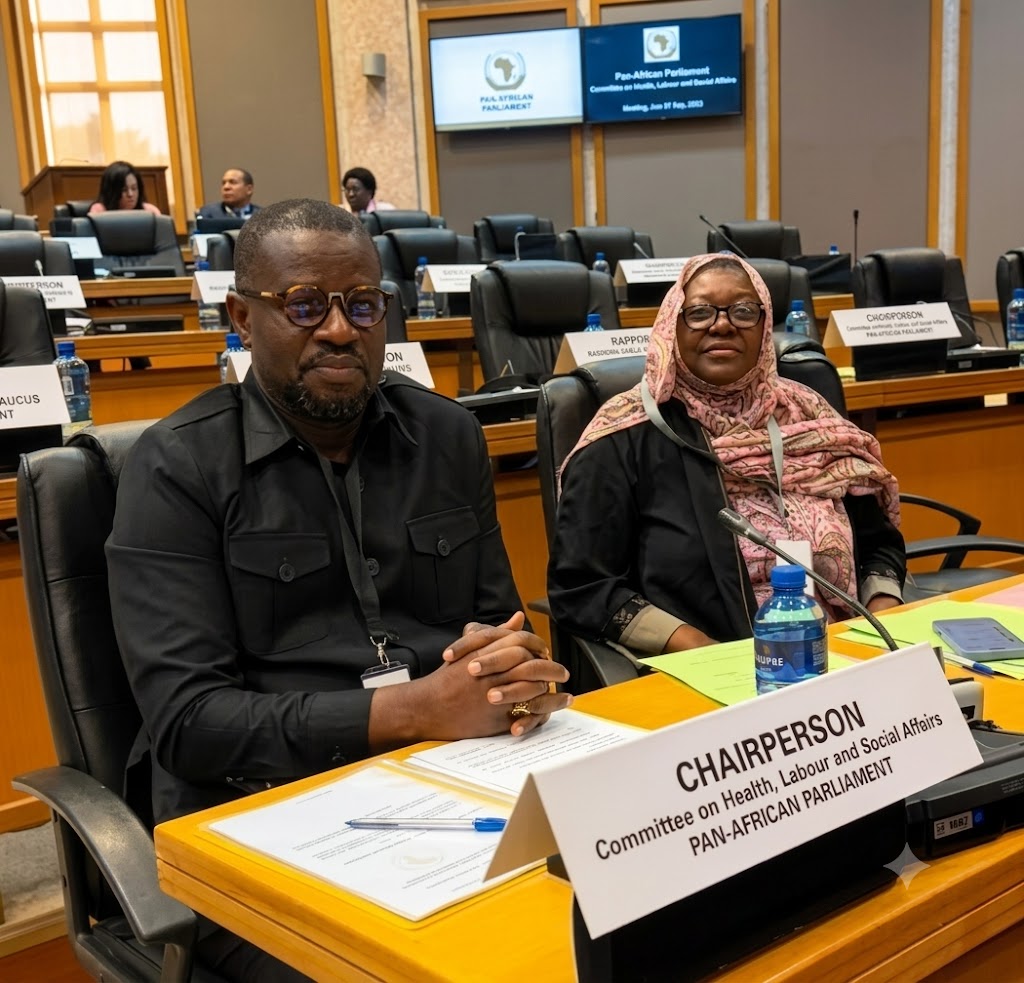
Member of Parliament for Nsawam-Adoagyiri and Minority Chief Whip Frank Annoh-Dompreh has called for stronger national and continental laws to regulate traditional medicine, protect indigenous knowledge and improve public confidence in African healthcare products.
Annoh-Dompreh, who chairs the Pan-African Parliament’s Committee on Health, Labor and Social Affairs, is supporting efforts to create harmonized standards for the research, production and use of traditional medicines across African Union member states.
The proposed approach includes developing a Pan-African model framework that countries could adapt to their national laws. It would focus on public safety, scientific validation, intellectual-property protection and the integration of approved traditional treatments into formal healthcare systems.
The initiative forms part of a broader Pan-African Parliament agenda to strengthen health sovereignty and reduce Africa’s dependence on imported medicines.
Model Law Could Guide African Governments
A Pan-African model law would not automatically replace the health legislation of individual countries. Instead, it would serve as a common reference that governments could use when creating or revising their national laws.
The proposed framework is expected to encourage consistent standards for examining traditional remedies, licensing practitioners and monitoring the production and sale of herbal products.
Many African countries currently regulate traditional medicine differently. While some have developed licensing and research systems, others have limited laws or weak enforcement mechanisms.
These differences can make it difficult to trade approved products across borders and protect consumers from remedies that have not been properly tested.
The Pan-African Parliament has advocated for a model law on the integration of traditional medicine since at least 2023. Its earlier policy discussions emphasized the need for continental legislation, stronger research institutions and greater recognition of indigenous healthcare.
Scientific Research and Quality Assurance
One of the central goals is to create stronger systems for researching and validating indigenous remedies.
Traditional treatments may be based on knowledge passed down through families and communities over several generations. However, regulators need reliable evidence about ingredients, dosage, possible side effects and interactions with other medicines before products can be widely recommended.
A harmonized framework could provide common guidelines for laboratory testing, clinical research, manufacturing and post-market monitoring.
This would help regulators remove toxic, contaminated or substandard products while creating a clearer path for legitimate remedies to receive approval.
Quality assurance would also require hygienic production facilities, accurate labels, consistent dosages and reliable shelf-life information.
Annoh-Dompreh maintains that stronger regulation should not be interpreted as an attempt to suppress indigenous healthcare. Instead, it should help credible practitioners distinguish their work from unsafe or fraudulent operations.
Protecting Indigenous Knowledge
The proposed continental framework would also seek to protect African communities from the unauthorized commercial use of their traditional knowledge.
Indigenous practitioners may possess valuable information about medicinal plants, natural compounds and treatment methods. Without adequate legal safeguards, researchers or foreign companies could use that knowledge to develop commercial products without recognizing or compensating its original custodians.
A model law could help countries establish systems for prior informed consent, benefit-sharing and ownership of traditional medical knowledge.
It could also improve the protection of medicinal biodiversity, particularly as climate change, deforestation and commercial exploitation threaten plant species used in local treatments.
Supporting African Pharmaceutical Production
Traditional medicine could also contribute to the expansion of Africa’s pharmaceutical and health-manufacturing sectors.
Annoh-Dompreh argues that scientifically validated remedies should be developed locally rather than exported as raw materials and later returned to African markets as expensive finished products.
Investing in laboratories, research centers, processing facilities and regulated production lines could create jobs while reducing reliance on imported medicines.
The Pan-African Parliament and Africa Centers for Disease Control and Prevention have been working together on wider health-sovereignty initiatives. A joint parliamentary oversight mission previously explored the integration of traditional medicine into broader efforts to strengthen African health systems.
Ghana Faces Major Licensing Challenge
While promoting continental reform, Annoh-Dompreh has also drawn attention to weaknesses in Ghana’s regulation of traditional and alternative healthcare.
The Traditional Medicine Practice Act, 2000 (Act 575), requires practitioners and facilities to be registered and licensed. The law established the Traditional Medicine Practice Council to regulate the sector and protect the public.
Despite the legislation, thousands of herbal centers, wellness facilities and alternative-health practitioners have operated without valid licenses.
A 2024 estimate attributed to the TMPC suggested that more than 521,000 traditional and complementary practitioners were unregistered or unlicensed. That figure included about 321,000 traditional practitioners and more than 200,000 complementary and alternative-health providers.
The estimate covered a broad range of services, including herbal medicine, naturopathy, homoeopathy, chiropractic care, massage therapy, spiritual healing, acupuncture and wellness centers.
More recent statements from the regulator have provided substantially lower estimates for active practitioners, highlighting the need for an updated national database. Regardless of the exact number, the registration gap remains significant.
Unqualified Staff Raise Public-Health Concerns
Regulators have found cases in which licensed or previously licensed facilities employed workers who lacked the required training and registration.
Some centers were reportedly left under the control of unqualified staff when the authorized practitioners were absent. Such practices create risks because employees may recommend products, dispense remedies or provide treatment without understanding dosage, contraindications or possible adverse effects.
Under Act 575, operating an unlicensed practice or providing services without the necessary practitioner registration is an offence.
The concern is not simply whether a remedy is described as traditional or orthodox. Public safety depends on whether the person providing treatment is qualified, whether the product is properly regulated and whether the facility meets acceptable standards.
TMPC Intensifies Enforcement
The Traditional Medicine Practice Council has expanded inspections and enforcement operations across Ghana.
In February 2026, the Council closed several herbal and alternative medicine centers in Medina and Ashaiman for breaches involving licensing and certification. Tabletop vendors were also sanctioned, with some products confiscated.
A separate 15-day exercise in Accra inspected more than 500 facilities. Several operators received compliance notices, while herbal shops, spas and other businesses were closed for operating without the required licenses.
Enforcement later expanded to the Ashanti Region, where inspectors found facilities operating without current documentation or qualified personnel.
The Council says its objective is not to destroy businesses but to ensure that only properly trained and licensed practitioners provide healthcare services.
Members of the public have been encouraged to confirm the registration status of practitioners before receiving treatment.
Integration Must Follow Evidence
Ghana has made previous efforts to introduce approved herbal medicine services into selected public health facilities. Discussions have also continued over how validated traditional treatments could play a larger role in the national healthcare system.
Any broader integration, including possible coverage under the National Health Insurance Scheme, would require reliable evidence of safety, effectiveness and cost.
The Food and Drugs Authority regulates medicinal products, while the TMPC oversees practitioners and facilities. Clear coordination between the two institutions is necessary to prevent gaps in supervision.
Research institutions such as the Centre for Plant Medicine Research and universities with herbal medicine programs will also be important in testing products and training professionals.
Annoh-Dompreh’s position is that traditional medicine should be neither rejected without examination nor accepted without evidence. A credible system must preserve valuable indigenous knowledge while ensuring that patients receive safe, properly tested and accurately administered treatments.
If developed and adopted, a Pan-African framework could help African countries create more consistent rules, strengthen local manufacturing and build international confidence in approved traditional medicines.
Source: Omanghana