Omanghana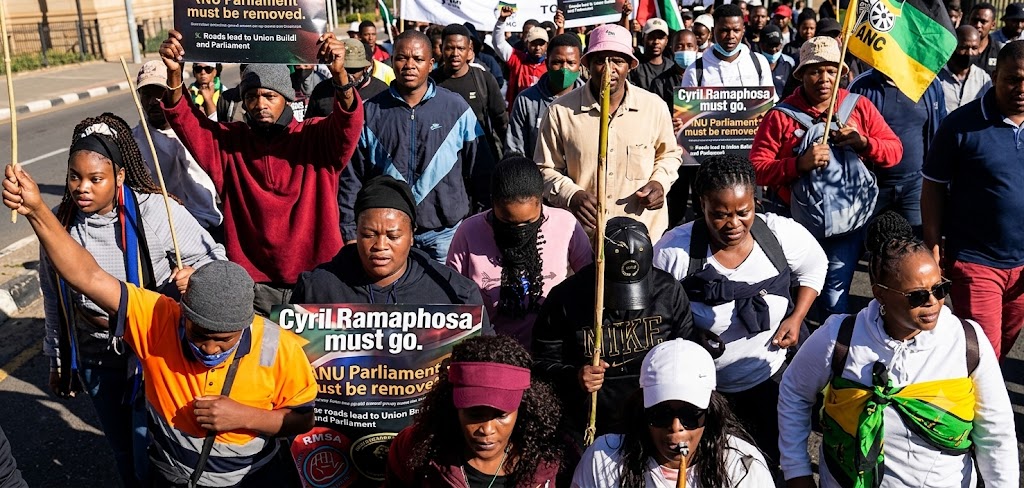
Anti-immigration protests have intensified in South Africa, with demonstrators carrying out door-to-door raids in parts of Johannesburg’s Alexandra township and Soweto, targeting people they suspect of being undocumented migrants.
The protesters, associated with movements such as March and March and Operation Dudula, reportedly forced their way into homes, removed residents they believed to be in the country illegally, and handed them over to police. The raids represent a significant escalation in the campaign against undocumented immigration following the expiration of a self-imposed June 30 deadline that protest organizers had given foreign nationals without legal status to leave the country.
Organizers have vowed to continue similar operations every Thursday until the government implements stricter border controls and launches large-scale deportations of undocumented migrants.
Door-to-Door Raids Raise Alarm
Witnesses reported that groups of protesters carrying sticks and flags moved through neighborhoods in Alexandra before extending their demonstrations into parts of Soweto.
During the operations, families, including women and young children, were reportedly removed from their homes and placed into police vehicles for immigration checks.
Human rights advocates have also raised concerns that the sweeps have affected individuals who are legally residing in South Africa. Among those reportedly detained was a Zimbabwean national holding a valid Zimbabwean Exemption Permit (ZEP), highlighting fears that lawful residents are being caught up in the operations.
The growing tensions have displaced thousands of migrants, many of whom have fled their homes out of fear. Some are now sleeping on sidewalks, near government offices, or in temporary camps close to border crossings while awaiting assistance or voluntary repatriation.
Government Condemns Vigilante Enforcement
South African authorities have warned against civilians taking immigration enforcement into their own hands.
President Cyril Ramaphosa and law enforcement officials have stated that only authorized government agencies have the legal authority to enforce immigration laws and have cautioned that vigilante actions are unlawful.
Despite these warnings, critics argue that police operations targeting undocumented migrants have increased alongside the protests, with authorities processing a growing number of immigration-related arrests during the demonstrations.
Human rights organizations say at least five foreign nationals have been killed since the broader wave of anti-immigration unrest began. South Africa’s police watchdog has opened investigations into the reported incidents of violence.
Neighboring Countries Begin Repatriation Efforts
The deteriorating security situation has prompted several neighboring countries to organize emergency repatriation efforts for their citizens.
Prior to the latest escalation, more than 9,000 Malawian nationals and approximately 3,000 Zimbabweans were repatriated through the Beitbridge Port of Entry.
The governments of Nigeria, Ghana, and Mozambique have also publicly condemned attacks targeting their citizens and called on South African authorities to ensure the safety of foreign nationals living in the country.
Debate Over the Causes of the Crisis
Protest organizers argue that undocumented immigration has contributed to unemployment, increased crime, and mounting pressure on South Africa’s already strained public healthcare and education systems.
However, migration experts and human rights organizations, including Amnesty International South Africa, dispute those claims. They note that migrants account for only a small share of South Africa’s population—estimated at around four percent—and argue that foreign nationals are being unfairly blamed for broader socioeconomic challenges.
Analysts point to persistently high unemployment, slow economic growth, poverty, and inadequate public services as the underlying factors fueling public frustration. They warn that without addressing these structural issues, tensions surrounding immigration are likely to continue despite enforcement efforts.
As demonstrations persist, concerns are growing over the humanitarian impact of the unrest and the potential for further violence against migrant communities across South Africa.
Source: Omanghana