Omanghana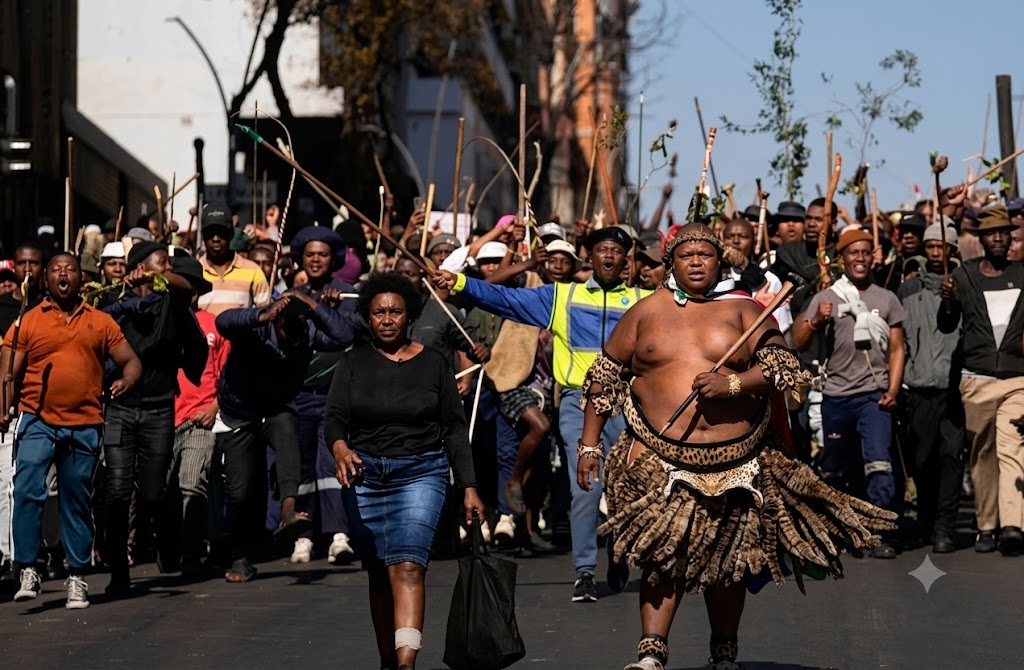
South Africa’s escalating anti-migrant protests and backlash against foreign workers could trigger serious economic consequences, with economists warning that the country risks losing up to $43 billion in Gross Domestic Product (GDP) if thousands of migrant workers leave or are forced out of key sectors.
The protests, fueled by concerns over unemployment, crime, and slow economic growth, have intensified as campaigners point to South Africa’s 32.7% unemployment rate in the first quarter of 2026 as evidence of a growing jobs crisis.
However, economic analysts caution that targeting foreign workers could weaken the very industries and businesses that support millions of South Africans.
Migrants Play Major Role in South Africa’s Economy
Although migrants represent only about 5% of South Africa’s population, estimates suggest they contribute approximately 9% of the country’s GDP through their participation in various sectors.
Economists warn that a sudden reduction in the migrant workforce could create major economic disruptions, particularly in industries that depend heavily on foreign labor.
Key Sectors Face Labor Shortages
The rising insecurity has already encouraged thousands of African immigrants to leave South Africa, creating shortages in sectors where employers often struggle to find enough workers.
Industries considered most vulnerable include:
- Agriculture
- Construction
- Hospitality
- Transport
- Logistics
Businesses in these sectors rely heavily on migrant workers for both skilled and low-skilled positions, and a rapid workforce decline could affect production, service delivery, and economic growth.
Investor Confidence Under Pressure
Beyond immediate labor concerns, economists warn that continued unrest could damage South Africa’s reputation among international investors.
While global markets have often absorbed concerns about long-standing social challenges, analysts say recent incidents involving blockades, looting, and forced business closures represent a new level of economic risk.
Investors may begin viewing social instability as a threat to business operations and long-term returns, potentially affecting foreign investment flows.
Businesses and Supply Chains Already Feeling Impact
The unrest has begun affecting major business operations and informal economic networks.
One example is Sixty60, the grocery delivery platform owned by the Shoprite Group, which experienced operational challenges due to disruptions involving its delivery workforce. Reports indicate that fewer than 25% of its delivery drivers are South African citizens, highlighting the company’s dependence on migrant labor.
Foreign-Owned Spaza Shops Targeted
Anti-migrant groups have also targeted foreign-owned spaza shops, small informal convenience stores that serve as essential businesses in many townships.
Economists warn that closing these businesses does not only affect foreign owners. The disruption also impacts:
- Local landlords who rent shop spaces
- South African employees working in the stores
- Domestic wholesalers supplying goods
- Communities that rely on nearby retail services
The informal retail sector forms a critical part of South Africa’s economy, and widespread closures could reduce income opportunities for many local residents.
Research Challenges Claim That Migrants Take Jobs
While some protesters argue that foreign workers reduce employment opportunities for South Africans, economic research presents a more complex picture.
According to International Labour Organization (ILO) findings, increased immigrant participation can contribute to broader economic expansion, with each migrant worker potentially supporting the creation of additional employment opportunities for local citizens through increased business activity and demand.
Regional Economies Face Remittance Risks
The economic impact could extend beyond South Africa’s borders.
Remittance transfers from South Africa to neighboring countries more than tripled between 2016 and 2024, reaching approximately 19 billion rand ($1.16 billion).
Nearly 90% of these transfers support economies in countries such as:
- Lesotho
- Malawi
- Mozambique
- Zimbabwe
A slowdown in South Africa’s economy or a major reduction in migrant employment could therefore affect household incomes and economic stability across the wider Southern African Development Community (SADC) region.
Balancing Economic Concerns and Social Tensions
As South Africa continues to grapple with unemployment, inequality, and crime, experts argue that addressing these challenges requires policies focused on job creation, economic growth, and improved governance rather than measures that risk destabilizing key sectors.
The ongoing debate highlights the complex relationship between migration, employment, and economic development in Africa’s most industrialized economy.
Source: Omanghana