Omanghana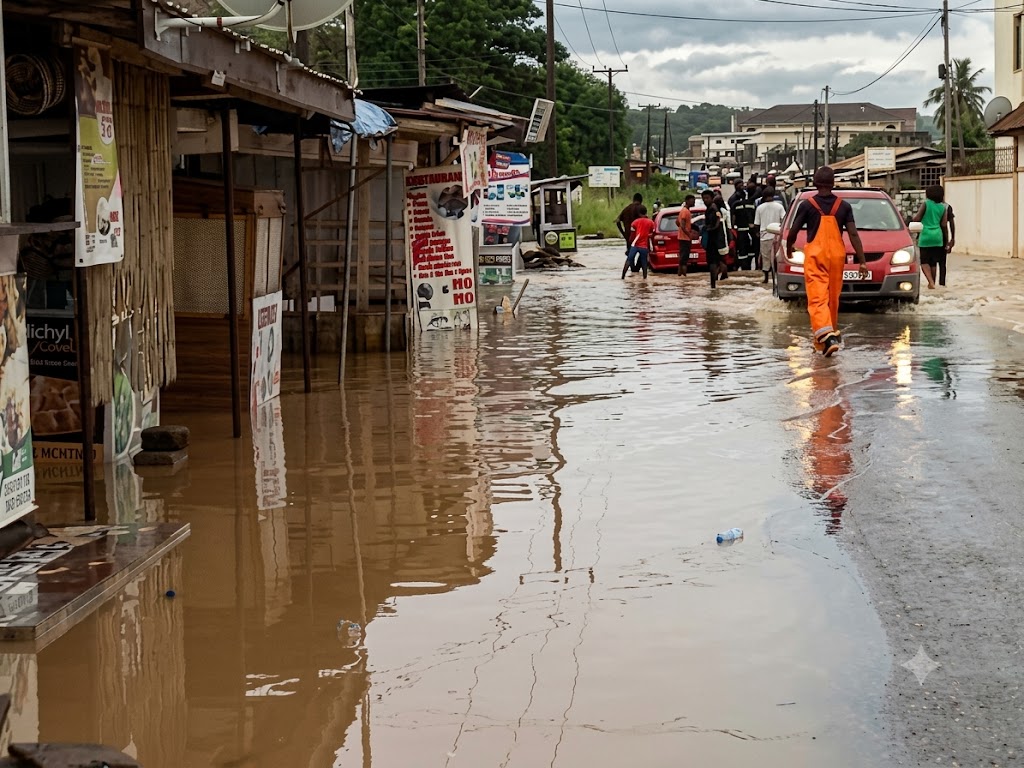
The Cape Coast Metropolitan Assembly (CCMA) has unveiled an aggressive flood mitigation strategy that includes plans to demolish at least 50 unauthorized and unsafe structures across the metropolis following devastating floods that recently struck the Central Region.
Metropolitan Chief Executive (MCE) George Justice Arthur announced the initiative during a press conference on June 25, 2026, describing it as part of a broader effort to reduce the city’s vulnerability to future flooding and safeguard lives and property.
Flood Disaster Leaves Widespread Damage
The announcement comes in the aftermath of torrential rains that battered Cape Coast and surrounding communities on June 19 and 21, causing extensive destruction across the region.
According to figures released by the National Disaster Management Organization (NADMO), the flooding resulted in 18 fatalities across the Central Region. In Cape Coast alone, 2,929 residents were displaced, while authorities identified 155 buildings deemed structurally unsafe and marked for possible demolition.
Several Communities Severely Affected
The heavy rainfall inundated numerous neighborhoods, including areas that have not traditionally been associated with flooding.
Among the worst-affected locations were communities surrounding the University of Cape Coast (UCC), as well as Adisadel and Ameen Sangari. Residential areas including Abura, Ekon, Eyifua, Mpeasem, Nkanfoa, Asenadze, and the DVLA/Nokaans enclave also experienced significant flooding and property damage.
Assembly Targets Illegal and Unsafe Structures
As part of its emergency response, the CCMA has begun enforcing measures aimed at removing structures that contribute to flood risks.
Authorities indicated that buildings erected on waterways, drainage channels, road reservations, and other unauthorized locations will be demolished to restore the natural flow of stormwater and reduce future flooding.
The Assembly also plans to remove abandoned or severely deteriorated structures that pose safety risks, particularly those vulnerable to collapse during extreme weather events.
In addition, special task forces have been deployed to review building permits and monitor ongoing developments to prevent further encroachment on designated drainage corridors.
Long-Term Flood Prevention Measures
Beyond immediate enforcement actions, the Assembly says it is developing a comprehensive strategy to improve Cape Coast’s resilience against recurring floods.
Plans include preparing a drainage master plan to guide future stormwater management, as well as undertaking extensive desilting and widening of major drainage channels, including the Kru Town storm drain and waterways serving the Abura and Aquarium areas.
Balancing Safety and Heritage Preservation
Recognizing Cape Coast’s historical significance and its status as a UNESCO World Heritage destination, city authorities have pledged to consult with property owners and key stakeholders before carrying out demolitions that may affect culturally important structures.
Officials say the goal is to strike a balance between protecting public safety and preserving the city’s architectural and historical heritage while implementing necessary flood control measures.
The Assembly has urged residents to cooperate with the ongoing interventions and to avoid activities that obstruct drainage systems, emphasizing that collective action will be essential in reducing the impact of future flooding.
Source: Omanghana