Omanghana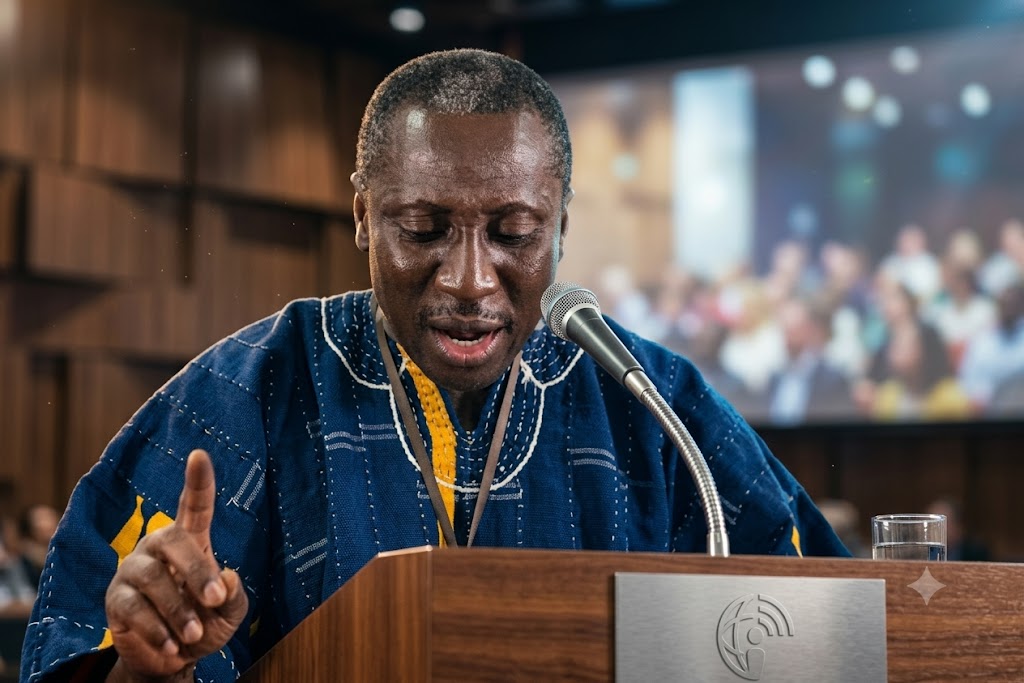
The Ghana Center for Democratic Development (CDD-Ghana) has called on the Economic and Organized Crime Office (EOCO) to conduct its investigations with greater transparency while strictly adhering to due process.
The appeal was made by CDD-Ghana Research Fellow Dr. John Osae-Kwapong on July 11, 2026, amid growing public debate over recent enforcement actions by the state investigative agency.
According to Dr. Osae-Kwapong, law enforcement institutions must exercise their statutory powers in a manner that promotes public confidence and avoids creating the perception of arbitrary action or intimidation.
Concerns Follow NAFCO Rearrest Controversy
CDD-Ghana’s remarks come in the wake of the controversial rearrest of former National Food Buffer Stock Company (NAFCO) Chief Executive Officer, Hanan Abdul-Wahab Aludiba, and his wife, Faiza Seidu Wuni.
The case drew significant public attention after the Attorney-General withdrew financial crime charges against the couple, citing the emergence of fresh evidence.
However, Abdul-Wahab was subsequently rearrested by EOCO at Kotoka International Airport on July 4, shortly after his release. His legal counsel, former Attorney-General Godfred Yeboah Dame, has publicly challenged the legality of the rearrest, describing the action as unlawful.
Call for Fair and Transparent Enforcement
Dr. Osae-Kwapong stressed that maintaining public trust in Ghana’s justice system requires a careful balance between effective law enforcement and the protection of constitutional rights.
He emphasized that anti-corruption and investigative agencies should ensure their actions remain firmly within the bounds of due process and do not give rise to allegations of abuse of power or harassment.
He also underscored the importance of clear public communication, noting that transparent explanations of investigative decisions can help strengthen confidence in state institutions.
According to him, agencies should be mindful of public perception and strive to ensure that their actions cannot reasonably be viewed as politically motivated or unfairly targeted.
Proposal for Anti-Corruption Reforms
The latest comments are consistent with CDD-Ghana’s broader advocacy for institutional reform within Ghana’s anti-corruption architecture.
The policy think tank has previously proposed consolidating key anti-corruption institutions—including the Economic and Organised Crime Office (EOCO), the Office of the Special Prosecutor (OSP), and the Commission on Human Rights and Administrative Justice (CHRAJ)—into a single independent Anti-Corruption Commission.
CDD-Ghana argues that such a reform could improve coordination among investigative bodies, reduce institutional overlap, and strengthen the independence and effectiveness of anti-corruption enforcement in Ghana.
The organization maintains that enhancing transparency, accountability, and public confidence remains essential to the country’s efforts to combat corruption and uphold the rule of law.
Source: Omanghana