Omanghana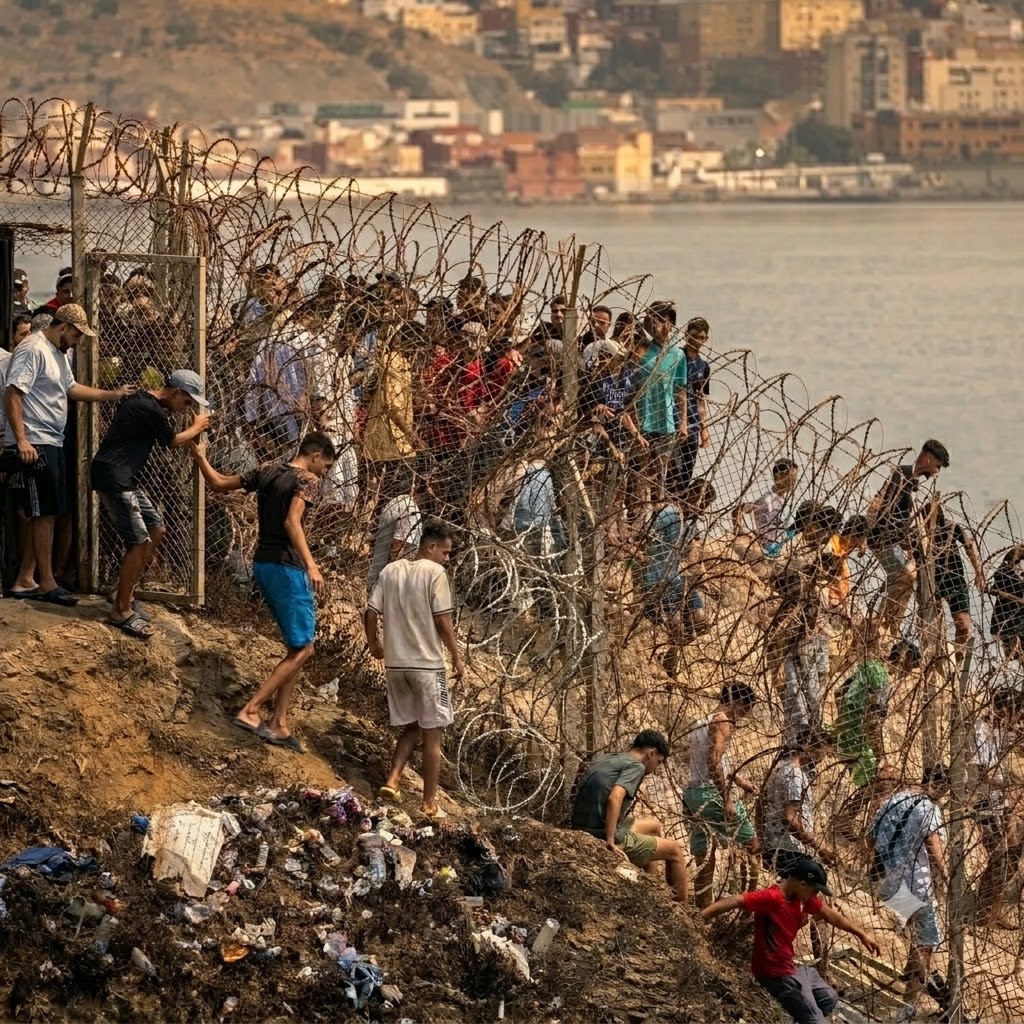
Spain has reinforced security in Ceuta after an unprecedented influx of migrants from Morocco overwhelmed the small North African enclave, disrupted commercial activity and created a major humanitarian emergency.
Ceuta’s President, Juan Jesús Vivas, estimated that as many as 60,000 people entered the territory during the late-July 2026 surge an extraordinary figure for a city with approximately 84,000 residents. Spain’s Interior Ministry initially estimated that about 49,000 crossings occurred within 24 hours.
Migrants entered Ceuta by crossing the land frontier or swimming around breakwaters separating the Spanish territory from Morocco. The scale and speed of the arrivals overwhelmed border personnel, reception facilities and other public services.
Vivas appealed to Spain’s central government for an emergency response, prompting Madrid to deploy military personnel to reinforce police and border-security units.
At Least 67 People Die During Crossings
The humanitarian cost continued to rise as authorities recovered the bodies of migrants who drowned or were crushed amid the disorder. By August 1, the confirmed death toll had reached at least 67.
Thousands of those who successfully crossed were left without adequate shelter, food or sanitation. Public squares, beaches and waterfront areas became temporary sleeping spaces as the enclave’s reception center exceeded capacity.
Some migrants reportedly bathed in public fountains, while others spent days outdoors without reliable access to food. Several returnees said hunger, exhaustion and uncertainty about reaching mainland Europe influenced their decision to go back to Morocco.
Businesses Close as Residents Face Shortages
The influx severely disrupted everyday life across Ceuta. Shops, markets and other businesses temporarily closed because of safety concerns, contributing to shortages of bread and other essential products.
Vivas said the city had yet to return fully to normal despite the decline in crossings and the beginning of large-scale returns. He called for an increased security presence to protect residents, migrants and commercial areas.
Spanish officials said most of the migrants had returned to Morocco within approximately 48 hours, some voluntarily and others through expedited repatriation procedures. More than 48,000 returns were reported as cooperation between Spanish and Moroccan authorities intensified.
Spain Installs Floating Maritime Barrier
Spain responded by strengthening patrols and installing a 500-metre floating containment barrier along Ceuta’s maritime frontier. The structure is intended to discourage migrants from swimming around the existing border defenses and allow Civil Guard vessels to patrol the area more effectively.
The government also accelerated removal procedures for migrants who entered irregularly, while stressing that arrival in Ceuta does not automatically provide access to mainland Spain or the wider Schengen Area.
The crisis followed a Spanish Supreme Court decision restricting the summary return of migrants intercepted at sea. However, officials also blamed trafficking networks, economic hardship and misleading social-media claims for encouraging thousands of people to attempt the dangerous journey.
Crisis Fuels European Immigration Debate
The extraordinary border breach quickly became a wider European political issue. Italy announced additional controls affecting arrivals from Spain, while other European governments demanded stronger measures to prevent irregular migrants from travelling deeper into the continent.
Spanish Prime Minister Pedro Sánchez described the mass crossing as a violation of the country’s territorial sovereignty but praised Morocco for helping restore control at the frontier.
Although the immediate pressure has eased, Ceuta remains under heightened security. The crisis has renewed debate over European border protection, migration policy and the humanitarian consequences of blocking safe and lawful routes into Europe.
Source: Omanghana