Omanghana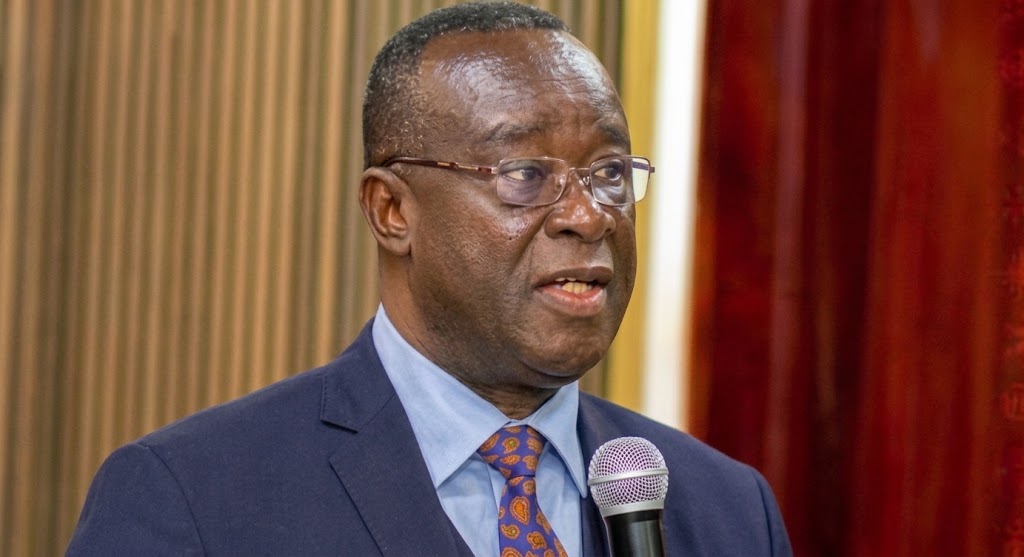
Ghana’s Chief Justice, Justice Paul Baffoe-Bonnie, has praised the operational and financial performance of the Minerals Income Investment Fund (MIIF) and other state-owned institutions, saying their recent progress raises questions about what the country had been doing over the previous eight years.
Justice Baffoe-Bonnie made the remarks during an official visit to the MIIF head office in Accra, where he interacted with the fund’s leadership and staff and received briefings on its operations, revenue strategies and institutional reforms.
The visit followed an earlier engagement at the Social Security and National Insurance Trust (SSNIT), where the Chief Justice was also briefed on the institution’s operations and performance.
Chief Justice Commends MIIF Management
Addressing officials at MIIF, Justice Baffoe-Bonnie expressed admiration for what he described as significant achievements by the institution.
“I must congratulate you. I mean, you have done marvelously well. See, because sometimes when we hear the things that you have done, the things that some organizations are doing now, we wonder; some of us keep wondering what really we have been doing in the past eight years,” he said.
His comments appeared to draw a comparison between the recent performance of some state institutions and their management during the preceding eight-year period.
MIIF is responsible for managing and investing certain mineral royalties and related income accruing to Ghana, with a mandate to maximize the long-term value of the country’s mineral wealth.
Baffoe-Bonnie References Previous SSNIT Asset Sale Controversy
The Chief Justice also referred to his earlier visit to SSNIT, contrasting what he had heard about the institution’s current operations with previous proposals involving some of its major assets.
“We’ve just come back from SSNIT… and the kind of things that we heard… if you compare that to the fact that not too long ago, SSNIT was preparing to sell its prized assets like Labadi Beach Hotel, you wonder how Ghana [could have fallen that low],” he stated.
The proposed sale of SSNIT’s interests in several hotels, including Labadi Beach Hotel, became a major national controversy under the previous administration and attracted opposition from organized labor, civil society groups and political actors.
The plan ultimately became one of the most contentious debates surrounding the management of SSNIT’s investment portfolio.
Remarks Trigger Political Debate
Justice Baffoe-Bonnie’s comments have since attracted attention within Ghana’s political and civic space because of the apparent comparison between the performance of state institutions under the current administration and the preceding eight years of New Patriotic Party (NPP) government.
Critics have questioned whether such observations from the head of the judiciary could create a perception of political preference, even when made in the context of assessing the performance of public institutions.
The controversy is particularly sensitive because the judiciary is constitutionally expected to exercise its responsibilities independently and impartially, separate from partisan political interests.
Supporters of the Chief Justice’s remarks may, however, view them as observations about institutional management and accountability rather than an endorsement of any political party.
The debate therefore centers not only on what Justice Baffoe-Bonnie said, but also on the expectations surrounding public comments by the country’s highest-ranking judicial officer.
Judicial Independence Comes Into Focus
The remarks are also receiving heightened scrutiny because of the political controversy that surrounded Justice Baffoe-Bonnie’s rise to the leadership of Ghana’s judiciary following the removal of former Chief Justice Gertrude Torkornoo through proceedings under Article 146 of the 1992 Constitution.
The opposition Minority contested developments surrounding the transition, making questions of judicial independence and the relationship between the judiciary and executive particularly sensitive subjects.
Justice Baffoe-Bonnie has maintained that his progression through the judiciary reflects decades of professional service and merit and has pledged to uphold the independence and non-partisan character of the judicial branch.
His latest comments at MIIF have nevertheless reopened public discussion about how senior judicial officials should navigate commentary on politically sensitive issues, particularly when assessing the records of successive governments.
Beyond the political debate, the Chief Justice’s visits to MIIF and SSNIT placed renewed attention on the management of Ghana’s state institutions and the need to ensure that public assets and revenues are administered efficiently for the benefit of the country.
Source: Omanghana