Omanghana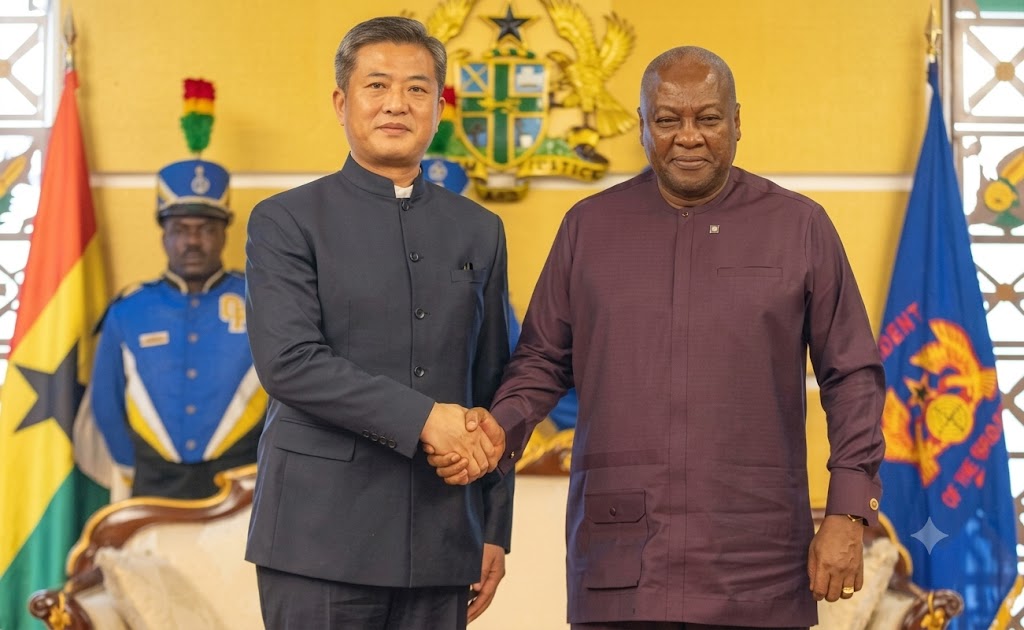
China has commended Ghana’s efforts to reduce its reliance on imported refined petroleum products, describing the country’s determination to process its natural resources domestically as a major step toward industrialization, energy security, and long-term economic transformation.
The praise was delivered by China’s Ambassador to Ghana, Cong Song, during the commissioning of Phase Two of the Sentuo Oil Refinery Project in Tema, a landmark expansion expected to significantly strengthen Ghana’s refining capacity and reduce its dependence on fuel imports.
Speaking at the ceremony, Ambassador Cong said Ghana’s commitment to adding value to its natural resources aligns with the country’s broader industrial development agenda and represents an important milestone in building a resilient and self-sustaining economy.
Sentuo Refinery Expansion Marks Major Milestone
The newly commissioned Phase Two expansion of the Sentuo Oil Refinery, developed by the Chinese-owned Sentuo Group, will increase the facility’s refining capacity from 40,000 barrels per day to 100,000 barrels per day.
The expansion is expected to substantially reduce Ghana’s need to import refined petroleum products, helping to improve fuel security while lowering the country’s import bill.
Government officials believe the increased domestic refining capacity will also create new employment opportunities, stimulate industrial activity, and strengthen Ghana’s position as a regional energy hub in West Africa.
China Backs Ghana’s Resource Value-Addition Agenda
Ambassador Cong also praised Ghana’s broader strategy of processing its natural resources locally instead of exporting them in raw form.
He highlighted the government’s ambitious target of ending the export of raw minerals by 2030 and refining crude oil produced from the Jubilee Oil Field within Ghana rather than shipping it abroad for processing.
According to the ambassador, local value addition is essential for creating jobs, expanding manufacturing, increasing export earnings, and ensuring that Ghana derives greater economic benefits from its abundant natural resources.
He noted that China’s longstanding development partnership with Ghana is centered on supporting industrialization, infrastructure development, and technology transfer to help achieve these national objectives.
Mahama: Refinery Will Shield Ghana from Global Oil Shocks
President John Dramani Mahama also emphasized the strategic importance of the expanded refinery, describing it as a critical safeguard against global energy market disruptions.
He noted that the facility would enhance Ghana’s ability to refine and store petroleum products domestically, helping cushion the economy against supply interruptions and price volatility resulting from geopolitical tensions, including ongoing conflicts in the Middle East.
According to the President, expanding local refining capacity will improve Ghana’s energy resilience while reducing the country’s exposure to fluctuations in international fuel prices.
He added that the investment forms part of a broader national strategy to achieve greater energy independence and strengthen economic stability.
Strengthening China-Ghana Economic Cooperation
The Sentuo refinery expansion also reflects the deepening strategic partnership between Ghana and China following high-level engagements between President Mahama and Chinese President Xi Jinping during bilateral meetings in Beijing.
Both governments have reaffirmed their commitment to expanding cooperation across key sectors, with industrialization, infrastructure, manufacturing, and trade remaining central pillars of the relationship.
Zero-Tariff Access Opens New Export Opportunities
One of the most significant recent developments in bilateral relations has been China’s decision to grant zero-tariff access to 100 percent of Ghanaian exports.
The move is expected to provide Ghanaian businesses with greater access to the Chinese market, creating new opportunities for exporters while boosting trade and investment between the two countries.
Officials believe the preferential trade arrangement will particularly benefit manufacturers and producers seeking to diversify export destinations and increase foreign exchange earnings.
Expanding Cooperation Beyond Oil
Beyond the petroleum sector, Ghana and China are pursuing several major industrial initiatives designed to unlock the country’s mineral wealth and accelerate economic transformation.
Among the flagship projects under discussion is the development of an integrated aluminium industry built around Ghana’s vast bauxite reserves, supported by modern railway infrastructure to facilitate mining and industrial production.
The two countries are also exploring plans to establish an electric vehicle (EV) manufacturing plant in Ghana. The proposed facility would leverage the country’s growing lithium resources and position Ghana as an emerging player in the global clean energy and electric mobility value chain.
The expanding partnership underscores both nations’ shared commitment to promoting industrial development, technology transfer, infrastructure investment, and sustainable economic growth, while creating long-term value from Ghana’s natural resources.
Source: Omanghana