Omanghana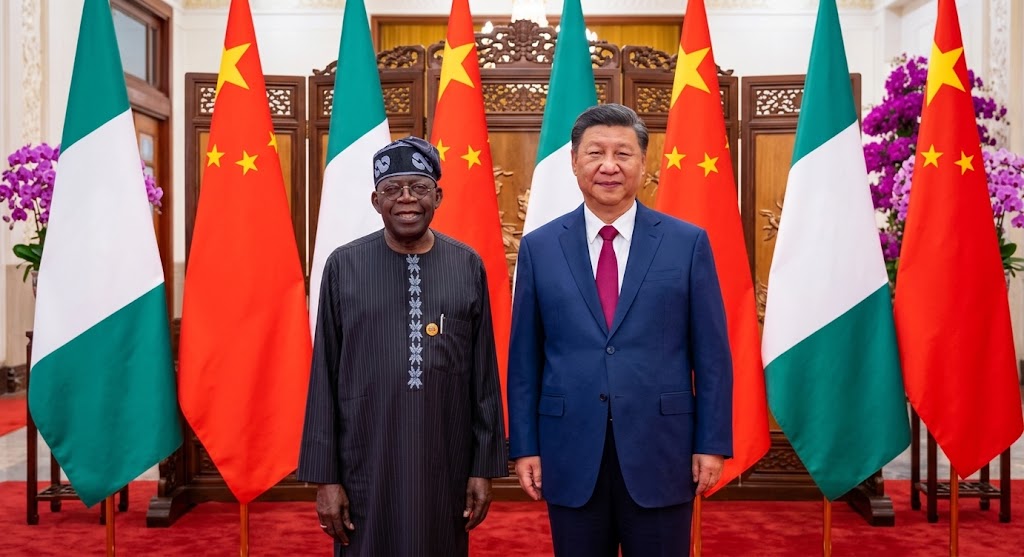
The latest grant, valued at approximately $29 million, is expected to support Nigeria’s economic growth and finance development projects jointly agreed upon by the two governments.
Chinese Ambassador to Nigeria Yu Dunhai announced the funding during a meeting with officials from Nigeria’s Ministry of Foreign Affairs. The financial assistance forms part of the broader cooperation framework established following the 2024 Forum on China-Africa Cooperation.
The grant comes alongside an estimated $24.6 billion construction commitment linked to the Ogidigben Gas Revolution Industrial Park in Delta State. The agreement reportedly made Nigeria the largest single beneficiary of China’s Belt and Road Initiative in 2025.
The Ogidigben project, commonly known as GRIP, is intended to help Nigeria derive greater economic value from its abundant natural gas resources. Plans for the industrial park include facilities capable of producing fertilizer, methanol, petrochemicals and other processed products.
If fully implemented, the development could support industrialisation, create employment opportunities and reduce Nigeria’s dependence on exporting unprocessed natural resources. It could also strengthen the country’s position as a major regional centre for gas-based manufacturing.
The latest financial commitments reflect the expansion of relations between Abuja and Beijing. Nigeria and China have maintained diplomatic ties for 55 years, with their relationship recently elevated to a Comprehensive Strategic Partnership.
Chinese direct investment in Nigeria reportedly reached $690 million in 2025, representing a 103% increase over the previous year. However, investment flows have not remained consistent.
Figures from Nigeria’s National Bureau of Statistics showed that actual Chinese capital inflows fell by nearly 41% in the first quarter of 2026 compared with the corresponding period a year earlier.
Despite the decline, China continues to combine large infrastructure projects, direct financial assistance and high-level diplomatic engagement to maintain its presence in Nigeria.
For Abuja, the partnership offers potential access to funding, technology and infrastructure needed to stimulate industrial development. However, the long-term benefits will depend on whether the announced projects are implemented successfully and deliver sustainable employment, local participation and measurable economic returns.
Source: Omanghana