Omanghana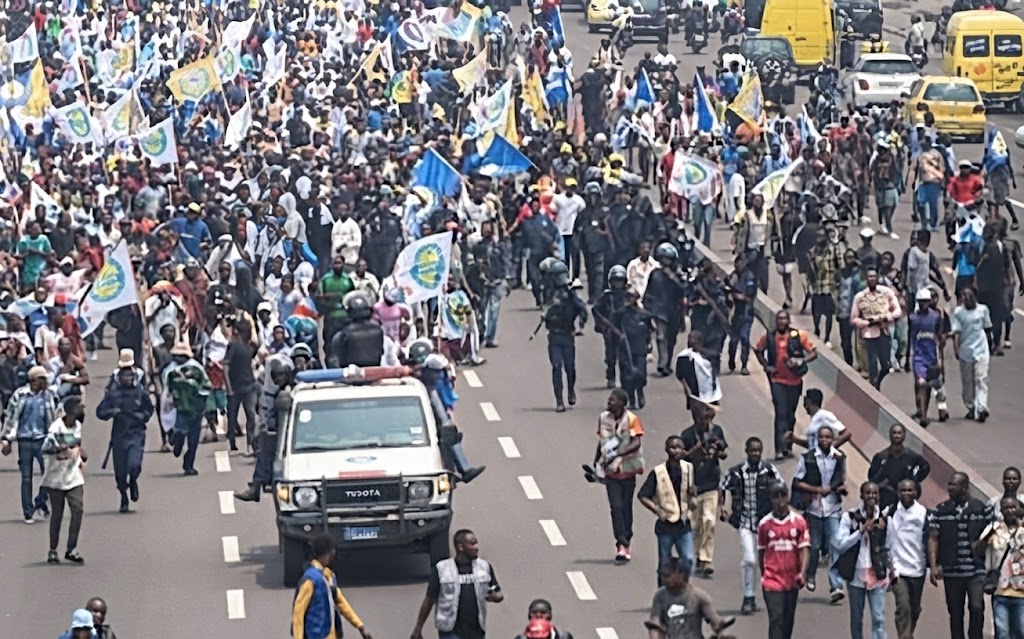
Political tensions have intensified across the Democratic Republic of Congo after security forces dispersed demonstrations opposing proposed changes to the country’s constitution.
The nationwide protests were organised by Coalition Article 64, commonly known as C64, an opposition alliance involving figures such as Martin Fayulu, Moïse Katumbi, Jean-Marc Kabund and Delly Sesanga.
Demonstrators gathered in the capital, Kinshasa, and other cities, including Lubumbashi and Kindu, to protest proposals they fear could allow President Félix Tshisekedi to remain in office beyond his current second term.
In Kinshasa, confrontations reportedly broke out between opposition demonstrators and pro-government activists before police fired tear gas and warning shots to disperse the crowds. Security forces also broke up demonstrations in other parts of the country, where some local authorities had restricted public gatherings.
C64 argues that the proposed constitutional process could weaken safeguards limiting presidents to two terms. The coalition has described the initiative as a threat to constitutional order and called on lawmakers to reject any measure that could create a path to a third term for Tshisekedi.
The government, however, has accused opposition groups of spreading misinformation and disrupting public activities. Supporters of constitutional reform maintain that parts of the existing legal framework should be reviewed to address the country’s political and institutional challenges.
President Tshisekedi, who has governed the DRC since 2019, is serving his second term. He has indicated that he could consider contesting again if constitutional changes allowing it were approved by voters through a referendum.
The demonstrations are unfolding as the country confronts several challenges, including armed conflict involving M23 rebels in the east, economic pressures and a public health crisis linked to an Ebola outbreak.
The unrest has raised concerns about the risk of further political violence as the constitutional debate progresses through Parliament. Opposition groups have vowed to continue mobilizing, while the authorities insist that demonstrations must comply with public-order and health restrictions.
Source: Omanghana