Omanghana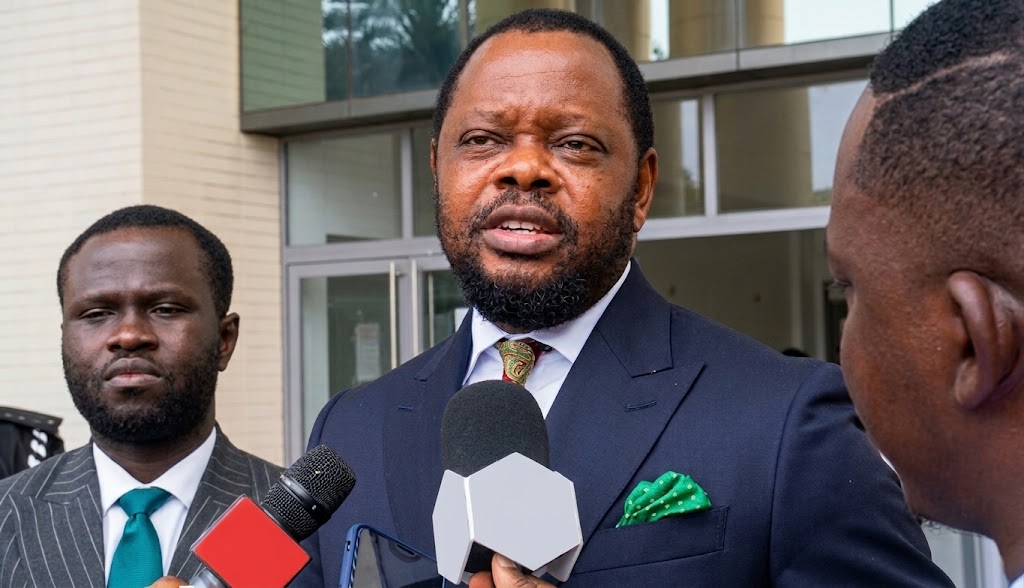
Deputy Attorney General Dr. Justice Srem-Sai has cautioned the government against rushing to terminate Ghana’s power agreement with Turkish energy company AKSA following the conviction of a former Goldman Sachs banker in the United States over bribery connected to the transaction.
Speaking in an interview with JoyNews, Dr. Srem-Sai acknowledged the public anger generated by the case but said outrage alone could not provide a sufficient legal basis for cancelling a commercial agreement.
He warned that improperly terminating the contract could expose Ghana to international arbitration or a substantial judgment debt.
“The law doesn’t work that way,” Dr. Srem-Sai said, stressing that the government must carefully assess the evidence and contractual provisions before taking any action.
His comments follow renewed calls for Ghana to cancel the AKSA agreement after the former banker was convicted in the United States for his involvement in paying bribes connected to the power deal.
The conviction has raised serious questions about how the agreement was negotiated, approved and awarded. It has also intensified demands for accountability and a broader investigation into all individuals and institutions associated with the transaction.
Dr. Srem-Sai, however, explained that the conviction of an individual connected to the deal does not automatically render the entire contract legally invalid.
A central issue in the government’s assessment will be the legal distinction between bribery and fraud.
According to the Deputy Attorney General, bribery and fraud are separate concepts under the law, even though both may involve serious criminal conduct.
“Bribery is not actually fraud,” he stated, explaining that evidence of a bribe does not, by itself, establish that the commercial agreement was fraudulently procured.
For the contract to be invalidated on the basis of fraud, investigators would need to establish a direct connection between the unlawful conduct and the formation or approval of the agreement.
The government may have to prove that false representations, deliberate deception or other fraudulent actions influenced the state’s decision to enter into the contract.
Investigators may also need to determine whether AKSA knew about, authorised or benefited from any unlawful payments made during the procurement process.
The legal position could be different if the bribery was carried out by an individual acting independently without the knowledge of the contracting company. In such circumstances, cancelling the agreement without further proof could become difficult to defend.
The specific terms of the contract will also be crucial. Government lawyers are expected to examine any anti-corruption clauses, termination provisions, warranties and dispute-resolution arrangements contained in the agreement.
Some international commercial contracts allow termination when corruption is proven, while others require evidence directly linking the company or its authorised representatives to the misconduct.
Dr. Srem-Sai said the government would therefore conduct a comprehensive legal review of the AKSA agreement rather than respond immediately to public demands for cancellation.
The review will assess the evidence arising from the US proceedings and determine whether the findings provide valid legal grounds for challenging or terminating the contract in Ghana.
Government lawyers are also expected to study the judgment, witness testimony, financial records and other material presented during the American prosecution.
Any evidence obtained through cooperation with US authorities could help Ghana determine whether the bribery affected the contract itself and whether additional individuals or entities should face investigation.
The review may also consider whether the agreement remains in Ghana’s economic interest and whether any renegotiation, suspension or other corrective measure is legally available.
Dr. Srem-Sai’s warning reflects Ghana’s previous experience with costly judgment debts arising from the termination of contracts without adequate legal justification.
When the state cancels an agreement in breach of its obligations, the affected company may seek compensation through the courts or international arbitration. Such claims can include unpaid amounts, lost profits, interest and legal costs.
A judgment against Ghana could therefore leave taxpayers responsible for substantial financial liabilities, even if the cancellation was initially supported by public opinion.
The Deputy Attorney General maintained that the government must balance the demand for accountability with its duty to protect the state from avoidable legal and financial exposure.
The legal review is expected to determine whether the AKSA agreement was merely connected to an individual act of bribery or whether the contract itself was procured through fraudulent or corrupt means.
Until that assessment is completed, Dr. Srem-Sai said any decision to terminate the agreement would be premature and potentially costly for Ghana.
Source: Omanghana