Omanghana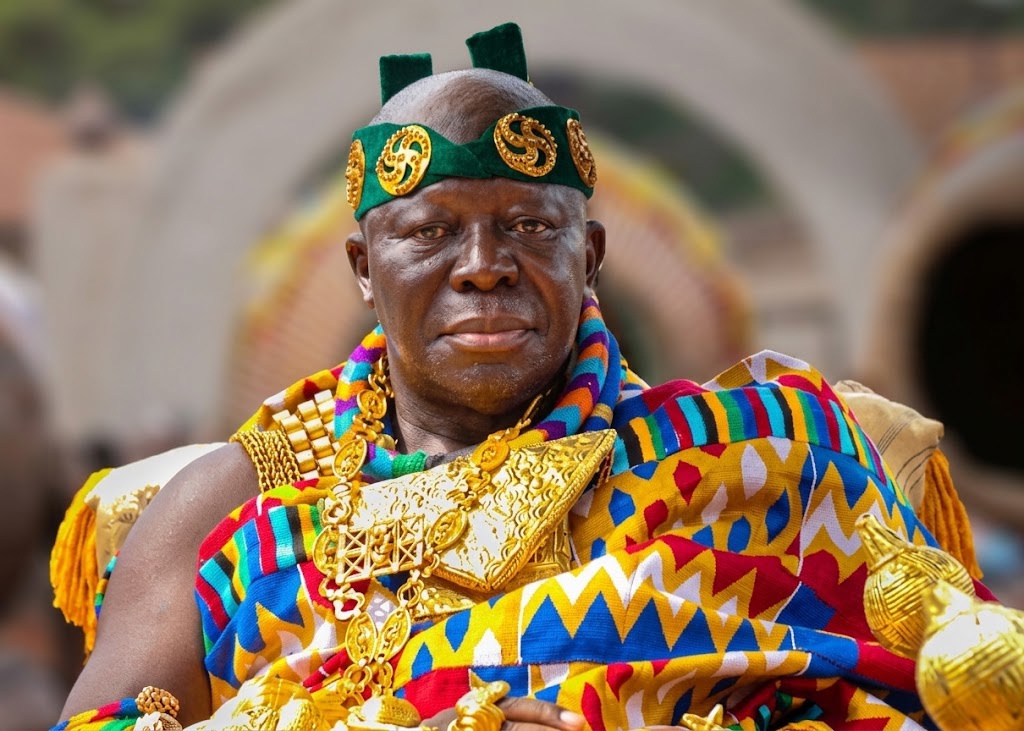
Claims that an Asantehene appointed a man as a paramount chief simply because he considered him handsome are not supported by credible historical records or established Asante customary practice.
Such a claim is likely to be a sensationalized interpretation of an oral tradition, a misleading social-media caption or a clickbait headline that leaves out the cultural and historical context surrounding the installation of chiefs in Asanteman.
The Asantehene does not ordinarily select and install a paramount chief, known as an Omanhene, solely on the basis of personal preference. Chieftaincy in Asanteman follows a structured customary process connected to royal lineage, matrilineal inheritance and the authority of traditional kingmakers.
When a stool becomes vacant, eligible candidates must generally come from the recognized royal family, or Abusua, associated with that particular traditional area. A person who does not belong to the appropriate lineage cannot ordinarily claim the stool simply because the Asantehene or another influential person favors him.
The Queen Mother, known as the Ohemaa, plays a central role in choosing a successor. Under Asante custom, she nominates an eligible royal after consulting relevant family members and considering the candidate’s character, leadership ability and suitability for office.
The nominee is then presented to the traditional kingmakers. These elders examine the candidate and determine whether he meets the customary requirements for the stool. They may accept or reject the nomination depending on the circumstances.
Following a valid nomination, election and enstoolment by the appropriate traditional authorities, the new chief is presented to the Asantehene at the Manhyia Palace. He then swears an oath of allegiance and assumes his responsibilities within the wider Asante traditional system.
The Asantehene’s role is highly significant because he provides recognition and legitimacy within Asanteman. However, the established process does not permit the King to disregard the Queen Mother, royal family and kingmakers merely to appoint someone based on physical appearance.
The misunderstanding may be connected to oral traditions surrounding Osei Kofi Tutu I, the founder and first Asantehene, who ruled during the early 18th century.
According to some accounts preserved through oral history, Osei Tutu was known as a handsome and charismatic young man. Before becoming Asantehene, he reportedly spent time at the Denkyira royal court.
One popular version of the story claims that his appearance attracted the attention of a female member of the Denkyira royal family and led to a controversial relationship. Fearing punishment, Osei Tutu reportedly left Denkyira and sought refuge in Akwamu.
At the Akwamu court, he was said to have been warmly received by King Ansa Sasraku. Some narratives suggest that Osei Tutu’s appearance, personality and charisma contributed to the favorable reception he received.
That account, however, does not mean Osei Tutu became a chief or king merely because he was handsome. He belonged to the appropriate royal lineage and had a legitimate claim to the Kwaaman, later Kumasi, stool.
His political leadership, alliance-building abilities and partnership with the renowned priest Okomfo Anokye were central to the creation of the Asante union.
Asante tradition holds that Okomfo Anokye commanded the Golden Stool from the heavens. The stool became the sacred embodiment of the soul, identity and unity of the Asante nation, with Osei Tutu recognized as the first Asantehene.
Physical attractiveness may have featured in stories about Osei Tutu’s personality and early life, but it was not the customary or constitutional basis for his elevation.
The claim that the Asantehene made someone a paramount chief simply because he was handsome therefore confuses personal descriptions in oral tradition with the formal requirements of Asante chieftaincy.
Any modern claim involving the installation of a chief should be assessed by examining the candidate’s royal lineage, the Queen Mother’s nomination, the decision of the kingmakers and the final customary recognition granted within Asanteman—not an isolated statement about physical appearance.
Source: Omanghana