Omanghana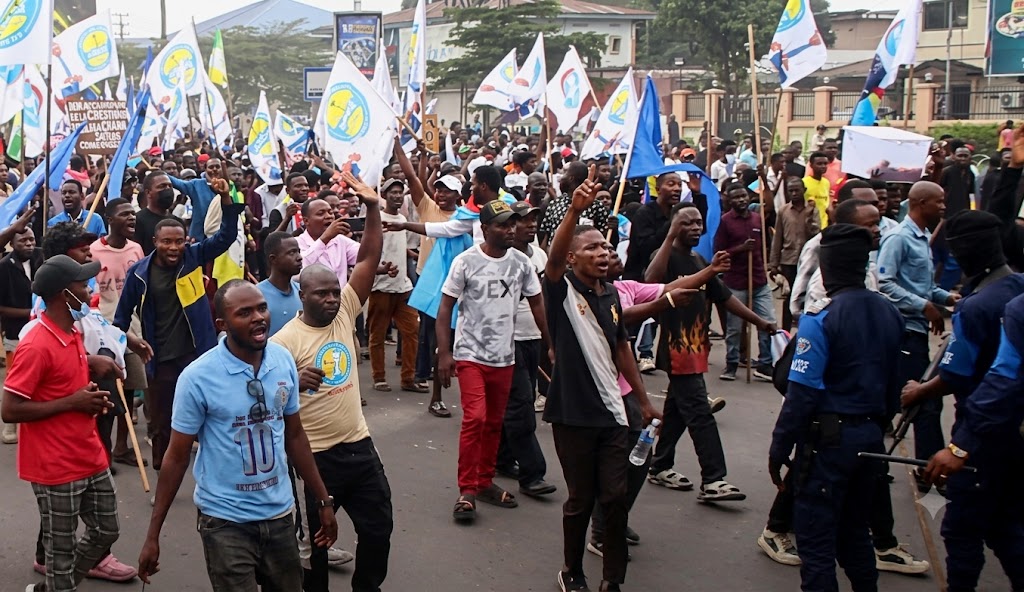
The Constitutional Court of the Democratic Republic of Congo has upheld a controversial referendum law that could create a pathway for major constitutional changes, intensifying political tensions over President Félix Tshisekedi’s future.
The court ruled that the legislation was broadly consistent with the country’s Constitution, although judges ordered changes to some of its provisions. The National Assembly and Senate adopted the bill in June 2026 following heated debates and an opposition boycott.
The law establishes the procedures through which national referendums may be organized. Its supporters describe it as a necessary legal framework for allowing Congolese citizens to decide important constitutional questions directly.
Opposition parties and civil-society groups, however, fear it could ultimately be used to remove presidential term limits and allow Tshisekedi to remain in power beyond 2028.
One of the law’s most contested provisions permits constitutional restructuring when a “major dysfunction” paralyses state institutions. Under that mechanism, the president could initiate a reform process involving a constituent assembly before submitting the proposed changes to a public referendum.
The Constitutional Court approved the general framework but rejected a provision that would have allowed the president to call a referendum on any issue considered to be of “fundamental importance.”
Judges reportedly found the wording too broad and ruled that referendums must be limited to circumstances recognized by the Constitution, including proposed constitutional changes, the transfer of national territory or the relocation of the country’s capital.
The ruling also expands participation in future referendums to Congolese citizens living abroad. Eligible members of the diaspora would be permitted to register and vote through arrangements established by the country’s electoral authorities.
Supporters of the legislation argue that the DRC’s 2006 Constitution no longer adequately responds to the country’s political, security and economic realities.
Some government supporters in Kinshasa maintain that constitutional reform is needed to strengthen national institutions, protect the country’s natural resources and ensure that mineral wealth delivers greater benefits to Congolese communities.
They also argue that the existing constitutional system was developed during a fragile post-war transition and should be reviewed to reflect present-day challenges.
The opposition rejects those arguments, describing the referendum initiative as a “constitutional coup d’état” intended to prolong Tshisekedi’s presidency.
Under the current Constitution, a president is limited to two five-year terms. Tshisekedi first assumed office in January 2019 and began his second term in 2024, meaning his presidency is due to end in 2028.
Critics fear that the government could use the referendum process to replace the current Constitution with an entirely new document. They argue that such a move could reset the calculation of presidential terms, allowing Tshisekedi to present himself as a first-term candidate under a new constitutional order.
The government has not formally announced a referendum date, and the approval of the law does not itself remove presidential term limits. However, it creates the legal procedures needed to organize a future public vote.
Tshisekedi has said he has not personally demanded a third term but would accept another mandate if Congolese citizens explicitly supported it through a referendum.
His comments have done little to calm opposition concerns. Thousands of people demonstrated in Goma and Bukavu on July 28 against any attempt to extend the president’s rule, highlighting growing resistance beyond Kinshasa.
The constitutional dispute is unfolding as the DRC confronts several national emergencies, including an Ebola outbreak and continuing conflict involving the Rwanda-backed M23 rebel group in the eastern provinces.
Political analysts warn that a prolonged confrontation over presidential term limits could trigger wider demonstrations and distract the government from urgent security and humanitarian challenges.
For now, the Constitutional Court’s decision clears an important legal hurdle for the referendum framework. The next stage will depend on whether Tshisekedi’s administration proceeds with a specific constitutional proposal and whether it can persuade a deeply divided population to support it.
Source: Omanghana