Omanghana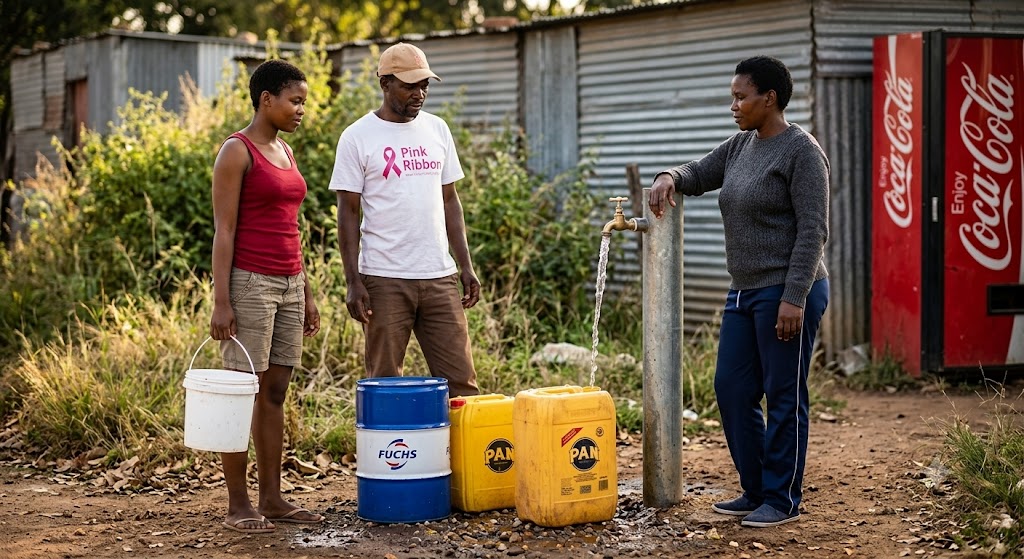
The future of global water security depends not only on technological innovation and infrastructure investment but also on empowering women to lead the management, protection, and distribution of one of the world’s most vital resources.
Across many parts of the world, women and girls shoulder the greatest burden of water scarcity. As the primary collectors and users of household water in countless communities, they possess firsthand knowledge of the challenges surrounding access, quality, and sustainability. Increasingly, governments, development organizations, and researchers are recognizing that placing women at the center of water governance leads to more effective, resilient, and equitable water systems.
Women Bear the Greatest Burden of Water Scarcity
In many regions affected by water shortages, securing water for daily use remains the responsibility of women and girls.
Globally, they spend an estimated 200 million hours every day collecting water for their households. Long journeys to distant water sources consume valuable time that could otherwise be spent on education, employment, or income-generating activities.
For millions of girls, the responsibility of fetching water directly affects school attendance, limiting educational opportunities and contributing to cycles of poverty that can persist across generations.
The physical demands are equally significant. Carrying heavy containers over long distances often results in chronic back, neck, and joint injuries. Limited access to clean and safe water also poses serious health risks for women, particularly during pregnancy and childbirth, when adequate sanitation and hygiene are essential.
Women’s Leadership Strengthens Water Systems
Evidence increasingly shows that involving women in water governance produces stronger and more sustainable outcomes.
When women transition from being water collectors to decision-makers, they help design systems that better reflect the daily needs of households and communities. Their experience managing water for cooking, cleaning, farming, sanitation, and family health enables them to identify practical solutions that improve efficiency and accessibility.
Studies by the United Nations have found that community water projects can be up to 70 percent more sustainable when women play active roles in planning, management, and maintenance. Their participation often leads to improved oversight, stronger community ownership, and better long-term operation of water infrastructure.
Women’s leadership has also been linked to greater financial accountability. Community water committees led by women frequently demonstrate stronger revenue collection, more transparent financial management, and more consistent funding for maintenance and repairs.
Leading Innovation in Water and Climate Solutions
Women’s contributions extend far beyond local water systems.
In agriculture, women account for nearly half of the workforce in many developing countries. Expanding access to training in water-efficient farming techniques enables them to improve food production while protecting increasingly scarce groundwater resources.
Women are also playing influential roles in shaping national and international water policies. Female ministers, diplomats, and negotiators have helped advance cooperation on the management of shared rivers and water basins, often emphasizing dialogue, collaboration, and sustainable resource management.
Meanwhile, women scientists and engineers continue to drive innovation in water security by developing new technologies for rainwater harvesting, wastewater recycling, drought-resistant sanitation systems, and climate-resilient water infrastructure.
Building a More Water-Secure Future
As climate change, population growth, and urbanization place growing pressure on global freshwater supplies, experts argue that inclusive leadership will be essential to meeting future water challenges.
Empowering women through education, leadership opportunities, access to finance, and participation in decision-making not only promotes gender equality but also strengthens communities’ ability to manage water resources sustainably.
By recognizing women as leaders, innovators, and partners in water governance, countries can build more resilient water systems that improve public health, support economic development, and help secure reliable access to clean water for future generations.
Source: Omanghana