Omanghana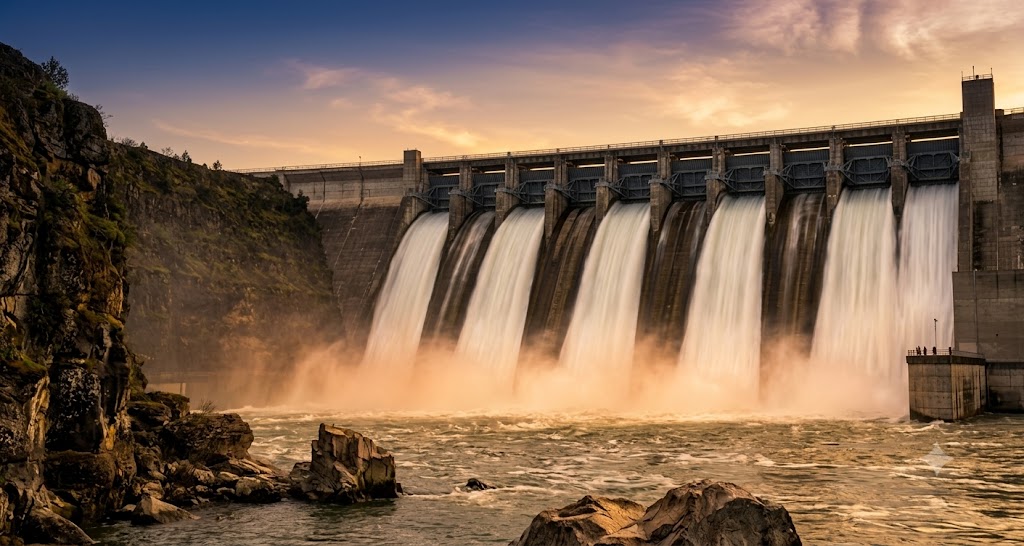
An environmental scientist has called on the Government of Ghana to pursue compensation from Burkina Faso over the recurring destruction caused by the annual spillage of the Bagre Dam, arguing that decades of seasonal flooding have inflicted enormous economic and social costs on communities across northern Ghana.
The appeal was made by Dr. Raymond Aitibasa Atanga of the University of Technology and Applied Sciences during a regional forum in Bolgatanga, where policymakers, environmental experts, and development stakeholders gathered to discuss sustainable solutions to the persistent flooding crisis.
According to Dr. Atanga, the yearly flooding can no longer be addressed through emergency relief and temporary interventions, insisting that a long-term strategy backed by legal, diplomatic, and infrastructure measures is urgently needed.
Call for Legal Redress
Dr. Atanga argued that Ghana has a legitimate basis to seek legal redress under the framework of the Volta Basin Authority (VBA), which promotes the equitable, sustainable, and cooperative management of shared transboundary water resources among member states.
He noted that while the controlled release of water from Burkina Faso’s Bagre Dam is intended to protect the dam’s structural integrity, the downstream impact on Ghanaian communities has become increasingly severe.
According to him, the repeated destruction of lives, livelihoods, and public infrastructure raises important questions about shared responsibility and accountability between countries that depend on the Volta River Basin.
He urged the government to explore all available legal and diplomatic avenues to ensure that affected communities receive adequate support and compensation for the losses they continue to endure.
Annual Floods Leave Communities Devastated
Communities in the Upper East, North East, Savannah, Northern, and other downstream regions have for years borne the brunt of the Bagre Dam spillages.
The seasonal floods frequently wash away homes, destroy schools and health facilities, damage roads and bridges, and submerge thousands of hectares of farmland.
Livestock losses are also common, leaving many farming families without their primary source of income and forcing some residents to abandon their communities.
Dr. Atanga observed that the recurring disasters have trapped many rural households in a cycle of poverty, as they struggle to recover from one flooding season before another begins.
Strengthening Cross-Border Cooperation
While acknowledging the importance of existing cooperation between Ghana and Burkina Faso, the environmental scientist called for stronger accountability mechanisms to address the recurring impacts of the dam spillages.
He proposed that Ghana establish more structured partnerships not only with Burkina Faso’s central government but also with authorities in the country’s Center-East Region, where the Bagre Dam is located.
Such collaborations, he argued, should go beyond routine notifications before water releases and instead include clear agreements on disaster preparedness, compensation mechanisms, joint monitoring, and coordinated flood management.
Shift from Disaster Response to Flood Management
Dr. Atanga emphasized that Ghana must move beyond reacting to annual flooding and instead invest in infrastructure that transforms the excess water into an economic resource.
He identified the long-proposed Pwalugu Multi-Purpose Dam as one of the country’s most critical flood mitigation projects.
According to him, completing the project would enable Ghana to capture and regulate excess water released from the Bagre Dam, significantly reducing downstream flooding while generating additional benefits such as hydroelectric power, irrigation, and water storage.
Unlocking Agricultural Potential
Environmental and policy experts at the forum also stressed that effective flood-control infrastructure could transform northern Ghana’s agricultural sector.
Rather than allowing excess water to destroy crops each year, they proposed the construction of permanent flood-control dikes, irrigation canals, and spillway diversion systems that could channel the water into reservoirs for dry-season farming.
Such investments, they argued, would improve food security, boost agricultural productivity, create employment opportunities, and strengthen the resilience of farming communities against climate-related disasters.
Call for a Comprehensive National Strategy
Participants at the forum urged the government to adopt a comprehensive approach that combines diplomacy, legal engagement, infrastructure investment, climate adaptation, and regional cooperation to address the long-standing challenges associated with the Bagre Dam.
They maintained that while emergency relief remains important, lasting solutions will require proactive planning and strategic investments that protect vulnerable communities while unlocking the economic potential of the Volta Basin.
With climate change expected to increase the frequency and intensity of extreme weather events, experts believe Ghana must accelerate efforts to build resilient infrastructure and strengthen cross-border collaboration to safeguard lives, property, and livelihoods in the years ahead.
Source: Omanghana