Omanghana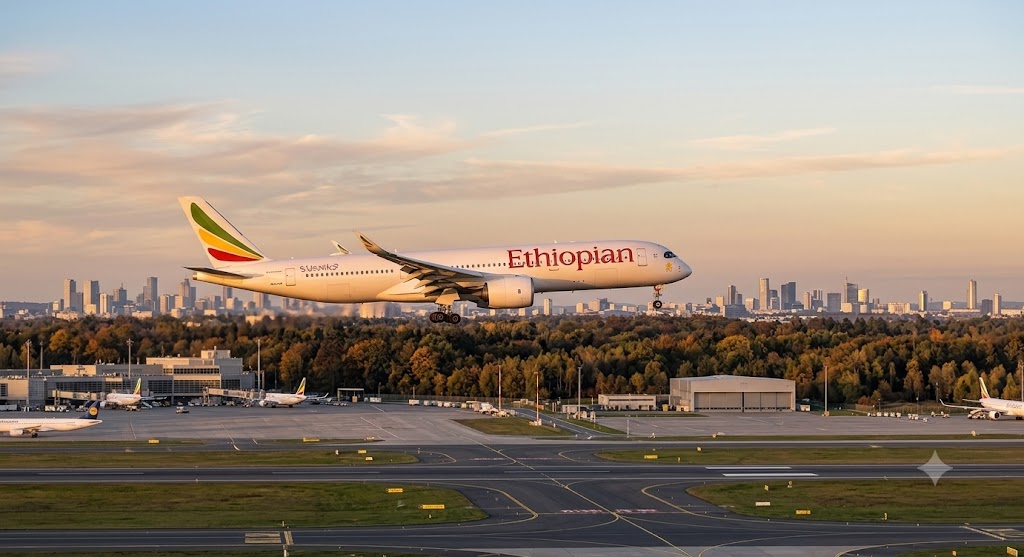
Ethiopian Airlines Group generated a record $9.1 billion in revenue during its 2025/2026 financial year, strengthening its position as Africa’s largest and fastest-growing aviation group.
Group Chief Executive Officer Mesfin Tasew announced the financial results on July 29, 2026, revealing that annual revenue increased by 20% compared with the previous financial year.
The state-owned carrier achieved the milestone despite serious operational disruptions, including flight cancellations linked to conflict in the Middle East and travel concerns associated with an Ebola outbreak in the Democratic Republic of Congo.
Passenger and cargo operations played significant roles in the airline’s financial growth. Ethiopian Airlines transported 20.7 million passengers during the reporting period, representing another year of strong traffic expansion across its domestic and international networks.
The airline’s cargo division also recorded substantial growth, transporting approximately 897,000 metric tonnes of freight. Cargo volume increased by 16%, supported by sustained demand for the movement of agricultural products, pharmaceuticals, manufactured goods and e-commerce shipments.
Ethiopian Airlines continued expanding its fleet during the year, adding nine aircraft and taking the number of planes in operation beyond 150. The additions are intended to support new routes, improve flight frequencies and replace older aircraft with more fuel-efficient models.
The carrier has also converted options for six Boeing 787 Dreamliners into firm orders. The 787-9 aircraft will be deployed on long-distance routes while providing additional freight capacity for the airline’s growing cargo business.
Management is also preparing to select a supplier for an order of about 25 smaller commercial aircraft. Those planes are expected to support domestic and short-haul regional services as Ethiopian Airlines expands connectivity within Ethiopia and across neighboring markets.
The investments form part of the carrier’s Vision 2035 strategy, under which it plans to serve 212 destinations and significantly increase its passenger, cargo, maintenance and aviation-training operations.
Facility improvements have also been completed at Addis Ababa Bole International Airport, Ethiopian Airlines’ principal operating hub. However, the airport is approaching its capacity limits as passenger traffic continues to increase.
To address those constraints, Ethiopian Airlines is developing a new international airport near Bishoftu, approximately 45 kilometers southeast of Addis Ababa.
The Bishoftu International Airport project is now estimated to cost about $12.5 billion following an expansion of its original design. Initial earthworks have already started, with the principal construction phase expected to accelerate in 2026.
Plans for the airport include four runways, parking facilities for approximately 270 aircraft and an eventual capacity of up to 110 million passengers annually. It is scheduled for completion around 2030 and is expected to become Africa’s largest airport.
The African Development Bank has pledged financial support for the project and is helping mobilize funding from international lenders. Ethiopian Airlines will finance part of the development, while the remaining cost is expected to be covered through external financing.
The project is central to Ethiopia’s ambition of becoming one of the world’s leading aviation and logistics hubs. Once operational, the Bishoftu airport is expected to relieve congestion at Bole International Airport and provide Ethiopian Airlines with the capacity required to pursue its long-term expansion targets.
Source: Omanghana