Omanghana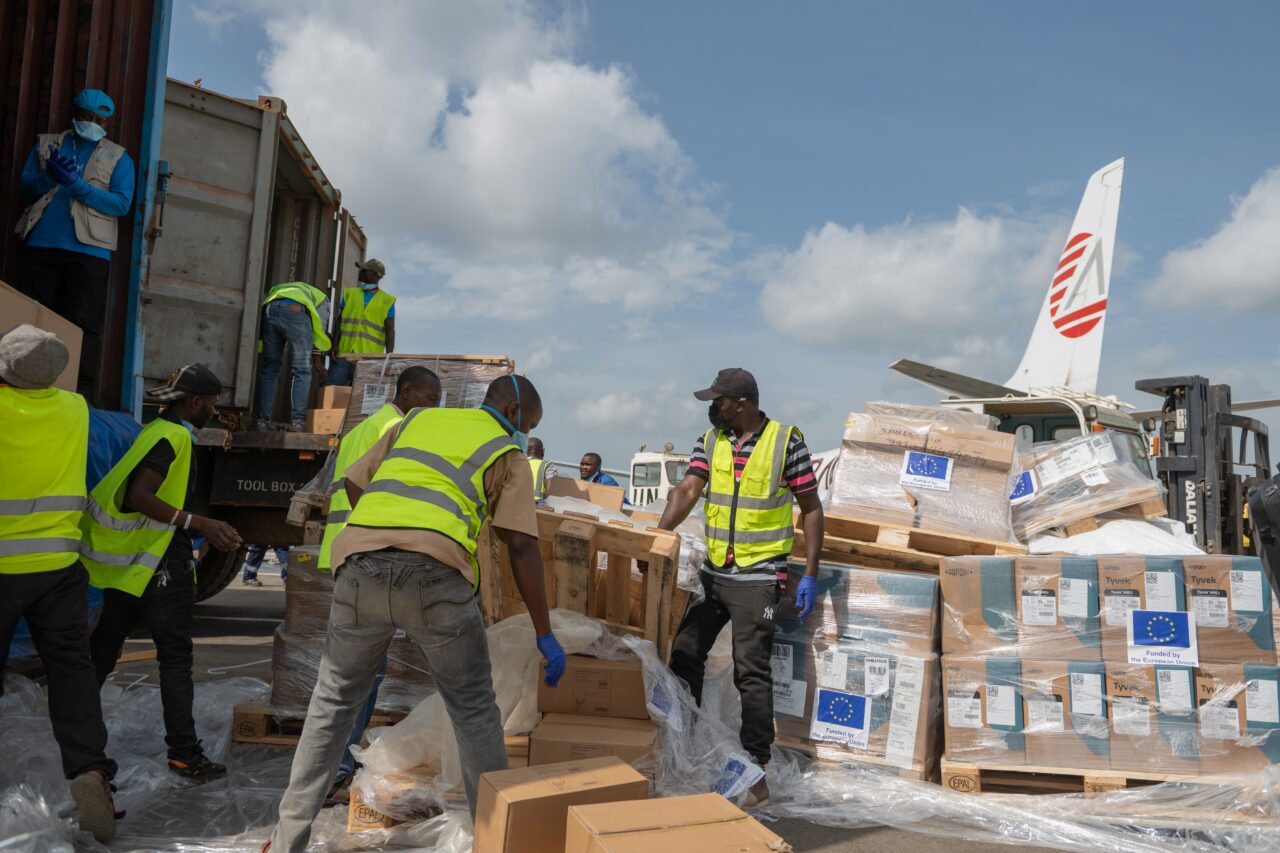
The European Union and UNICEF have launched a major humanitarian air bridge operation to support the response to the growing Ebola outbreak in eastern Democratic Republic of the Congo (DRC), delivering more than 100 metric tonnes of critical medical supplies to affected communities.
Specialized cargo flights arriving from logistics hubs in Nairobi, Kenya, and Liège, Belgium, have transported urgently needed equipment into the heart of the epidemic zone, where health authorities are racing to contain the spread of the rare Bundibugyo strain of the Ebola virus.
Emergency Airlift Targets Hard-to-Reach Areas
The humanitarian operation was designed to overcome significant logistical challenges caused by insecurity and transportation disruptions in eastern DRC.
The shipments included a wide range of essential emergency supplies, such as:
- Personal protective equipment (PPE) for healthcare workers
- Isolation and treatment tents
- Water purification and sanitation equipment
- Infection prevention and control materials
- Critical medical supplies for outbreak response
The aid was mobilized from international emergency stockpiles in Copenhagen and transported to frontline response zones in Ituri Province, including Bunia, Ramparat, and Mongbwalu.
Humanitarian agencies estimate that the operation will help protect healthcare personnel and support nearly 100,000 people considered at high risk from the outbreak.
Additional Emergency Funding Announced
Alongside the airlift operation, international partners have increased financial support for response efforts.
The European Commission announced an additional €5 million in humanitarian funding to strengthen emergency operations, while UNICEF allocated more than $6.5 million from its emergency response resources to support healthcare services, disease surveillance, and community protection programs.
The funding is expected to help expand treatment capacity, improve outbreak monitoring, and provide essential services in affected communities.
Ebola Cases Continue to Rise
Health authorities remain concerned about the trajectory of the outbreak, which has expanded rapidly since it was first declared in mid-May 2026.
According to the latest available figures, confirmed and verified cases have continued to increase across affected areas, placing additional pressure on already strained healthcare systems.
The World Health Organization (WHO) has acknowledged that international response efforts are intensifying, but officials warn that containing the outbreak remains a significant challenge.
A major concern is that the outbreak involves the Bundibugyo strain of the Ebola virus, for which there are currently no widely approved vaccines or proven therapeutic treatments. As a result, healthcare providers must rely heavily on early detection, isolation, supportive care, infection-control measures, and contact tracing to reduce transmission and improve patient outcomes.
Conflict Complicates Response Efforts
Humanitarian and health organizations face significant obstacles in carrying out containment operations across northeastern DRC.
Ongoing armed conflict and insecurity continue to limit access to affected communities, disrupt supply routes, and complicate efforts to identify and monitor potential cases.
According to humanitarian reports, violence in parts of Ituri Province has resulted in substantial civilian casualties in recent months, creating additional risks for healthcare workers, contact-tracing teams, and emergency response personnel.
The unstable security environment has also made it more difficult to conduct safe burials, community outreach campaigns, and disease surveillance activities that are critical to controlling Ebola outbreaks.
International Precautionary Measures
As concerns grow over the potential regional spread of the virus, several countries have implemented additional public health precautions.
Authorities are closely monitoring travel patterns and strengthening screening measures to reduce the risk of cross-border transmission while supporting international efforts to contain the outbreak at its source.
Public health experts continue to emphasize that rapid response, community engagement, adequate funding, and sustained international cooperation will be essential to preventing further spread of the disease.
Race Against Time
With case numbers continuing to climb and no approved vaccine currently available for the Bundibugyo strain, health officials describe the coming weeks as critical.
The arrival of more than 100 tonnes of emergency supplies provides a significant boost to frontline operations, but humanitarian agencies warn that sustained international support will be needed to help eastern DRC contain the outbreak and protect vulnerable communities from a wider health crisis.
Source: Omanghana