Omanghana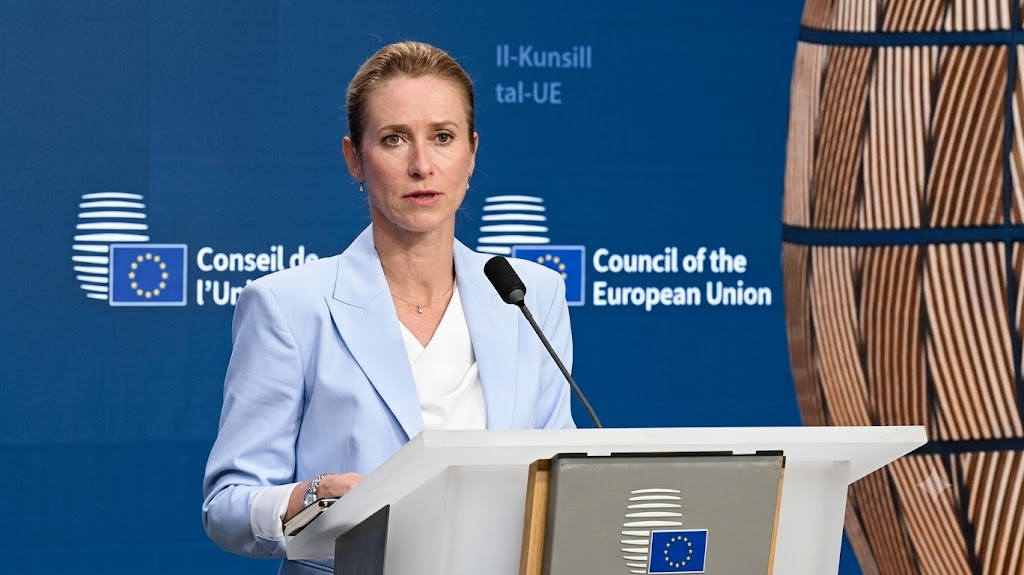
A proposal to impose a complete trade ban on goods originating from Israeli settlements in occupied Palestinian territories has emerged as the most widely supported option among European Union member states, according to EU Foreign Policy Chief Kaja Kallas.
Following a meeting of EU foreign ministers in Brussels on July 13, 2026, Kallas said all 27 EU countries agree that the settlements are illegal under international law, but member states remain divided over the appropriate response.
The discussions follow a confidential options paper prepared by the European Commission in response to worsening security conditions in the occupied West Bank and increasing reports of settler violence.
Three Measures Considered by the European Commission
EU officials reviewed three possible approaches aimed at restricting economic activity linked to Israeli settlements:
Stricter Import Licensing Rules
The first option would introduce tighter monitoring systems requiring businesses to provide detailed documentation proving the origin of imported goods.
The measure would expand tracking requirements and create stronger oversight of products entering the European market.
Higher Tariffs on Settlement Products
The second proposal would impose additional tariffs on goods produced in settlements, increasing costs and potentially making those products less competitive within EU markets.
Complete Trade Ban
The third and most far-reaching option would prohibit all imports originating from Israeli settlements considered illegal under international law.
According to Kallas, this option received the strongest support during discussions among EU foreign ministers.
Legal and Political Divisions Within the EU
Despite gaining broad support, a full trade ban faces significant political and legal challenges within the European Union.
European Commission President Ursula von der Leyen has argued that such a measure would require unanimous approval from all 27 member states, a difficult threshold given divisions among EU governments.
Countries including Spain, Ireland, and Belgium have supported stronger sanctions, while nations such as Germany and Italy have expressed greater caution over punitive measures.
Debate Over Voting Requirements
Kallas challenged the view that unanimity would be necessary, pointing to an official legal opinion from the Council of the European Union’s legal services.
According to that interpretation, the EU could potentially approve a settlement trade ban through a qualified majority vote, requiring support from at least 15 member states representing 65% of the bloc’s population.
The disagreement over voting procedures could become a key factor in determining whether the proposal moves forward.
Current Policy Has Limited Impact
The EU currently follows a “differentiation policy” that seeks to distinguish between products made inside Israel and those produced in settlements.
Under the existing approach, authorities rely partly on postal code systems to identify settlement goods and apply standard tariffs.
However, Kallas said enforcement has been inconsistent across member states, limiting the effectiveness of the policy.
EU Clarifies Focus of Proposed Measures
Kallas stressed that any new restrictions would not represent broader measures against Israel itself, but would specifically target economic activity connected to settlements.
She said the objective is to respond to actions that the EU believes undermine prospects for a future two-state solution between Israelis and Palestinians.
Next Steps for Decision
EU ambassadors have now been tasked with developing the legal framework for a possible trade ban and examining how such measures could be implemented.
Kallas indicated that foreign ministers could hold an additional extraordinary meeting to consider a final decision once the legal and political issues are addressed.
The debate represents one of the most significant discussions within the EU over economic measures linked to Israeli settlements and highlights growing divisions among member states over how to respond to developments in the Middle East.
Source: Omanghana