Omanghana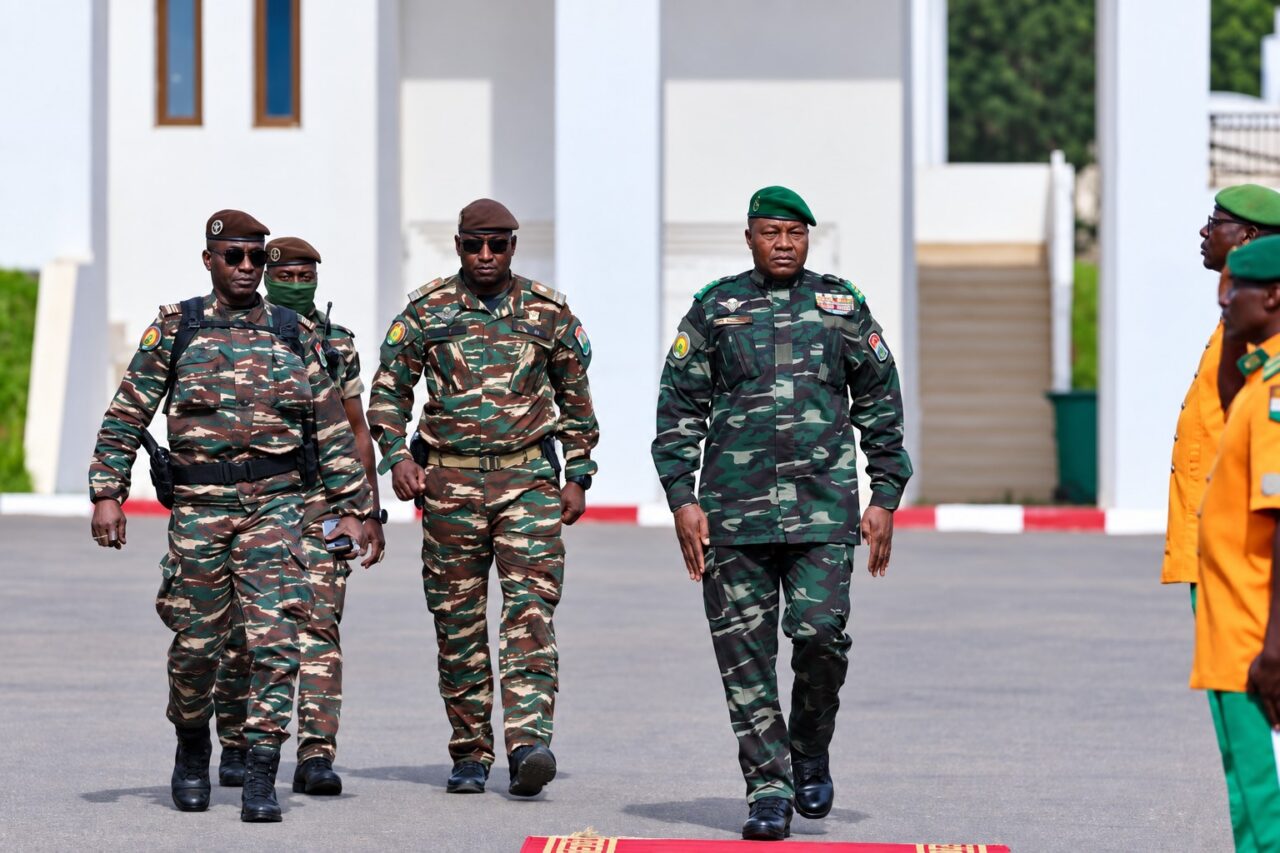
Niger’s military leader, General Abdourahamane Tiani, is facing mounting questions about unity within the armed forces following a violent mutiny that threatened his government in late August 2026.
The unrest unfolded during the night of August 28–29, when mutinous soldiers attacked strategic locations in the capital, Niamey. The fighting was concentrated around Air Base 101 at Diori Hamani International Airport, close to the presidential palace.
Nigerien state television described the incident as an attempted coup, although some security analysts have characterized it as a military revolt driven by anger among frontline troops rather than a fully coordinated plan to seize national power.
The mutineers reportedly included soldiers from special-forces units with experience fighting armed groups in the Tillabéri region. Gunfire and explosions were heard across parts of Niamey as the rebels briefly gained control of the airbase.
Several military formations reportedly hesitated to confront the mutineers, while at least one unit refused orders to participate in the operation to retake the base. The response raised concerns about divided loyalties within an army already under pressure from repeated battlefield losses.
Dozens of soldiers were subsequently killed or arrested. Other suspected participants reportedly escaped before loyalist forces regained control, prompting security operations and further arrests within military units.
Russian personnel attached to the Kremlin-controlled Africa Corps played an important role in helping government forces recapture Air Base 101. According to multiple reports, they provided ground and aerial support during the fighting.
The intervention demonstrated the extent to which Tiani’s administration has become dependent on Russian security assistance since ending military cooperation with France and the United States.
Reports of arrests have since emerged from several military formations, including special-forces units deployed in Tillabéri. Soldiers connected to Niamey’s 1st Parachute Battalion have also reportedly faced questioning as investigators attempt to determine the full scope of the rebellion.
However, Nigerien authorities have not published a complete list of those detained or released detailed evidence establishing the involvement of senior members of the ruling National Council for the Safeguarding of the Homeland.
The government has also reshuffled the military leadership. On September 11, Tiani appointed Brigadier General Mamane Sani Kiaou as chief of staff of the armed forces, replacing Moussa Salaou Barmou, a prominent member of the junta who had held the position since the July 2023 coup.
Kiaou previously played a role in negotiations that led to the withdrawal of French and American troops from Niger. His appointment is widely viewed as an attempt to restore discipline and confidence within the armed forces following the mutiny.
Neighboring Algeria also responded to the crisis after receiving a request for assistance from Nigerien authorities. Algiers deployed four Su-30 fighter aircraft and an aerial-refueling plane to Niamey on August 30. An Il-76 military transport aircraft was also reported as part of the deployment.
The Algerian aircraft did not participate in the fighting because the mutiny had already been defeated by the time they arrived. Their deployment nevertheless represented a significant show of support for Tiani’s government and an unusual foreign military mission for Algeria.
The unrest appears to be connected to growing frustration within Niger’s military over deteriorating security conditions. Tiani seized power from democratically elected President Mohamed Bazoum in July 2023 after accusing the civilian government of failing to contain armed groups linked to al-Qaeda and the Islamic State.
Despite the junta’s promises to improve security, attacks have continued and military units in regions such as Tillabéri have suffered substantial losses. Soldiers have also reportedly complained about inadequate equipment, delayed support and the unequal treatment of units serving on dangerous frontlines.
The attempted overthrow has exposed a widening gap between Niger’s military leadership and some of the troops responsible for fighting the insurgency. It has also shown that the main threat to Tiani’s government may come not only from armed extremist groups but also from dissatisfied sections of his own security forces.
Although calm has returned to Niamey, the arrests, military reshuffle and increased reliance on Russian and Algerian support indicate that the August uprising has left lasting uncertainty within Niger’s ruling establishment.
Source: Omanghana