Omanghana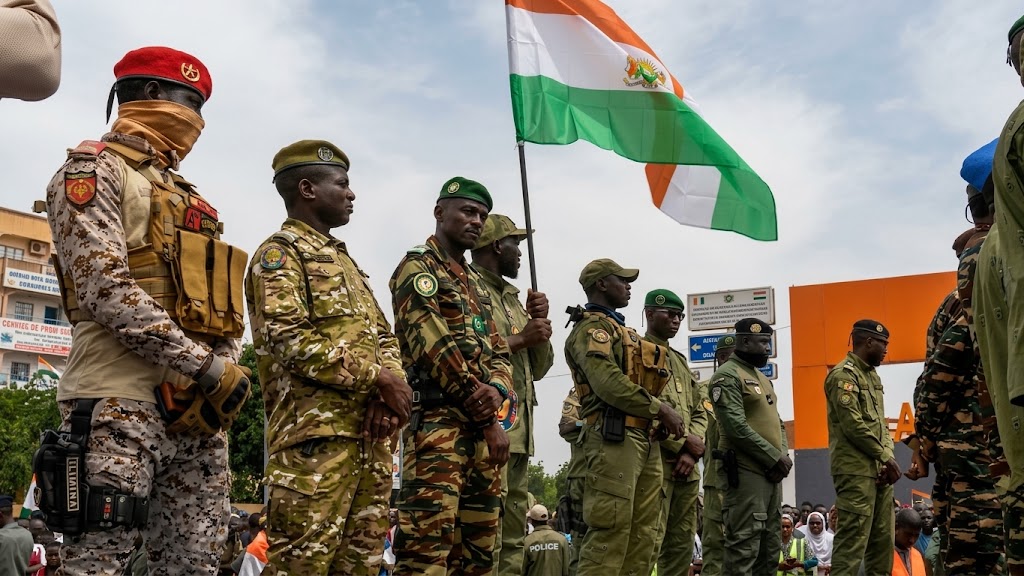
A violent mutiny and attempted coup in Niger’s capital, Niamey, between August 28 and 29, 2026, exposed growing divisions within the military administration led by General Abdourahamane Tiani.
The uprising highlighted discontent among frontline troops, concerns over the government’s handling of the jihadist insurgency and the regime’s increasing dependence on foreign security support.
Soldiers operating under the name Armed Forces for the Restoration of the Fatherland reportedly launched coordinated attacks on several strategic locations across Niamey. The targets included the area surrounding the presidential palace, the state broadcaster and Air Base 101, located near Diori Hamani International Airport.
The rebellion was reportedly driven mainly by junior officers and combat units deployed in Niger’s conflict-affected southwestern regions, including Ouallam, Téra and Dosso.
Troops stationed in these areas have suffered significant casualties during operations against fighters linked to the Islamic State Sahel Province and Jama’at Nusrat al-Islam wal-Muslimin. Continued battlefield losses, combat fatigue and alleged disparities in equipment and resources are believed to have fueled resentment within the armed forces.
Some frontline soldiers reportedly compared their difficult conditions with those of Tiani’s better-equipped Presidential Guard, deepening tensions between combat units and troops considered loyal to the leadership.
Tiani seized power in July 2023 after accusing the civilian administration of failing to contain Niger’s worsening security crisis. The mutineers used a similar argument against his government, condemning what they described as “three years of disastrous governance” as militant violence continued to spread across rural communities.
The uprising was eventually suppressed by loyalist Presidential Guard units with reported operational assistance from Russia’s Africa Corps, which replaced the Wagner Group’s role in the region.
Russian personnel reportedly provided ground and air support during efforts to regain control of Air Base 101. The facility is strategically important because it also serves as an operational center for Russian forces and the joint military command of the Alliance of Sahel States.
Following the suppression of the mutiny, Niger’s military government accused France of supporting “traitorous” elements involved in the rebellion. Paris rejected the allegation and described it as “pure fantasy.”
The incident represents a serious political and security challenge for the Alliance of Sahel States, comprising Niger, Mali and Burkina Faso. The three military-led governments have argued that their regional partnership offers a stronger and more independent security framework following their withdrawal from the Economic Community of West African States and the reduction of cooperation with Western countries.
However, the Niamey uprising has raised questions about cohesion within Niger’s armed forces and the long-term stability of the country’s military government.
It also suggests that one of the most immediate threats to Tiani’s leadership may come not from foreign interference but from dissatisfied soldiers within the country’s own military ranks.
Source: Omanghana