Omanghana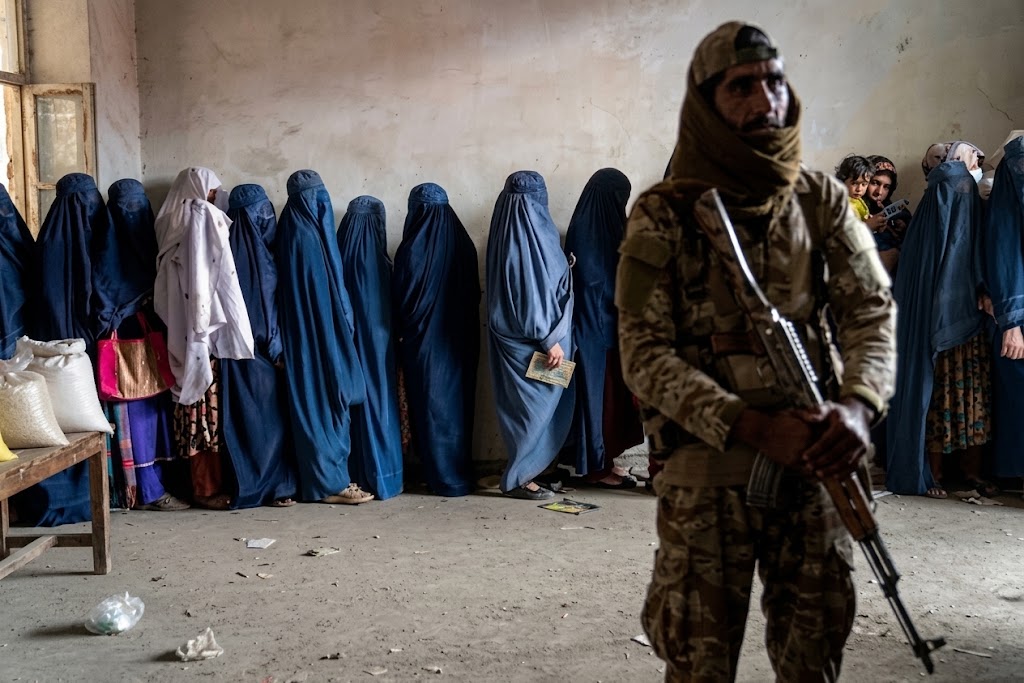
August 2026 marks five years since the Taliban returned to power in Afghanistan, a period defined by sweeping restrictions on women and girls, the dismantling of the former justice system and a prolonged humanitarian crisis.
Since seizing Kabul in August 2021, the Taliban authorities have replaced many of the institutions and legal protections established during the previous two decades. The United Nations and several human rights organizations have described the resulting system of discrimination against women as “gender apartheid.”
The Taliban have issued nearly 100 decrees and directives restricting women’s participation in education, employment, public life and travel.
Afghanistan is now the only country where girls and women are prohibited from attending secondary school and university. Millions have been denied formal education beyond the primary level, limiting their future employment and independence.
Restrictions were further formalized through the Taliban’s morality law in August 2024. The legislation requires women to cover their faces and bodies in public, prohibits them from wearing fragrance and classifies a woman’s voice as awrah, meaning it should not be heard publicly.
In May 2026, the authorities introduced the Code on Judicial Separation of Spouses. Rights groups warned that the measure removed minimum-age protections for marriage and weakened the ability of girls to challenge unions arranged by male relatives.
Healthcare has also been placed under growing pressure. Since late 2024, women have been barred from studying medicine, nursing, midwifery and dentistry.
The restriction threatens to deepen Afghanistan’s shortage of female medical workers. In many communities, cultural rules prevent women from receiving treatment from male healthcare professionals, making trained female providers essential.
Afghanistan’s previous legal system has also been largely dismantled. The 2004 Constitution, which included equality guarantees, and the 2009 Law on the Elimination of Violence Against Women are no longer enforced.
Judges appointed by the former government were dismissed, including approximately 270 women. They were replaced by Taliban-affiliated men, many of whom lack formal legal training and base their rulings on the movement’s interpretation of Islamic law and official decrees.
Specialized family courts, women’s shelters and other protection services have been closed. The Afghanistan Independent Human Rights Commission, which once investigated abuses and monitored government conduct, was dissolved in 2022.
These institutional changes have left women and girls with few avenues for challenging forced marriage, domestic violence, employment discrimination or other forms of abuse.
The political transformation has unfolded alongside a severe economic and humanitarian crisis. The sudden reduction in foreign assistance following the Taliban takeover contributed to widespread unemployment, falling household incomes and the deterioration of public services.
About half of Afghanistan’s population currently depends on food or medical assistance, while more than 3.7 million children are reportedly experiencing acute malnutrition.
The crisis has been intensified by the mass return of Afghan refugees from Pakistan and Iran. Many have been deported or pressured to leave, returning to communities already struggling with shortages of housing, employment and essential services.
The exclusion of women from higher education and large sections of the workforce is also expected to impose significant long-term economic costs. Projections indicate that Afghanistan’s gross domestic product could shrink by as much as two-thirds by 2066 if current restrictions remain in place.
Five years after the Taliban’s return, Afghanistan has become increasingly isolated as international demands for an inclusive government and the restoration of women’s rights remain unmet.
While the Taliban have consolidated their control of the country, millions of Afghans continue to face poverty, hunger and limited access to healthcare. Women and girls have carried the heaviest burden, losing many of the educational, legal and economic freedoms available to them before August 2021.
Source: Omanghana