Omanghana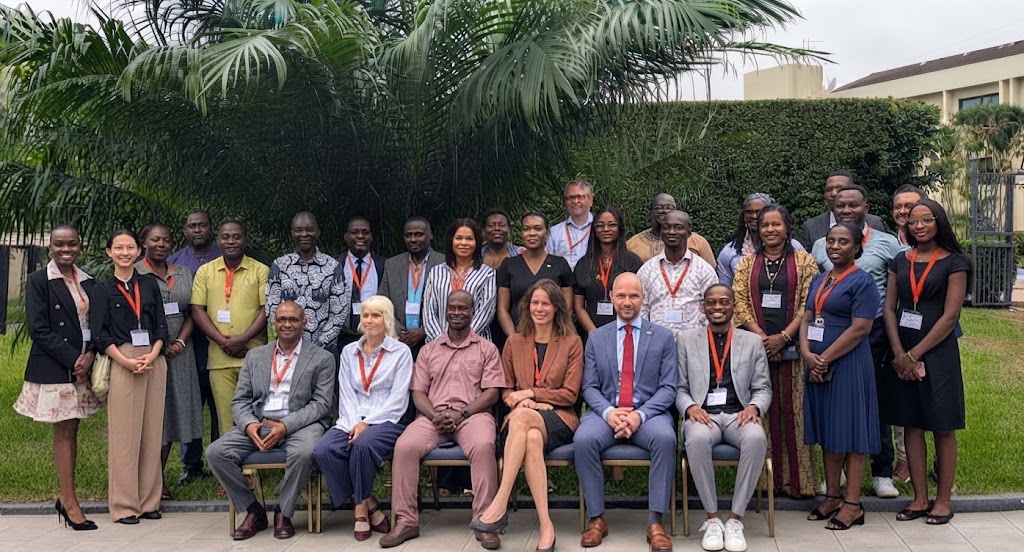
Government representatives from Ghana, Kenya, the Netherlands and South Africa have convened in Accra for a three-day dialogue focused on transforming national climate adaptation plans into practical projects.
The meeting began on Monday, August 17, 2026, and is expected to conclude on Wednesday, August 19.
It is being co-organized by the Government of Ghana and the NAP Global Network, with financial support from the Netherlands and technical assistance from the International Institute for Sustainable Development.
Government officials, development partners and adaptation-project implementers are using the forum to exchange experiences, identify obstacles and develop practical approaches to strengthening the climate resilience of communities, economies and ecosystems.
Countries Seek to Move Beyond Planning
The dialogue is concentrating on the gap between preparing national strategies and implementing projects that protect people from the effects of climate change.
National Adaptation Plans help countries assess climate risks and identify medium- and long-term priorities. However, participants noted that producing a policy document does not automatically result in stronger infrastructure, safer communities or more resilient livelihoods.
Nana Dr Antwi-Boasiako Amoah, Director of Adaptation, Climate Resilience and Risk Management at Ghana’s Environmental Protection Authority, said the true measure of a national plan was its ability to generate investments and visible action.
“Having a good plan is only part of the journey. It’s not the entire journey,” he said.
“The real test is whether those priorities translate into investments and actions that strengthen the resilience of our communities, ecosystems and economies.”
Implementation Requires Strong Institutions
Dr Amoah explained that climate adaptation requires more than the availability of funds.
Countries also need effective institutions, coordination among government agencies, credible projects, reliable climate data and strong monitoring systems.
Climate risks affect several areas of national development, including agriculture, fisheries, health, housing, transportation, energy and water resources. Adaptation planning must therefore involve ministries, local governments, businesses, research institutions and affected communities.
Weak coordination can lead to duplicated projects, conflicting policies or investments that fail to address the most urgent local vulnerabilities.
The Accra dialogue is expected to help participating countries examine ways to connect national policies with district and community-level needs.
Predictable Financing Remains a Major Challenge
Thabang Phago, Director of Climate Change Adaptation in the Natural Resource Sectors Department of South Africa’s Department of Forestry, Fisheries and the Environment, identified financing as one of the main barriers to implementation.
“Financing, of course, becomes one of the important things, particularly when you talk about national adaptation planning,” he said.
“We can only move towards implementation if we have resources to do that.”
South Africa has developed several climate strategies but continues to face difficulties implementing them on the scale required.
The experience is shared by many developing countries, which often have detailed adaptation priorities but struggle to secure predictable and accessible financing.
Participants are discussing how governments can connect their priorities to climate funds, development-finance institutions and private-sector investment.
They are also examining how countries can prepare technically credible projects that meet funding requirements and are ready for implementation.
Netherlands Offers Experience in Water Management
Dr Rens Twijnstra, First Secretary and Head of the Economic Affairs Department at the Embassy of the Kingdom of the Netherlands, called for a gradual shift from discussion to tangible action.
“Until you dig a hole, plant your tree, water it and make it survive, you haven’t actually done a thing. You’re just talking,” he said.
He indicated that the Netherlands was prepared to share knowledge with Ghana, Kenya and South Africa in areas including water management and climate-resilient agriculture.
The Netherlands has extensive experience managing floods and water systems, while the participating African countries bring lessons from drought management, coastal adaptation, agriculture and locally led resilience programs.
The peer-learning approach allows each country to adapt relevant practices to its own environmental, financial and institutional circumstances rather than copying solutions directly.
Dialogue Examines Practical Adaptation Measures
Discussions during the three-day program cover water-resource management, climate-smart agriculture and nature-based solutions.
Nature-based approaches may include restoring wetlands, mangroves and other ecosystems that provide natural protection against floods, erosion and extreme weather.
Climate-smart agricultural practices can help farmers manage irregular rainfall, high temperatures, drought and changing growing seasons while maintaining food production.
Participants are also reviewing monitoring systems that allow governments to determine whether projects are producing the intended results.
Reliable data is necessary to identify vulnerable areas, measure progress and ensure that limited resources are directed toward interventions with the greatest potential impact.
Delegates to Visit Ga Mashie
The program includes a planned field visit to Ga Mashie, a vulnerable coastal community in Accra.
Delegates are expected to assess how coastal erosion and other climate-related pressures are affecting homes, livelihoods and public infrastructure.
The visit is intended to connect national policy discussions with the daily experiences of people living in exposed communities.
Ga Mashie’s location makes it vulnerable to rising sea levels, coastal erosion, flooding and storm surges. These threats can damage houses, disrupt fishing livelihoods and place roads and other infrastructure at risk.
The field exercise is expected to help participants examine how community knowledge and local priorities can inform national investment decisions.
Building on Earlier Peer Exchanges
The Accra meeting follows a similar in-person dialogue held in Johannesburg, South Africa, in April 2026.
It forms part of a continuing peer-learning process intended to help participating countries share progress, address implementation challenges and strengthen institutional partnerships.
The NAP Global Network was established in 2014 to support developing countries in formulating and implementing national adaptation plans through knowledge sharing, peer learning and country-level assistance.
National Adaptation Plans were introduced under the United Nations Framework Convention on Climate Change in 2010 to help countries identify and address their medium- and long-term adaptation priorities.
Climate Policies Must Produce Local Results
Participants are expected to leave the Accra dialogue with clearer implementation approaches, stronger partnerships and practical ideas for converting policy priorities into investable projects.
For vulnerable communities, the success of national adaptation planning will be measured by outcomes such as secure water supplies, resilient farms, protected coastlines and infrastructure capable of withstanding extreme weather.
As floods, droughts, heatwaves and coastal erosion intensify, the participating countries have agreed that climate adaptation can no longer remain primarily a policy exercise.
The meeting’s objective is to ensure that national plans become visible investments that protect lives, livelihoods and ecosystems.
Source: Omanghana