Omanghana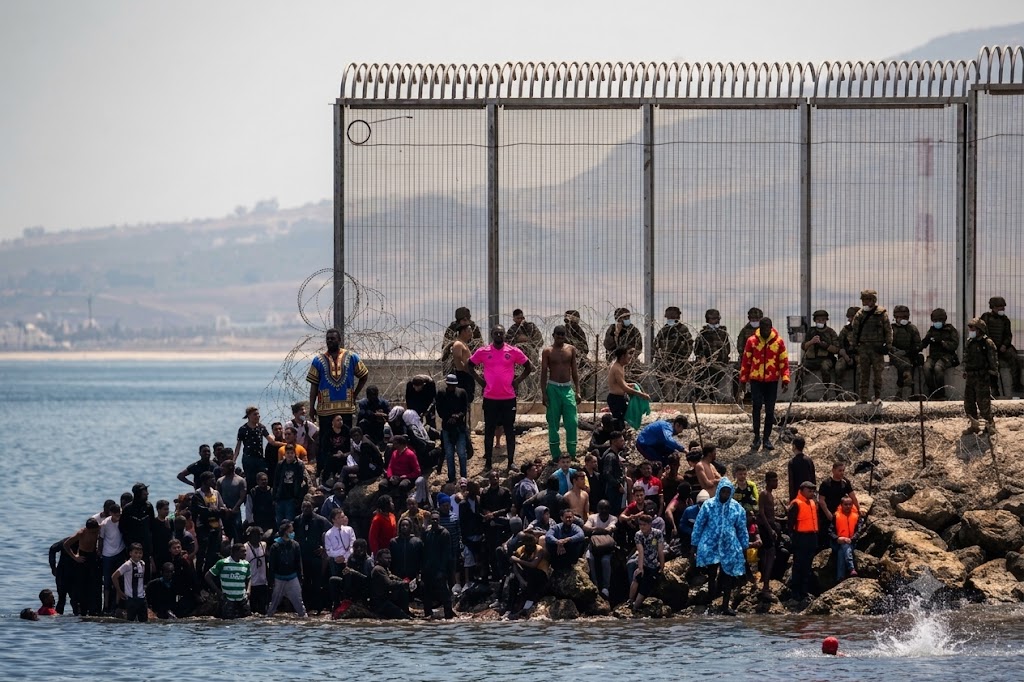
At least four migrants have died and more than 20 others remain missing after over 200 people attempted to swim from Morocco to the Spanish enclave of Ceuta during the weekend.
The dangerous crossings began from beaches near the Moroccan town of Castillejos, also known as Fnideq, as unusually calm weather encouraged large groups to enter the sea.
Most of those attempting the journey were reportedly young Moroccan and Algerian men. Women, children and people with disabilities were also said to be among the swimmers.
Moroccan security forces intercepted roughly half of the people attempting the crossing, while more than 100 succeeded in reaching Ceuta, which forms one of the European Union’s only land borders with Africa.
Spanish and Moroccan emergency personnel conducted rescue and interception operations throughout the weekend as groups entered the water during the early morning hours.
Spain’s Guardia Civil recovered one body on Saturday before locating three more on Sunday. The four deaths increased the number of migrants reported to have died along Ceuta’s coastline in 2026 to 27.
Search operations continued amid fears that at least 20 other people remained missing at sea.
The weekend incident formed part of a much larger rise in maritime arrivals. Ceuta’s regional government said more than 1,500 adults and children had reached the territory by sea in recent days, although Spain’s Interior Ministry had not independently confirmed that figure as of Wednesday.
The influx has overwhelmed Ceuta’s Temporary Immigrant Stay Centre, commonly known by its Spanish abbreviation CETI.
The facility is designed to accommodate 512 people but is currently operating beyond capacity. More than 100 recent arrivals have reportedly been left waiting outside, with some forced to sleep in the open while authorities search for emergency accommodation.
Ceuta regional president Juan Jesús Vivas said the reception system was saturated and appealed to Spain’s national government for urgent assistance.
The increase in sea crossings has also intensified debate over a recent Spanish Supreme Court decision restricting immediate returns, commonly known as “pushbacks.”
In a June 29 ruling made public in July, the court determined that migrants intercepted at sea while attempting to swim into Ceuta or Melilla cannot be immediately handed back to Moroccan authorities without the legally required return procedure.
Judges ruled that the special border-rejection provisions in Spain’s immigration law apply to people attempting to cross physical barriers, such as the fortified fences surrounding the enclaves, but not to migrants intercepted in open water.
Migrants stopped at sea must therefore be processed under the ordinary return procedure established by Article 58.3 of Spain’s immigration law, including the corresponding legal safeguards.
Vivas and some police representatives have argued that the distinction could encourage more people to attempt the dangerous maritime route. Human-rights advocates have questioned that conclusion, noting that migrants are unlikely to understand recent Spanish court decisions before entering the water.
The reason for the sudden increase remains uncertain. Some Moroccan activists have suggested that the timing could be connected to changing regional diplomatic relations following talks between Spanish Prime Minister Pedro Sánchez and Algerian President Abdelmadjid Tebboune.
No evidence has established a direct connection between those meetings and the crossings. Spanish officials have also continued to praise Morocco’s cooperation in controlling irregular migration.
The deaths have renewed concern about the dangers facing migrants trying to reach Ceuta without boats. Even in calm conditions, swimmers risk exhaustion, hypothermia, strong currents and becoming disoriented before reaching Spanish territory.
Authorities on both sides of the border remain under pressure to locate those still missing, provide shelter for survivors and prevent additional deaths as favorable summer weather encourages further crossing attempts.
Source: Omanghana