Omanghana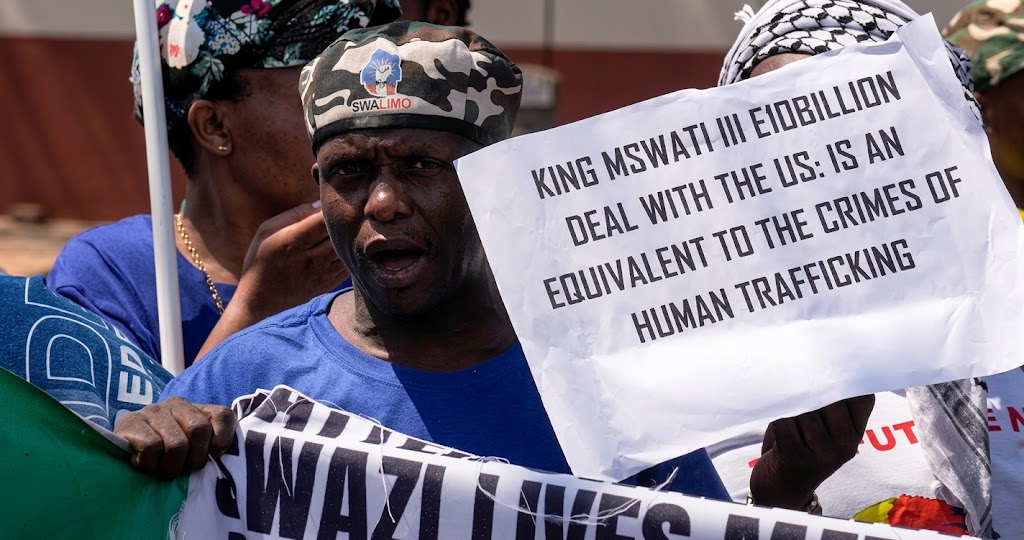
A fourth group of migrants deported from the United States arrived in Eswatini on July 8, 2026, marking the latest transfer under a controversial third-country deportation arrangement between the two countries.
The latest flight carried 11 deportees, bringing the total number of non-Eswatini nationals sent to the southern African kingdom under the agreement to 29.
The program has drawn growing criticism from human rights organizations, legal experts, and civil society groups, who have questioned both its legality and its humanitarian implications.
Deportees Taken to High-Security Prison
According to reports, none of the 11 individuals deported on Wednesday are citizens of Eswatini. Instead, they originate from several different countries whose governments either declined or delayed accepting their return directly from the United States.
Upon arrival, the group was escorted by security officials to the Matsapha Correctional Facility, where they were placed in detention pending further processing.
Concerns Over Legal Protections
U.S. immigration attorney Alma David said the latest group includes at least two individuals who reportedly had legal protections that advocates argue should have prevented their removal from the United States.
The claims have added to concerns among immigration lawyers and advocacy organizations regarding the implementation of the deportation program.
How the U.S.–Eswatini Agreement Works
The arrangement forms part of a broader U.S. immigration enforcement strategy that allows certain deportees to be transferred to third countries when their countries of origin do not immediately accept them.
Under the agreement, the government of King Mswati III reportedly received approximately $5.1 million from the United States to serve as a temporary processing and holding location for up to 160 deportees.
Officials have indicated that the individuals are considered temporary detainees while Eswatini works with the International Organization for Migration (IOM) to facilitate their eventual return to their respective home countries.
Previous Deportees Remain in Detention
Before the latest flight, Eswatini had received 19 deportees since the program began in July 2025.
Reports indicate that only two individuals—a Jamaican national and a Cambodian national—have since been repatriated to their home countries.
The remaining 17 deportees continue to be held at Matsapha Correctional Facility while awaiting further arrangements for their return.
Human Rights Groups Raise Concerns
The agreement has attracted increasing scrutiny from legal experts and international human rights organizations.
Some constitutional lawyers in Eswatini argue that the deal should have undergone parliamentary approval before being implemented, raising questions about its legal basis.
Human rights organizations, including Amnesty International, have criticized the arrangement, describing it as inconsistent with international human rights principles. Critics argue that Eswatini’s detention system and broader human rights environment raise concerns about the welfare of deportees held under the program.
Debate Over Prolonged Detention
Advocates have also questioned the continued detention of deportees who have already completed criminal sentences in the United States.
They argue that keeping individuals in prolonged detention while awaiting repatriation may amount to an additional punishment, particularly when there are no local criminal charges against them in Eswatini.
The latest arrivals are expected to intensify debate over the third-country deportation policy as legal challenges and international scrutiny continue to grow.
Source: Omanghana