Omanghana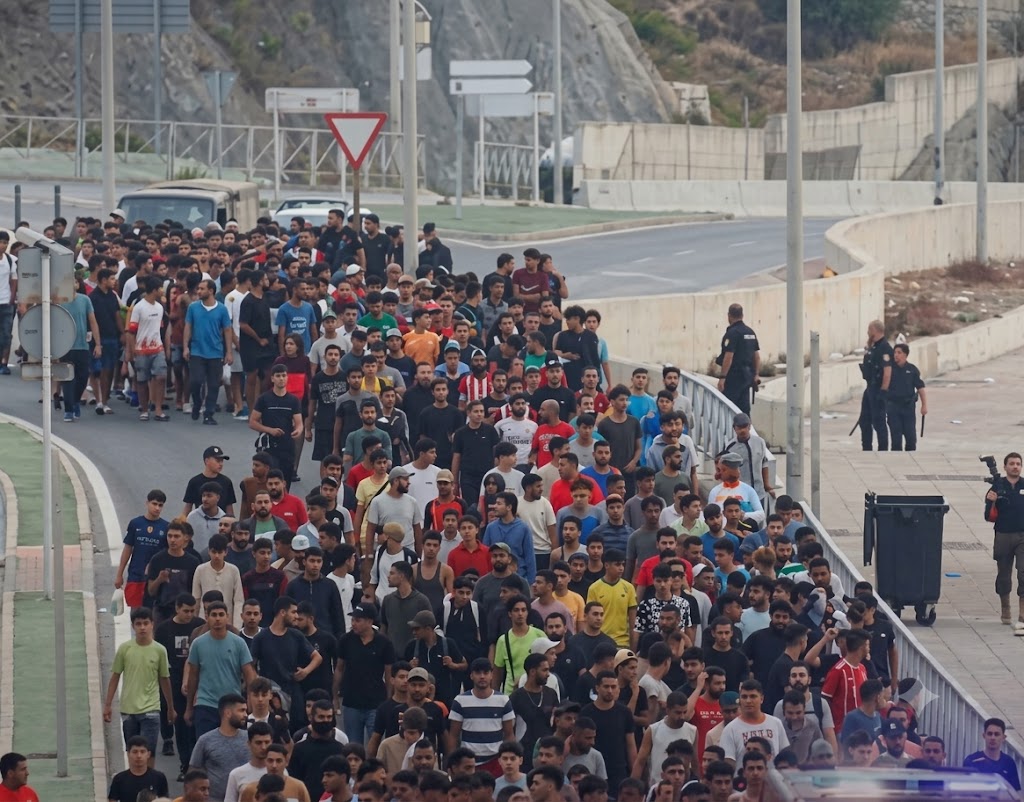
France and Italy have strengthened checks on travellers arriving from Spain following the unprecedented migration crisis in Ceuta, where an estimated 50,000 to 60,000 people crossed from Morocco into the Spanish territory.
The sudden influx alarmed European governments and intensified concerns that some migrants could attempt to travel from Spain into other countries within Europe’s passport-free Schengen Area.
Italy introduced temporary, targeted checks on non-European Union nationals arriving from Spain by air and sea. France also reinforced monitoring of routes connecting it with Spain as European authorities sought to contain the effects of the border breach.
The measures stopped short of completely sealing national borders, but they represented a significant departure from the largely unrestricted movement normally permitted between Schengen member states.
Meloni Defends Emergency Controls
Italian Prime Minister Giorgia Meloni defended the additional checks as an “extraordinary measure” required to protect national security and prevent uncontrolled movement following the Ceuta crisis.
Rome argued that the scale of the arrivals justified a temporary security response while Spanish and Moroccan authorities worked to restore order at the frontier.
Italy’s decision added to pressure on Madrid from European governments demanding assurances that people who entered Ceuta irregularly would not be allowed to travel to mainland Spain and then move into other Schengen countries.
Spanish authorities have stressed that Ceuta is subject to specific border arrangements and that migrants entering the enclave do not automatically gain access to mainland Spain or the rest of the Schengen Area.
Sánchez Criticises European Neighbours
Spanish Prime Minister Pedro Sánchez criticised the actions and rhetoric of some European governments, accusing them of exploiting the migration emergency for political purposes.
Responding publicly to the controversy, Sánchez maintained that governments were legally required to respect European Union treaties and free-movement rules, regardless of their individual positions on solidarity and migration.
His comments exposed growing divisions within Europe over how responsibility for controlling external borders should be shared. Spain has argued that countries located along the EU’s southern frontier cannot be expected to manage major migration emergencies alone.
Calls Grow for Review of Spain’s Schengen Status
Political leaders in several European countries, including Denmark and Czechia, have called for a review of Spain’s position within the Schengen system if authorities fail to demonstrate that the border situation is under control.
Some officials have suggested that restrictions should remain available until Spain can guarantee that irregular migrants will not move onward into other European countries. However, no collective decision has been announced to suspend Spain from the Schengen Area permanently.
Any long-term suspension would involve complex legal and political procedures and would require coordination at the European Union level.
Most Migrants Return to Morocco
The border pressure eased after Spanish and Moroccan authorities intensified cooperation. Most of the migrants who entered Ceuta reportedly returned to Morocco within approximately 48 hours, either voluntarily or through accelerated removal procedures.
Spain also reinforced security personnel and began installing a 500-metre floating barrier along Ceuta’s maritime border to discourage further crossings.
Despite the decline in arrivals, the crisis has reopened longstanding disagreements over migration policy, responsibility for the EU’s external borders and the future of free movement within Europe.
The dispute now presents European leaders with a difficult balance: protecting internal security without weakening the Schengen system that allows millions of people to travel across much of the continent without routine border checks.
Source: Omanghana