Omanghana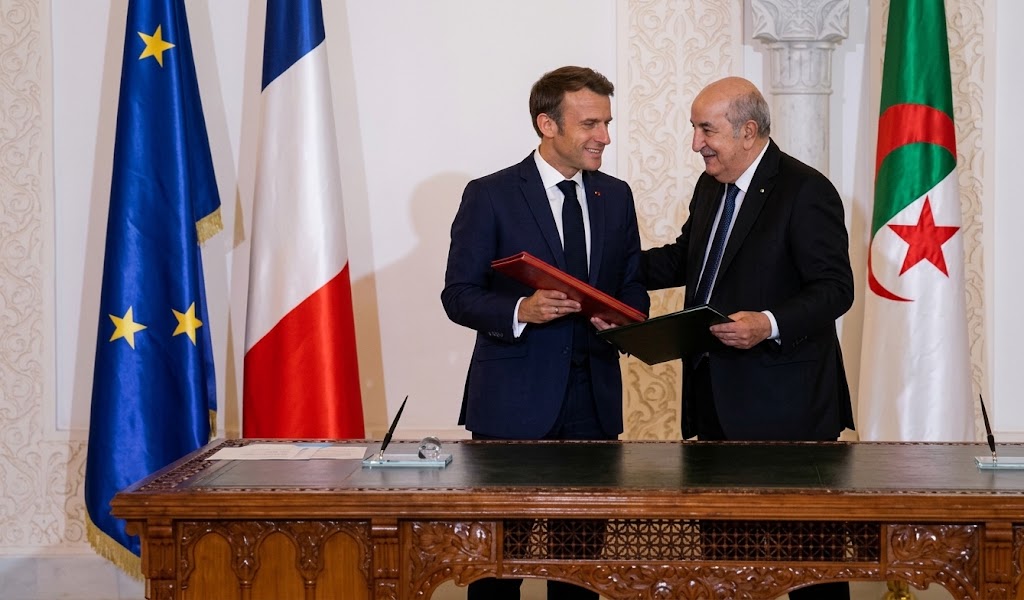
France has begun work to revise its longstanding 1968 migration agreement with Algeria, increasing pressure on Algiers amid continuing disputes over deportations, visas and regional diplomacy.
The French Interior Ministry confirmed in an official response to the Senate in early September 2026 that the government was preparing to renegotiate the bilateral accord. The process follows directives from President Emmanuel Macron and the prime minister.
Signed on December 27, 1968, the agreement gives Algerian nationals specific rules governing their entry, employment and residence in France. Although subsequent amendments have brought parts of the arrangement closer to France’s general immigration laws, Algerians remain subject to a separate legal framework.
The review comes as France accelerates the removal of Algerian nationals without legal residency. Interior Minister Laurent Nuñez said more than 140 Algerians had been deported since the beginning of 2026.
He also disclosed that slightly more than 700 Algerian nationals were being held in administrative detention centers, accounting for approximately 30% to 40% of the country’s estimated 2,000 detention places.
French authorities have repeatedly accused Algeria of delaying or refusing to issue the consular travel documents required to repatriate people subject to orders to leave French territory, commonly known as OQTFs. The dispute previously brought deportations to a near standstill before cooperation gradually resumed in 2026.
Paris has also tightened visa restrictions and suspended visa-free entry for holders of Algerian diplomatic and official passports. Macron ordered those measures as part of a broader effort to secure greater cooperation from Algiers on migration and security matters.
Pressure to change the 1968 accord has also grown within France. Right-wing and center-right lawmakers have argued that the agreement gives Algerian nationals exemptions that are no longer justified. The National Assembly previously adopted a non-binding resolution calling for the special arrangement to be ended.
Rather than immediately withdrawing from the treaty, however, the French government has chosen to pursue negotiations aimed at revising its provisions.
The migration dispute forms part of a wider deterioration in relations between the two countries. Tensions intensified after France backed Morocco’s autonomy proposal for Western Sahara, a position strongly opposed by Algeria, which supports the Polisario Front.
Diplomatic relations have been further strained by arrests involving nationals and officials from both countries, intelligence-related disputes and Algeria’s expanding defense relationship with Russia. Political changes across the Sahel have also widened differences between Paris and Algiers over regional security and influence.
The planned revision of the accord could significantly change the conditions under which Algerian citizens live, work and reunite with relatives in France. Any amendment, however, would require negotiations and the agreement of both governments.
Source: Omanghana