Omanghana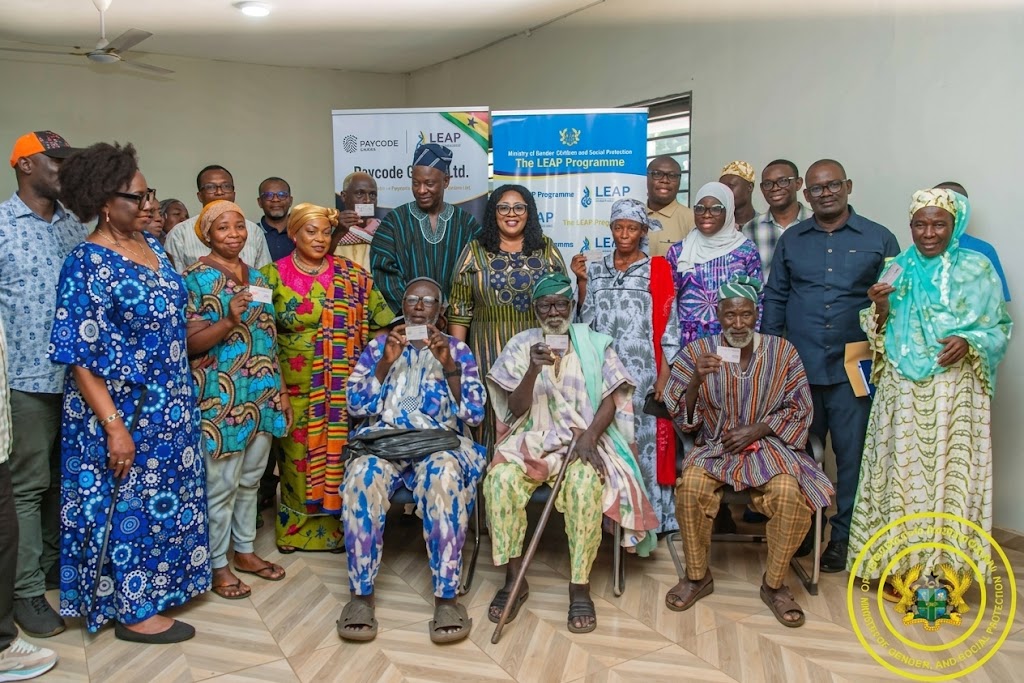
Ghana’s Minister for Gender, Children and Social Protection, Dr. Agnes Naa Momo Lartey, has monitored the ongoing Livelihood Empowerment Against Poverty registration exercise in the Savelugu Municipality and Kumbungu District.
The field visits, conducted during the first week of August 2026, formed part of the minister’s three-day working tour of the Northern and North East regions.
The exercise is intended to expand the LEAP program, update its beneficiary database and ensure that financial assistance reaches households experiencing extreme poverty.
Government Targets 400,000 Additional Households
The Ministry of Gender, Children and Social Protection is working to add 400,000 vulnerable households to the LEAP program nationwide.
During her visits, Dr. Lartey inspected registration centers to assess the efficiency of the process and identify challenges encountered by applicants and field officers.
She also evaluated how residents were being received and emphasized the need for vulnerable applicants to be treated with dignity and respect throughout the registration process.
Ministry Moves to Remove Ghost Beneficiaries
An important objective of the nationwide exercise is to reassess existing beneficiary records and improve the reliability of the LEAP database.
According to the ministry, updated household information will help identify and remove ghost beneficiaries while reducing errors that either admit ineligible people or exclude qualified households.
The reassessment will also determine whether some existing beneficiaries have achieved sufficient economic stability to leave the program. Their graduation would create space for other families facing severe financial hardship to receive assistance.
Traditional Leaders Pledge Community Support
As part of the monitoring tour, Dr. Lartey paid courtesy calls on the Chief of Savelugu, Yoonaa Abdulai Yakubu, and the Chief of Kumbungu, Gbullung Naa Musah Surani.
The engagements were intended to strengthen cooperation between the government, traditional authorities and local communities during the registration exercise.
Traditional leaders play an important role in mobilizing residents, promoting public understanding of social programs and helping authorities identify the needs of vulnerable households.
Minister Meets Local Government Officials
The ministerial delegation also held discussions with the Savelugu Municipal Chief Executive, Alhassan Fuseini, and the Kumbungu District Chief Executive, Imoro Yakubu Kakpagu.
The meetings focused on coordinating the registration process and ensuring that national implementation guidelines are applied effectively at the local level.
The ministry emphasized the importance of cooperation among district assemblies, social welfare officers, community leaders and registration teams in ensuring that the program reaches its intended beneficiaries.
Updated Data Expected to Improve Access to Services
Dr. Lartey said the initiative would deliver benefits beyond the immediate cash support provided through LEAP.
The alignment of beneficiaries’ biometric information is expected to simplify registration with the National Health Insurance Scheme. It could also improve school enrolment among children in rural communities and make it easier for households to access other social protection services.
Regular cash assistance may further stimulate economic activity in remote communities as beneficiaries spend money on food, healthcare, education and other essential needs.
Minister Visits Gambaga Alleged Witches Camp
The three-day working tour continued in the North East Region, where the ministerial team assessed social protection programs and engaged residents.
Dr. Lartey also visited the Gambaga Alleged Witches Camp to inspect conditions and listen to the concerns of residents.
The regional tour forms part of the government’s broader effort to strengthen Ghana’s social protection system and ensure that support is directed toward households with the greatest need.
Source: Omanghana