Omanghana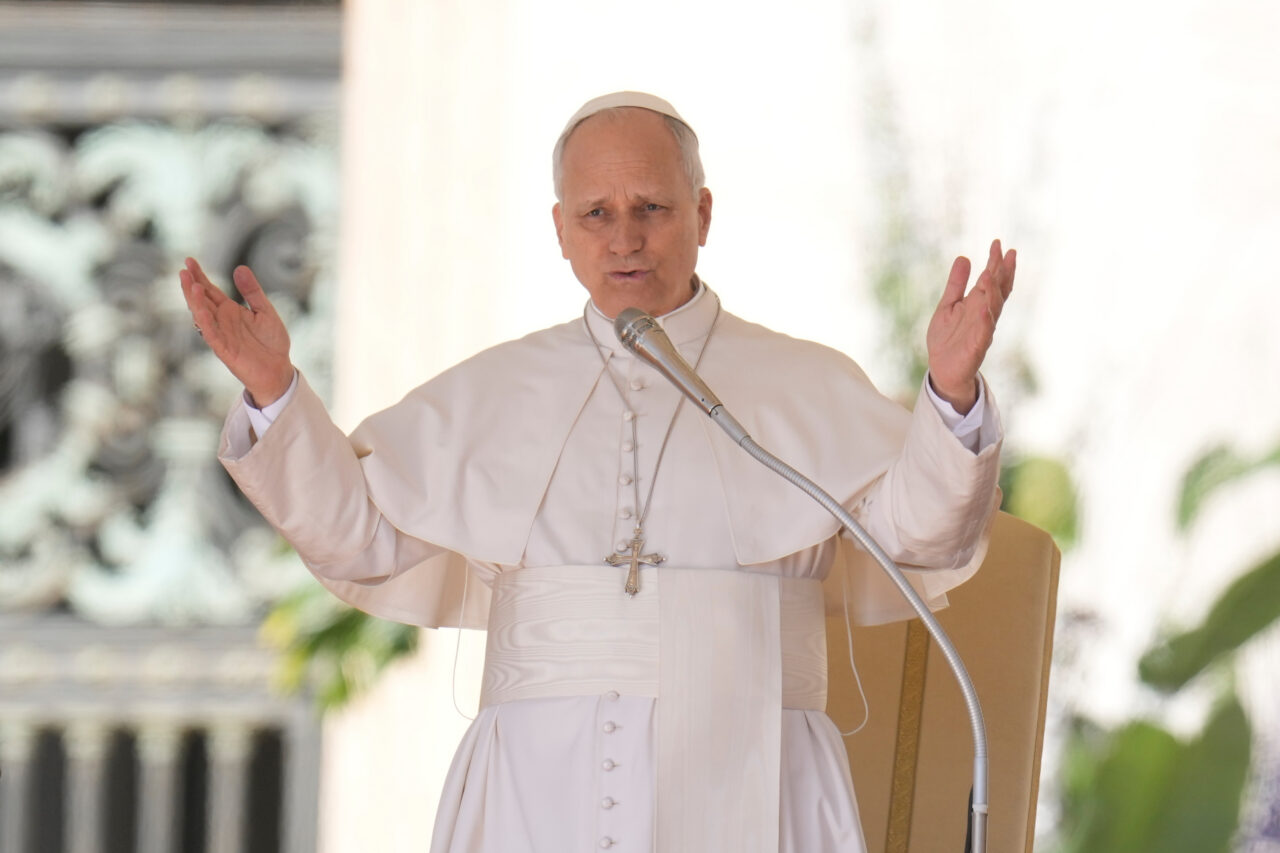
Ghana has officially welcomed an apology issued by Pope Leo XIV over the Catholic Church’s historical involvement in supporting the transatlantic slave trade, describing the gesture as a significant step toward justice and historical accountability.
In a statement released by the Ministry of Foreign Affairs, the Ghanaian government praised the Pope’s remarks as an “act of moral courage” and an important contribution to ongoing global conversations surrounding reparations, historical truth, and reconciliation.
The apology was contained in Pope Leo XIV’s first major official document, titled “Magnifica Humanitas” (“Magnificent Humanity”), in which the Pontiff openly acknowledged the Catholic Church’s role in legitimizing the transatlantic slave trade and delaying meaningful opposition to slavery for centuries.
In the document, the Pope admitted that Church institutions historically owned slaves and described the Church’s past actions as a “wound in Christian memory.” He formally asked for pardon from descendants of enslaved Africans and communities affected by centuries of exploitation.
The statement carries deep significance for Ghana, which served as one of the central hubs of the transatlantic slave trade during the colonial era. Millions of Africans were held in coastal forts and castles across present-day Ghana before being forcibly transported across the Atlantic.
For years, Ghana has positioned itself at the forefront of international campaigns demanding formal apologies and reparations from Western governments, institutions, and organizations linked to slavery and colonial exploitation.
Diplomatic observers noted that the Pope’s apology comes shortly after Ghana successfully pushed for a United Nations resolution that officially described the transatlantic slave trade as the “gravest crime against humanity.”
Beyond addressing historical slavery, Pope Leo XIV also warned against what he described as modern forms of exploitation and human bondage. In “Magnifica Humanitas,” he criticized systems that force vulnerable populations into dangerous labor conditions, including mining operations linked to the production of minerals used in mobile phones, computer chips, and other modern technologies.
Human rights organizations and reparations advocates have welcomed the Vatican’s acknowledgment of responsibility but insist that symbolic apologies must now be followed by concrete actions.
Several advocacy groups are calling on the Catholic Church to support healing initiatives, educational programs, and financial reparations aimed at addressing the long-term social and economic damage caused by slavery.
The Vatican has not yet announced any formal reparations framework or financial commitments following the Pope’s statement, but analysts say the apology could intensify global pressure on religious institutions and former colonial powers to take further action on historical justice.
Source: Omanghana