Omanghana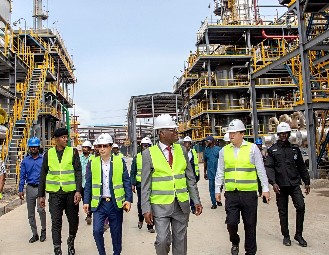
Ghana’s government has spent much of the past year touting a single figure as evidence that its energy sector is turning a corner: $3.5 billion in fresh investment commitments aimed at reviving an upstream oil and gas industry that has been losing ground since 2019.
Finance Minister Dr. Cassiel Ato Forson first detailed the package when he presented the 2026 Budget to Parliament last November, framing it as proof that investor-friendly reforms were paying off after years of declining output. President John Dramani Mahama put his own weight behind the figure in June, announcing it again at the groundbreaking for the second phase of the Sentuo Oil Refinery in Tema, and Energy Minister Dr. John Abdulai Jinapor has repeated the pledge at events ranging from a community engagement in the Savannah Region to the Ghana UK Investment Summit.
The bulk of the money is split between two offshore projects. A $2 billion framework agreement with the Jubilee and TEN field partners is meant to fund the drilling of up to 20 new wells, with officials projecting Jubilee’s output alone could climb from roughly 60,000 to 85,000 barrels per day. A separate $1.5 billion memorandum of intent with partners at the Offshore Cape Three Points block, led by Eni, is earmarked for further exploration and field development. Officials have also pointed to renewed interest from major players like Shell as a sign the reforms are drawing outside capital, technology and technical expertise back into the sector.
The investment drive is meant to address a steep and sustained decline: crude output has fallen from about 71.4 million barrels in 2019 to an estimated 36 million barrels last year, according to figures the finance minister presented to Parliament. Government officials have said the new drilling campaigns, along with output gains expected at the TEN and Sankofa fields, could deliver Ghana’s first net annual increase in crude production in six years.
The plan extends beyond the wellhead. Officials have said Ghana National Petroleum Corporation is due to begin drilling in the offshore Voltain Basin later this year, and government is fast-tracking a second gas-processing plant to handle additional volumes, alongside a planned 1,200-megawatt state-owned thermal plant to use gas supplied by the OCTP partners. On the downstream side, the Sentuo Refinery’s expansion is intended to roughly double its processing capacity to 100,000 barrels per day, which officials say would cut Ghana’s reliance on imported fuel, ease pressure on the cedi, and support jobs in oil services, logistics and construction.
Alongside the upstream push, the energy ministry says it is also working on a broader overhaul of the sector’s regulatory and fiscal framework, aiming to make Ghana’s petroleum regime more competitive and transparent for investors. The government has framed the oil and gas investment as one piece of a wider energy strategy that also includes expanding renewables, including plans for 200 megawatts of battery storage, and early-stage groundwork on nuclear power, with the International Atomic Energy Agency having completed a site-safety review last year.
Whether the investment commitments translate into the production turnaround officials are promising will likely become clearer as drilling activity ramps up through the rest of 2026.
Source: Omanghana.com/SP