Omanghana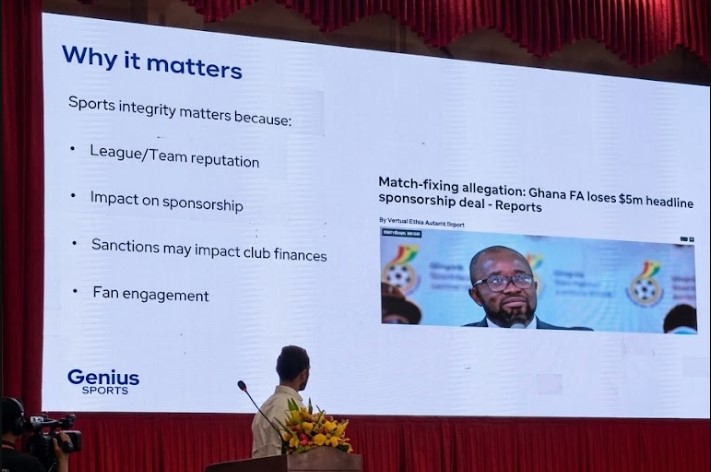
High-profile match-fixing cases involving Ghanaian football were examined during a football integrity workshop in Cambodia as authorities intensified efforts to combat corruption and competition manipulation in the sport.
The workshop brought together football administrators, referees, integrity officers and law-enforcement representatives to study how match-fixing schemes operate and identify measures for protecting domestic competitions.
Ghana’s experience was used to illustrate how financial vulnerabilities, weak reporting systems and betting-related misconduct can undermine the credibility of football leagues.
Among the cases discussed was the controversial 2021 Ghana Premier League match between AshantiGold and Inter Allies. The fixture attracted widespread attention after suspicious incidents on the field raised concerns about deliberate manipulation and betting activity.
The match became particularly notorious after Inter Allies defender Hashmin Musah scored two own goals. He later claimed that his actions were intended to frustrate an alleged predetermined scoreline.
The incident triggered investigations and disciplinary proceedings, making it an important case for understanding how suspected manipulation may involve players, officials, intermediaries and betting interests.
Workshop participants examined how syndicates may target lower-profile matches that receive limited international attention but remain available on betting markets. Such competitions can be especially vulnerable when players, referees and club employees experience delayed salaries or financial hardship.
Discussions also focused on the cross-border nature of modern match-fixing. Betting networks can operate from outside the country where a match is played, using intermediaries to contact players, club executives or match officials.
This structure makes investigations more difficult because communications, payments and betting transactions may occur across several jurisdictions. Tackling the problem therefore requires cooperation among football associations, betting regulators, law-enforcement agencies and international sporting bodies.
Another major concern identified at the workshop was the failure to report early warning signs. Players and officials may notice suspicious approaches but remain silent because of fear, inadequate protection or uncertainty about where to submit information.
Participants consequently called for secure and independent reporting channels that would allow individuals to provide information anonymously without risking retaliation from clubs, officials or criminal networks.
Real-time monitoring of betting markets was presented as another essential safeguard. Automated systems can detect unusual changes in betting volumes, odds and wagering patterns before or during a match.
Although suspicious betting activity does not automatically prove that manipulation has occurred, it can provide investigators with an early warning and help authorities identify fixtures requiring closer examination.
The workshop also emphasized education as a preventive measure. Integrity training should begin at youth-academy level and continue throughout a player’s professional career.
Footballers, coaches and referees must understand how match-fixers operate, how to reject and report suspicious approaches, and the disciplinary, legal and reputational consequences of becoming involved in competition manipulation.
Greater attention must also be given to player welfare. Clubs that fail to pay salaries and bonuses on time may leave players vulnerable to approaches from individuals offering money in exchange for influencing a match.
Participants further considered the need for clearer legislation against sporting fraud. In some jurisdictions, football authorities may impose disciplinary sanctions, but criminal prosecution remains difficult because national laws do not specifically address match-fixing.
Closer collaboration between domestic football federations, law-enforcement agencies, FIFA, INTERPOL and betting-monitoring organizations could help close those legal and investigative gaps.
The workshop concluded that match-fixing should not be treated as an isolated problem affecting only individual clubs or countries. It is increasingly a transnational threat capable of damaging public confidence, commercial partnerships and the long-term development of football.
Ghana’s cases provided Cambodian and regional football authorities with practical lessons on the importance of early detection, confidential reporting, financial transparency and swift disciplinary action.
Protecting the integrity of the game will ultimately require coordinated intelligence-sharing, stronger governance and sustained vigilance at every level of football.
Source: Omanghana