Omanghana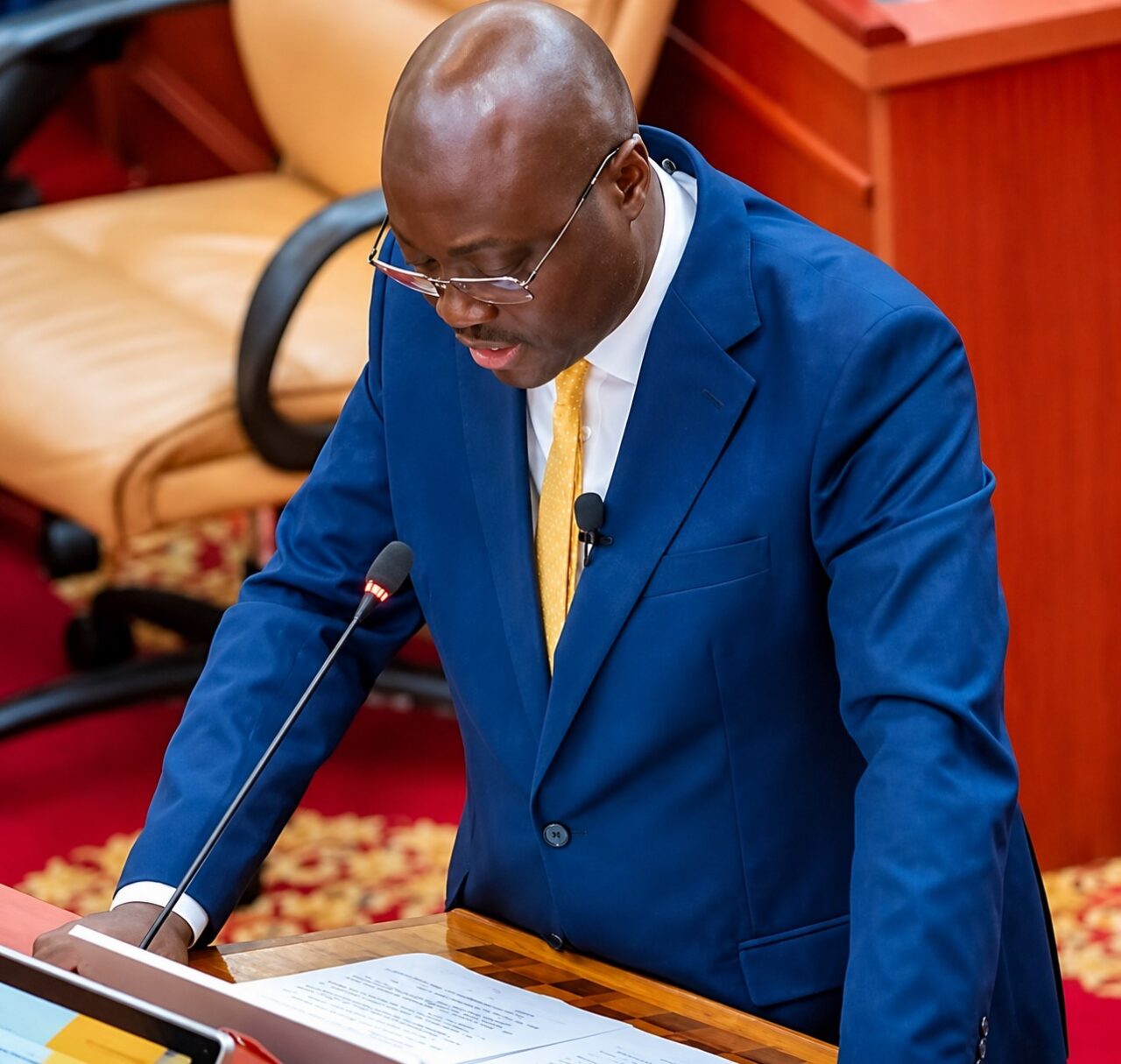
Finance Minister Dr. Cassiel Ato Forson delivered Ghana’s 2026 Mid-Year Fiscal Policy Review to Parliament on Thursday, using the constitutionally mandated presentation to argue that the country’s economy has staged a faster-than-expected recovery under the current administration.
The headline announcement was on public debt. Forson told lawmakers that Ghana has already reached its statutory target of bringing debt down to 45 percent of GDP, a milestone the government had not expected to hit until later, under either the timeline set by its own Public Financial Management Act or the schedule tied to its International Monetary Fund program. According to figures presented to Parliament, the debt-to-GDP ratio fell from 61.8 percent at the end of 2024 to 44.7 percent by the close of 2025, before ticking up slightly to 45.0 percent as of June this year.
That improvement, the minister said, has already shown up in Ghana’s credit outlook. He noted that a joint assessment by the World Bank and IMF now rates the country’s debt as sustainable, a marked shift from the “unsustainable” label attached to it in 2023, and that the risk of debt distress has eased from high to moderate for the first time in more than a decade.
Inflation was another point of emphasis. Forson said price growth has cooled sharply, dropping from 23.8 percent in December 2024 to roughly 5.3 percent by June 2026, comfortably inside the central bank’s target range. He tied the disinflation, along with a primary budget surplus that has now exceeded its target for a second straight period, to sustained cuts in government spending rather than new taxes. As evidence of that restraint, he pointed to a reduction in the number of cabinet ministers from a peak of 123 to 60, alongside a consolidation of ministries from 30 to 23.
The minister framed the results as proof of what he called disciplined, deliberate management rather than good luck, and pushed back on the idea that fiscal consolidation has come at the cost of growth: he cited 2025 GDP growth of 6.0 percent, which he described as the country’s fastest expansion since 2019.
Beyond the numbers, the review was also billed as a pivot point for government strategy. Officials had signaled ahead of the presentation that Forson would use the occasion to unveil elements of a “New Economic Policy,” shifting the government’s focus from stabilizing the economy toward longer-term growth priorities, including job creation, higher productivity and continued investment in flagship programs such as the 24-Hour Economy initiative and the Big Push infrastructure plan. The minister also addressed Ghana’s expected transition from its expiring IMF Extended Credit Facility program to a new Policy Coordination Instrument, and highlighted the Ghana Gold Board’s role in curbing smuggling and boosting foreign exchange earnings from gold.
The presentation came a day after the Bank of Ghana’s Monetary Policy Committee opted to hold its benchmark interest rate at 14 percent, a decision analysts described as a cautious response to inflation risks tied to global trade and geopolitical uncertainty. Economists watching the budget review said the key question for the rest of the year is whether government spending discipline can keep pace with the central bank’s steady policy stance.
Opposition lawmakers were less impressed with the presentation. Minority figures in Parliament, including Deputy Minority Leader Alexander Afenyo-Markin, dismissed the review as short on substantive new commitments, arguing it offered rhetoric rather than a concrete plan for the second half of the year.
Source: Omanghana.com/SP