Omanghana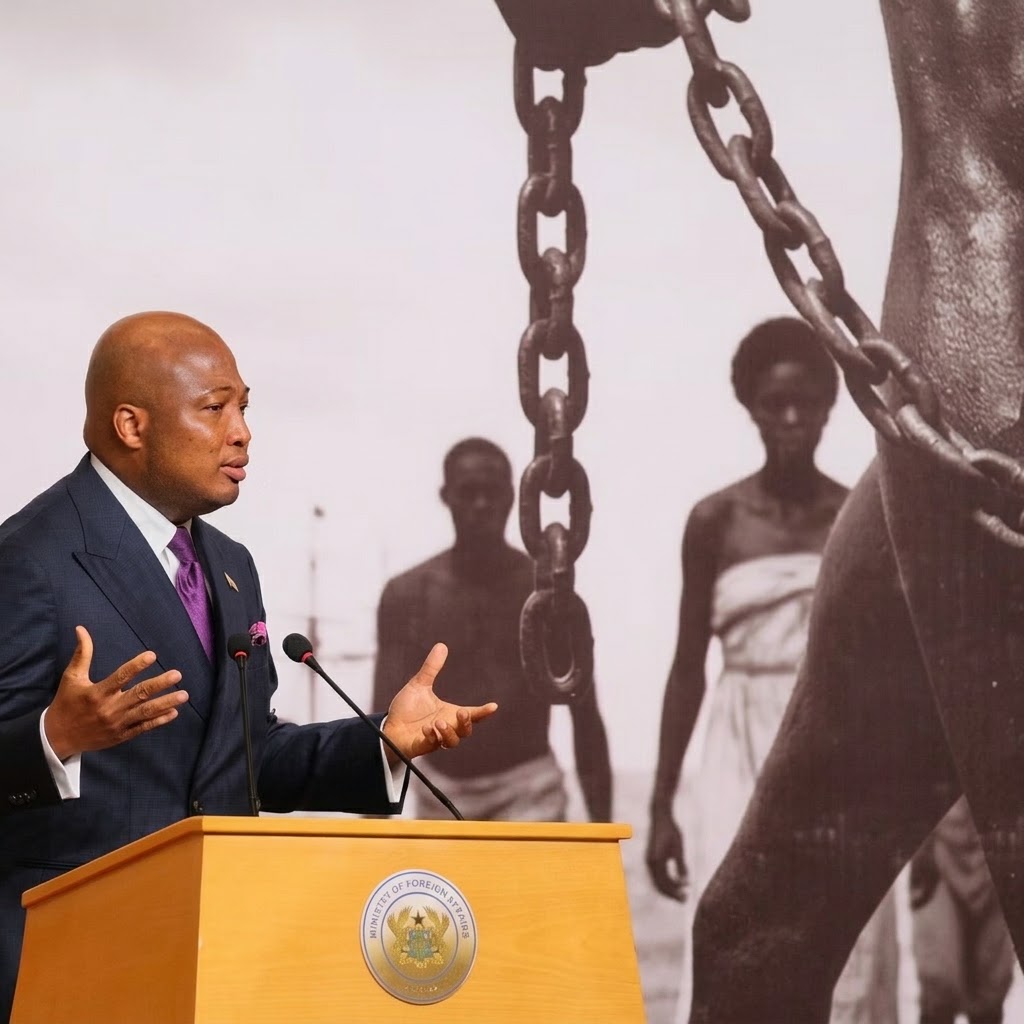
Foreign Affairs Minister Samuel Okudzeto Ablakwa has described Ghana’s growing role in the global reparations movement as a transition from a historical “crime scene” to a sanctuary for healing and justice.
Ablakwa made the statement during the three-day “Next Steps” conference on reparatory justice held in Accra in mid-2026. The gathering brought together hundreds of delegates to discuss practical measures for addressing the lasting consequences of the transatlantic slave trade and colonialism.
Ghana, formerly known as the Gold Coast, was a major departure point for enslaved Africans transported across the Atlantic. Coastal fortresses such as Christiansborg Castle in Osu were used as holding centers before captives were forced onto ships bound for the Americas and the Caribbean.
Reflecting on that history, Ablakwa said Ghana was “transitioning from being a crime scene to a sanctuary for healing and reparative justice.”
The conference followed a major diplomatic development at the United Nations General Assembly in March 2026. President John Dramani Mahama spearheaded a resolution declaring the transatlantic trafficking of enslaved Africans and racialized chattel slavery “the gravest crime against humanity.”
Supported by the African Union, the resolution received backing from 123 UN member states. Although it is not legally binding, Ghana considers its adoption an important step towards moving the international conversation beyond symbolic expressions of regret to institutional responsibility and concrete action.
The African Union has designated 2026 to 2036 as its Decade of Reparations and appointed President Mahama as its champion for the campaign.
Ghana and the AU are advocating a 19-point reparatory framework covering financial restitution, debt relief, cultural restitution and formal state apologies.
The proposals include the creation of structured compensation funds for governments and communities affected by slavery and colonial exploitation. The campaign is also calling for debt cancellation and reforms to international financial systems considered disadvantageous to African countries.
Another central demand is the unconditional return of looted cultural objects, monuments, human remains and national archives held by foreign governments and institutions.
Advocates are also seeking formal apologies from countries and institutions that benefited from slavery and colonialism, rather than statements expressing only regret.
The initiative continues to face resistance from several countries. The United States, Israel and Argentina voted against the March 2026 UN resolution, while 52 countries, including the United Kingdom and all 27 European Union members, abstained.
Some opposing governments argue that although the transatlantic slave trade was morally indefensible, it was not prohibited under the international legal framework that existed at the time.
Ghana, however, maintains that historical recognition must lead to measurable economic, social and cultural redress for Africa and communities of African descent around the world.
Source: Omanghana