Omanghana
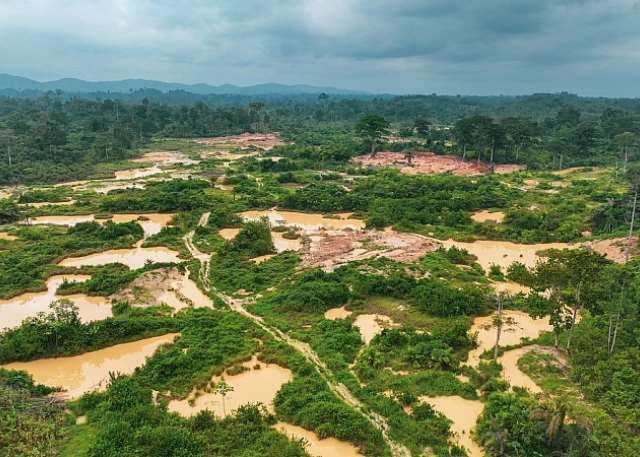
Professor Kwadwo Appiagyei-Atua of the University of Ghana School of Law says Ghana is making financial gains from its gold trade but continues to face serious environmental damage from illegal mining, popularly known as galamsey.
He said progress in formalizing gold trading through the Ghana Gold Board (GoldBod) should not be the only measure of success in the fight against illegal mining.
Speaking on Saturday, October 31, 2026, the professor acknowledged that GoldBod was contributing to the country’s economic efforts, including revenue generation and foreign exchange earnings. He argued, however, that those gains must be considered alongside the environmental harm caused by galamsey.
Concerns Over Water Pollution
Citing figures from the Council for Scientific and Industrial Research (CSIR), Prof. Appiagyei-Atua said approximately 60% of Ghana’s water bodies were polluted.
He warned that polluted rivers and other water sources create long-term challenges for communities and increase the difficulty and cost of treating water. He also expressed concern about the potential public health effects of exposure to contaminants associated with illegal mining.
The professor acknowledged that the government had taken some steps to address illegal mining, but said claims of progress should be supported by credible evidence.
He maintained that Ghana’s assessment of its fight against galamsey must take account of the condition of its water bodies and environment, as well as the financial benefits from gold.
Source: Omanghana