Omanghana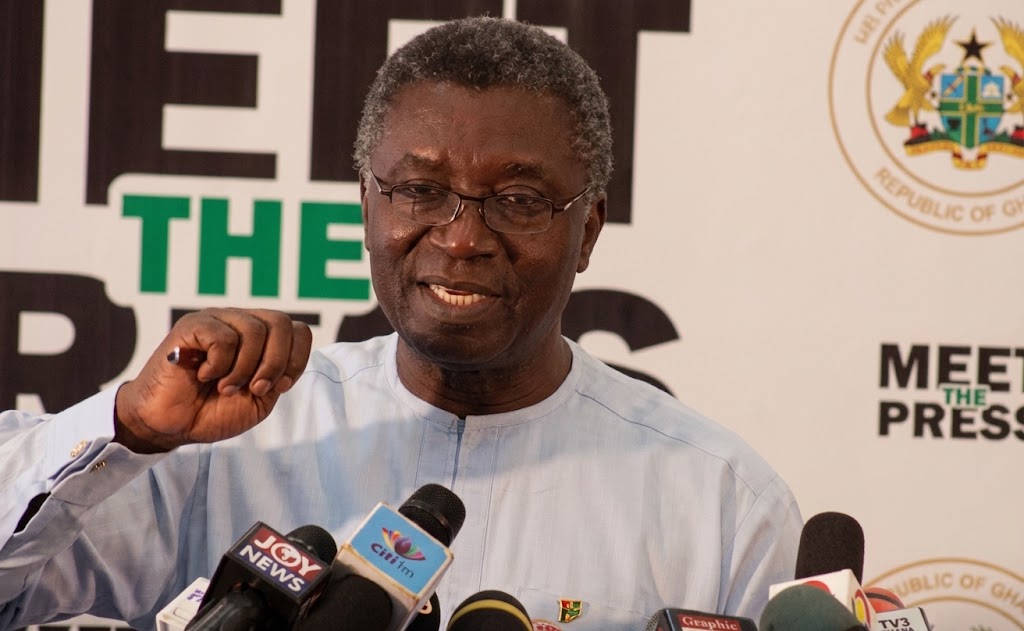
Ghana will require an estimated $21 billion to reclaim and restore lands damaged by illegal mining and related activities, former Minister for Environment, Science, Technology and Innovation Prof. Kwabena Frimpong-Boateng has said.
He disclosed the estimate while delivering the keynote address at the Fourth Annual Colloquium organized by the Department of Political Science Education at the University of Education, Winneba.
Prof. Frimpong-Boateng described illegal mining, commonly known as galamsey, as “the largest environmental crime in our history,” warning that its effects on Ghana’s land, water and public health had reached critical levels.
According to figures he presented, approximately 10% of Ghana’s total surface area has been stripped or degraded by mining activities. This represents about 23,853 square kilometers of land.
He estimated that restoring the Ankobra River alone would cost approximately $400 million.
The amount does not include the resources required to rehabilitate other heavily polluted and silted water bodies, including the Pra, Offin, Birim, Anum and Oda rivers. Sections of the Black, White and Red Volta basins have also been affected.
Prof. Frimpong-Boateng warned that the destruction of rivers and farmlands had exposed mining communities in the Ashanti, Eastern, Western and Western North regions to hazardous substances.
He identified mercury, arsenic, lead, cadmium and chromium among the toxic metals found in affected environments, raising concerns about possible links to kidney disease, cancer, neurological disorders and pregnancy complications.
Reflecting on his tenure as chairman of the Inter-Ministerial Committee on Illegal Mining between 2017 and 2021, the former minister said Ghana’s inability to stop galamsey was largely a political problem rather than a shortage of technical knowledge.
He explained that enforcing environmental laws often creates immediate political consequences, while the damage caused by weak enforcement develops gradually and may not become fully visible for years.
Prof. Frimpong-Boateng said several monitoring systems introduced between 2017 and 2018 were largely abandoned after restrictions on small-scale mining were lifted.
The measures included drone surveillance, concession mapping, the tracking of earth-moving equipment and the establishment of 72 district committees.
He said Ghana was caught on an environmental “roundabout,” where governments repeatedly deploy military task forces, introduce temporary restrictions and announce alternative livelihood programs before abandoning them when political pressure intensifies.
To address the problem, Prof. Frimpong-Boateng proposed the establishment of an independently managed environmental restoration fund.
He recommended that the fund receive a legally defined portion of Ghana’s mineral royalties and operate outside the regular national budget process to prevent the money from being redirected during periods of financial difficulty.
The former minister also called for an independently verified State of the Environment audit to be presented to Parliament alongside the annual national budget.
The proposed report would monitor pollution levels in river basins, forest-cover loss, wetland depletion and progress made in reclaiming individual mining sites.
Prof. Frimpong-Boateng maintained that protecting Ghana’s environment would require long-term institutional arrangements that could withstand political pressure and changes in government.
Source: Omanghana