Omanghana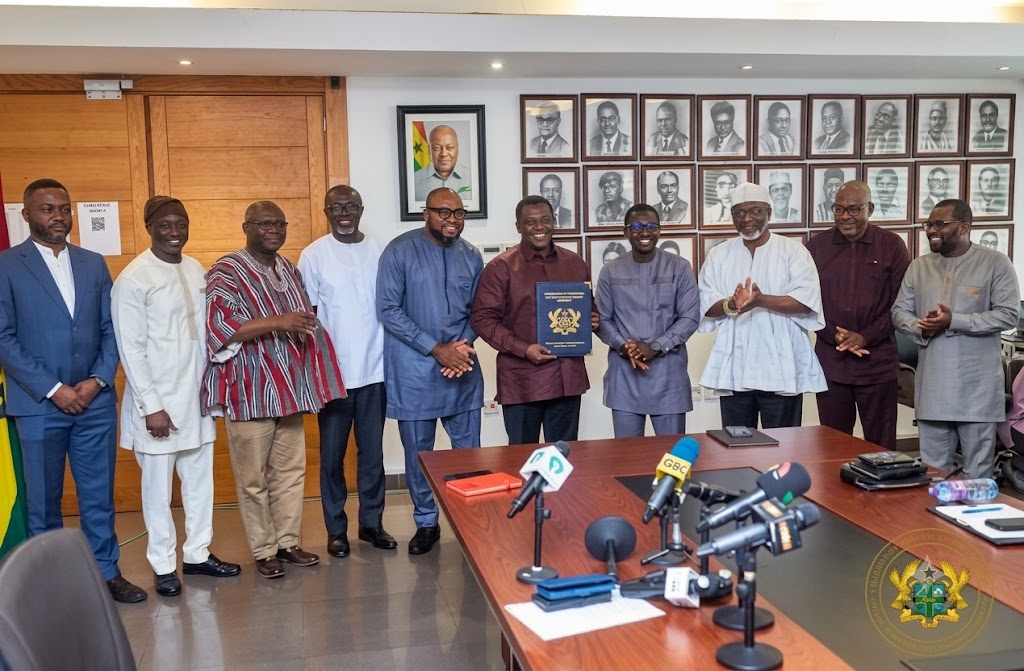
Ghana’s Minister for Communication, Digital Technology and Innovations, Samuel Nartey George, has received the final report of the Digital Terrestrial Television (DTT) Committee, marking a significant step toward restructuring and strengthening the country’s digital broadcasting sector.
The report was formally presented at the Ministry’s Conference Room in Accra and is expected to guide government decisions on improving the sustainability, affordability, and efficiency of Ghana’s state-managed digital television platform.
The development comes amid growing concerns among broadcasters and industry stakeholders about the long-term viability of Ghana’s DTT system, particularly issues surrounding operational costs, channel pricing, governance, and access for independent media organizations.
Independent Committee Established to Address Industry Concerns
Minister Sam George established the independent review committee following increasing concerns from players within Ghana’s broadcasting industry over challenges affecting the digital television framework.
The committee was tasked with conducting a comprehensive assessment of the DTT ecosystem and proposing solutions aimed at creating a more sustainable and inclusive broadcasting environment.
Over several months, the panel examined key areas including infrastructure management, financial sustainability, and regulatory structures.
Key Areas Covered by the Review
The committee’s assessment focused on several critical components of Ghana’s digital broadcasting system.
Operational Structure and Technical Delivery
The committee reviewed the current management of DTT infrastructure, including the systems responsible for delivering digital television services across the country.
The assessment considered whether existing technical arrangements are efficient enough to support broadcasters, improve service reliability, and accommodate future technological developments.
Financial Sustainability and Platform Costs
Another major area of focus was the financial model supporting the DTT platform.
The committee examined cost-sharing arrangements, affordability concerns, and the impact of platform charges on independent broadcasters.
Industry operators have previously raised concerns about the cost of accessing digital transmission services, arguing that high fees could limit competition and affect the survival of smaller media organizations.
Governance and Content Distribution Frameworks
The review also explored governance structures surrounding Ghana’s digital broadcasting environment.
The committee considered ways to improve transparency, fairness, and accountability in how channels are managed and how local content is distributed through the national digital platform.
Government Promises Inclusive Approach
Receiving the report, Minister Samuel George assured stakeholders that the government would not impose unilateral reforms without consultation.
He emphasized that the ministry would carefully study the committee’s recommendations and engage extensively with broadcasters, industry experts, and other relevant stakeholders before implementing any changes.
The minister said the goal is to develop a framework that balances public interest, industry growth, technological advancement, and investment opportunities.
White Paper Expected Within 14 Days
As part of the next phase of the process, Minister George announced that the government will issue an official white paper within 14 days outlining its position on the committee’s recommendations.
The document is expected to provide a roadmap for reforms aimed at creating a more stable and innovation-driven digital broadcasting environment.
According to the ministry, the proposed framework will be built around consensus and collaboration rather than government-directed changes.
Parliament Appeals for Settlement of DTT Legal Dispute
Following the submission of the committee’s report, the Chairman of Parliament’s Select Committee on Information and Communications, Abed-Nego Lamangin Bandim, called on the Ghana Independent Broadcasters Association (GIBA) to reconsider its ongoing legal action against the government.
GIBA has been challenging aspects of the state’s DTT channel pricing structure, arguing that the current model places financial pressure on broadcasters.
Bandim appealed to the association to withdraw the lawsuit and use the newly developed review framework as an opportunity to resolve disagreements through dialogue.
He argued that the committee’s recommendations provide a platform for stakeholders to negotiate solutions without prolonged court proceedings.
A New Chapter for Ghana’s Digital Broadcasting Sector
The delivery of the DTT Committee’s report represents a major milestone in Ghana’s efforts to modernize its broadcasting industry and address long-standing challenges within the digital television ecosystem.
Stakeholders are now awaiting the government’s white paper and subsequent consultations, which are expected to determine the future direction of Ghana’s digital broadcasting landscape.
Industry observers say successful implementation of the recommendations could encourage investment, improve competition among broadcasters, enhance local content delivery, and position Ghana’s media sector for greater technological growth.
Source: Omanghana