Omanghana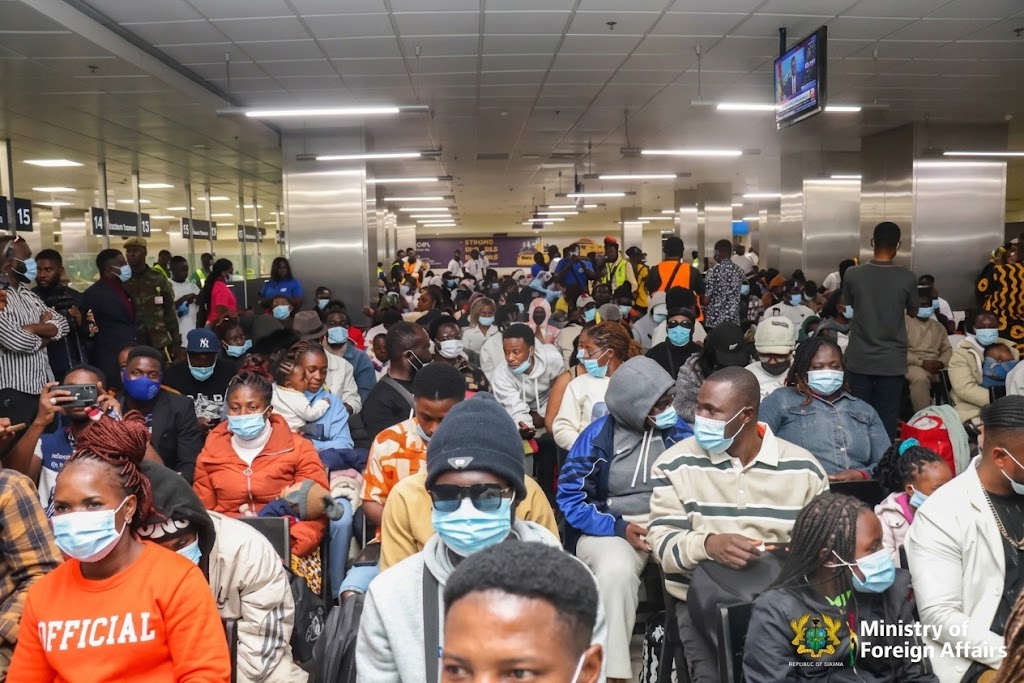
The government has reactivated its emergency consular response as anti-immigrant demonstrations and reported attacks leave foreign nationals seeking shelter or returning to their home countries.
The Ghanaian government has resumed emergency evacuation operations to repatriate approximately 1,000 citizens stranded in South Africa amid escalating anti-immigrant protests and reported vigilante violence.
The Ministry of Foreign Affairs said the evacuation would be conducted in phases, with the most vulnerable Ghanaians receiving priority. The intervention follows an earlier operation in late May that brought 297 citizens back to Ghana.
The renewed exercise comes as several African countries organize flights and ground transportation for nationals affected by the unrest.
Anti-Immigrant Ultimatum Heightens Tensions
The crisis intensified after anti-migrant groups, including March and March and Operation Dudula, reportedly issued a June 30, 2026, deadline demanding that undocumented foreign nationals leave South Africa.
The ultimatum had no legal authority because immigration enforcement is the responsibility of the South African government.
Following the expiration of the deadline, demonstrations reportedly escalated in parts of Johannesburg, Cape Town and Durban. Incidents of looting, arson and physical attacks have also been reported.
Foreign nationals in some communities have abandoned their homes and businesses because of safety concerns. Others have sought protection at temporary shelters, border-processing facilities and foreign diplomatic missions.
Reports indicate that about 160,000 foreign nationals have left South Africa over the past two months, while at least 25,000 people have been displaced. These figures may change as authorities and humanitarian organizations continue assessing the situation.
Legal Residents Reportedly Targeted
Although the groups behind the demonstrations say they are campaigning against undocumented migration, humanitarian organizations have raised concerns about indiscriminate targeting.
Doctors Without Borders and other organizations assisting affected communities say refugees, asylum seekers, documented migrants and naturalized South African citizens have also faced harassment.
In some cases, people were allegedly targeted because of their accents, names or physical appearance rather than their immigration status.
Human rights organizations have warned that such practices encourage racial profiling and expose both migrants and South African citizens to violence.
They have also emphasized that individuals suspected of violating immigration rules must be handled through lawful state procedures rather than community raids, threats or forced removals.
First Repatriation Flights Expected in Accra
Under Ghana’s reactivated evacuation plan, registered citizens will be transported home in groups.
The first emergency flights are scheduled to arrive at Kotoka International Airport in Accra on Sunday, July 26, and Monday, July 27, 2026.
Ghana’s High Commission in Pretoria is coordinating the operation with the Ministry of Foreign Affairs and other relevant agencies.
Officials are prioritizing women, children, elderly citizens, students and people with serious medical conditions. Individuals who have lost their homes or no longer have access to safe accommodation are also expected to receive urgent assistance.
The government has asked affected Ghanaians to register through the High Commission and follow official instructions concerning travel documents, departure locations and flight schedules.
Churches Provide Emergency Accommodation
The Ghanaian government has partnered with the Church of Pentecost in Pretoria and Johannesburg to provide temporary shelter for displaced citizens awaiting evacuation.
The facilities are offering free accommodation and basic assistance to individuals who have been forced from their homes or believe it is unsafe to return to their communities.
The shelters are also intended to provide secure gathering points where consular officials can document citizens and organize their movement to departure locations.
Ghanaians in South Africa have been advised to avoid protest areas and unauthorized gatherings while maintaining contact with the High Commission.
Other African Countries Launch Evacuations
Ghana is among several countries responding to the growing displacement of African migrants in South Africa.
Nigeria completed the fifth phase of its evacuation program on July 15, reportedly repatriating more than 1,500 citizens through flights operated by Air Peace.
Uganda, Kenya, Malawi and Mozambique have also organized charter flights or cross-border bus convoys to assist their nationals.
The simultaneous evacuation operations have transformed the unrest into a regional diplomatic and humanitarian concern.
Governments are under pressure to protect their citizens while engaging South African authorities to prevent further attacks and restore security in affected communities.
Crisis Strains Ghana–South Africa Relations
The unrest has also created tension between Ghana and South Africa.
Ghana postponed a planned visit by South African President Cyril Ramaphosa following the reported fatal shooting of a Ghanaian national in Cape Town.
Ghanaian and Nigerian security analysts have also submitted a petition to the International Criminal Court, alleging a pattern of attacks against migrants and insufficient intervention by state authorities.
The filing of a petition does not mean the ICC has opened a formal investigation or accepted the allegations. Any action would depend on the court’s jurisdiction and its assessment of the information submitted.
The diplomatic dispute could affect wider relations involving trade, investment and regional cooperation if the violence continues.
South African Government Condemns Vigilante Action
President Ramaphosa and the South African Department of Home Affairs have condemned the violence and warned private groups against taking immigration enforcement into their own hands.
Authorities have emphasized that only designated government agencies have the power to inspect immigration documents, arrest suspected offenders or order deportations.
South African police have specifically warned community organizations to stop unauthorized door-to-door searches for migrants.
Government officials maintain that immigration concerns must be addressed through the courts, police and Department of Home Affairs rather than intimidation or collective punishment.
Human rights groups, however, have criticized the authorities for failing to contain recurring demonstrations and prevent attacks on foreign nationals.
Critics say migrants are being blamed for South Africa’s unemployment rate, pressure on public services and persistent electricity and water problems—challenges they argue require policy solutions rather than attacks on vulnerable communities.
As the evacuations continue, Ghanaian officials face the immediate task of bringing stranded citizens home safely while pursuing diplomatic assurances for those who choose to remain in South Africa.
Source: Omanghana