Omanghana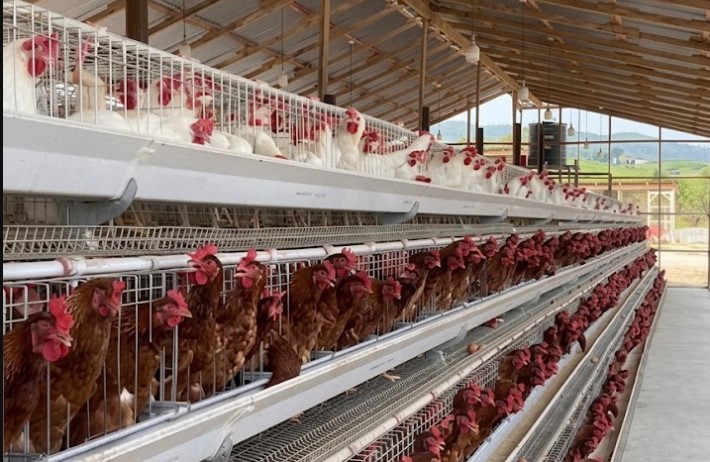
Ghana’s 24-Hour Economy and Accelerated Export Development Secretariat has facilitated a Heads of Terms agreement for a proposed US$270 million investment aimed at transforming the country’s poultry industry and reducing dependence on imported chicken.
The agreement represents the first formal step towards establishing a fully integrated domestic poultry production system under the National Poultry Transformation Program.
Parties involved include Agrium Capital Limited, Petra Pension Trust, Axis Pension Trust, the Tony Blair Institute and the 24-Hour Economy and Accelerated Export Development Secretariat. Ghana EXIM Bank is also expected to participate as the project advances.
The Heads of Terms must now be developed into a shareholders’ agreement before the investment moves into full implementation.
Project to Cover Entire Poultry Value Chain
The proposed investment will cover the principal stages of poultry production, from securing agricultural inputs to delivering processed chicken to consumers.
Planned components include feed production, breeding operations, hatcheries, commercial farms, processing facilities, cold-chain infrastructure, logistics and market distribution.
Presidential Adviser and Head of the 24-Hour Economy Secretariat, Augustus “Goosie” Tanoh, described the agreement as an important step towards building a modern and competitive poultry industry capable of satisfying a significant portion of local demand.
He said the project would complement the government’s wider 24-Hour Economy agenda, which seeks to increase productive activity, expand value addition, create employment and strengthen Ghanaian industries.
Implementation Expected in Three Phases
Chief Executive Officer of Agrium Capital Limited, Rod Bassett, said the project would undergo a development and design process lasting between 10 and 12 months.
The investment is expected to be implemented in three phases, with each stage structured to connect the commercial operation to surrounding rural communities.
Once operational, the project is expected to create more than 1,000 direct jobs and over 2,500 indirect employment opportunities.
Young people and women involved in farming, poultry production, processing, logistics and other agribusiness activities are expected to be among the principal beneficiaries.
Smallholder Farmers to Join Commercial Supply Chains
The integrated model is intended to create commercial opportunities for smallholder farmers rather than operate as an isolated industrial facility.
Farmers could participate by producing maize, soybean and other crops needed for poultry feed. The arrangement is expected to provide stronger market access, stimulate grain production and create more predictable income opportunities in rural communities.
Additional businesses could emerge around transportation, veterinary services, packaging, storage, equipment maintenance and food distribution.
The project’s backers believe this wider network of commercial activity could increase household incomes and attract complementary investment into participating communities.
Ghana Imports Most of Its Chicken
Ghana consumes approximately 340,000 metric tones of chicken annually but produces only a small proportion of that requirement locally.
About 270,000 tones are imported each year at an estimated foreign-exchange cost of approximately US$400 million.
The high level of import dependence exposes consumers to exchange-rate movements and fluctuations in international food prices. It also increases demand for foreign currency and limits the growth of domestic poultry farms and related businesses.
Mr. Tanoh said Ghana had the natural resources, entrepreneurial capacity and consumer market required to support a competitive poultry industry but continued to spend hundreds of millions of dollars on imports.
“The signing of this Heads of Terms agreement marks an important step towards building a modern, competitive and integrated poultry value chain capable of meeting a significant share of domestic demand,” he stated.
Investment Could Support Cedi and Food Security
Expanding domestic chicken production is expected to support Ghana’s import-substitution strategy by replacing part of the country’s poultry imports with locally produced alternatives.
If successfully implemented at scale, the project could conserve foreign exchange, reduce pressure on the cedi and improve national food security.
It could also make the poultry industry more resilient by connecting domestic feed production, breeding, processing, storage and distribution within a single operating system.
Other anticipated benefits include improved technical skills, increased availability of locally produced protein and better environmental outcomes through coordinated production and waste-management systems.
The 24-Hour Economy Secretariat said the next stage would involve converting the Heads of Terms into a shareholders’ agreement and completing the legal, financial and technical preparations required to deliver the project.
The ultimate impact will depend on the successful mobilization of financing, construction of the required facilities and ability of locally produced chicken to compete with imports on price, quality and distribution.
Source: Omanghana