Omanghana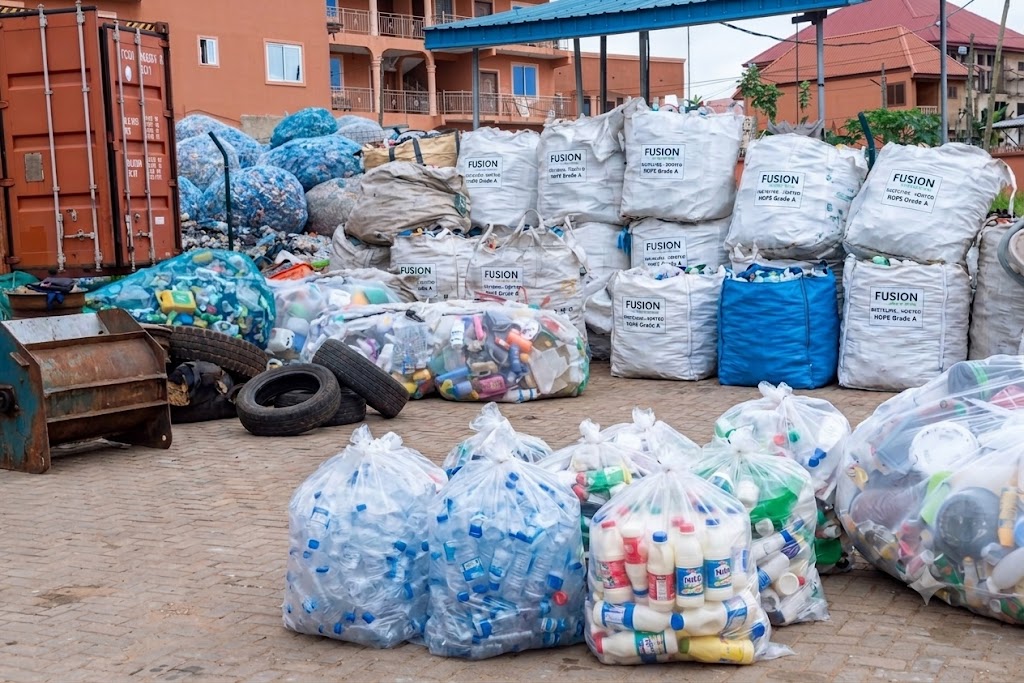
Ghana may not be able to eliminate all plastics immediately, but the country is taking significant steps to reduce its dependence on harmful single-use products and improve waste management.
The country generates approximately 1.1 million tonnes of plastic waste annually—reportedly more than its cocoa production volume. However, less than 5% of that waste is recycled, contributing to clogged drainage systems, urban flooding and marine pollution.
Rather than imposing a complete ban on plastics, the national conversation is increasingly focused on phasing out the most environmentally damaging products while developing a functional circular economy.
Nationwide Styrofoam Ban Set for 2027
As part of that effort, the Environmental Protection Authority has announced a nationwide ban on the production, importation, sale and use of polystyrene foam packaging from January 1, 2027.
Styrofoam containers, commonly known in Ghana as “takeaway packs,” are widely used by food vendors and restaurants. Once contaminated with food, however, the material becomes difficult to recycle and can break into microplastics that pollute waterways, soil and the marine environment.
The planned ban has drawn opposition from the Ghana Plastic Manufacturers’ Association. The association is reportedly seeking either an extension of the deadline to 2030 or a GH¢1.493 billion compensation package to cover investments in manufacturing equipment that could become unusable.
Why a Complete Plastic Ban Remains Difficult
A total ban would present major social and economic challenges, particularly because millions of Ghanaians depend on affordable packaged products.
One of the biggest concerns is sachet water. The inexpensive 500-millilitre water sachets provide many low-income households with access to drinking water, and Ghana currently lacks a similarly affordable and scalable alternative.
The plastics industry also supports about 120 local factories and is estimated to provide more than 350,000 direct and indirect jobs. An immediate nationwide ban could therefore result in substantial job losses, business closures and reduced tax revenue.
Industry stakeholders further argue that plastic itself is not the only problem. Weak enforcement of sanitation regulations, inadequate waste collection and the absence of widespread source-segregation systems have also contributed significantly to the crisis.
Ghana Pursues Plastic Alternatives
Ghana’s National Policy Blueprint for Plastic Alternatives proposes a hybrid approach that combines targeted restrictions with recycling, sustainable packaging and stronger collection systems.
Following the planned Styrofoam ban, authorities are expected to pursue a five-to-10-year reduction program targeting other single-use products, including thin plastic shopping bags and straws.
Environmental advocates are also calling for the revival of traditional biodegradable packaging. Before plastic became widespread, foods were commonly wrapped in banana, cocoyam and other natural leaves. Supporters say these materials could again become commercially viable alternatives for selected products.
Another part of the strategy involves formalizing the work of more than 2,000 informal waste pickers. Digital platforms could connect collectors with recycling companies, improve access to markets and help stabilize the prices paid for recyclable materials.
Environmental organizations are also pushing for a deposit-return system that would reward consumers for returning empty polyethylene terephthalate, or PET, beverage bottles.
Ghana’s plastic crisis cannot be solved through a single ban. Success will require affordable alternatives, effective enforcement, stronger recycling infrastructure and cooperation among manufacturers, consumers, waste collectors and public authorities.
Source: Omanghana