Omanghana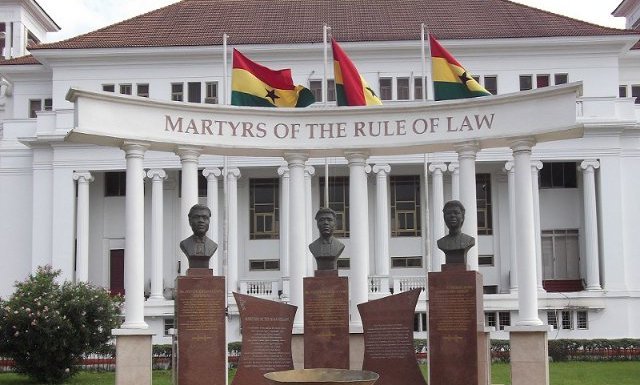
The Supreme Court of Ghana has unanimously dismissed a constitutional lawsuit brought by policy think tank IMANI Africa and security analyst Professor Kwesi Aning, affirming the President’s authority to appoint and remove the heads of the country’s major security agencies.
The seven-member panel, chaired by Justice Gabriel Pwamang, ruled that the case lacked merit and rejected all reliefs sought by the plaintiffs.
The decision represents a significant legal victory for the Presidency and provides further clarity on the scope of executive powers concerning leadership appointments within Ghana’s security services.
Challenge to Presidential Powers
The lawsuit sought to challenge the constitutional basis for the President’s authority to appoint and dismiss key security officials, including heads of institutions responsible for law enforcement, immigration, prisons, and fire services.
IMANI Africa and Prof. Kwesi Aning argued that certain constitutional protections governing public service appointments should apply to these positions, thereby limiting the President’s discretion in making leadership changes.
The plaintiffs specifically relied on interpretations of Article 191 of Ghana’s 1992 Constitution in support of their case.
Supreme Court’s Interpretation
In its ruling, the Supreme Court held that Article 191 does not apply to top-ranking leadership positions within Ghana’s security architecture, including offices such as the Inspector-General of Police (IGP) and the Director-General of Prisons.
The court concluded that these appointments fall within a distinct category of public office and are therefore not subject to the constitutional protections advanced by the plaintiffs.
As a result, the judges found no constitutional basis to restrict the President’s authority regarding the appointment or removal of these officials.
Authority Over Security Services Upheld
The ruling further affirmed the President’s statutory powers concerning leadership appointments within the Ghana National Fire Service and the Ghana Immigration Service.
According to the court, the heads of these agencies play critical roles in implementing national security policies and supporting the executive branch’s broader security agenda.
For that reason, the judges determined that the President retains the legal discretion to appoint and remove their leadership in accordance with existing laws and constitutional provisions.
Implications of the Decision
Legal observers say the judgment settles an important constitutional question regarding the relationship between executive authority and leadership within Ghana’s security institutions.
By dismissing the challenge, the Supreme Court has reinforced the longstanding interpretation that the President possesses broad powers over the appointment and removal of key security agency heads, subject to constitutional and statutory requirements.
The ruling is expected to influence future debates on governance, public sector appointments, and the balance of power between state institutions.
Final Verdict
After reviewing the arguments presented by both parties, the Supreme Court unanimously concluded that the case lacked legal merit and declined to grant any of the declarations or orders requested by IMANI Africa and Prof. Kwesi Aning.
The decision effectively preserves the current framework governing appointments and removals within Ghana’s security services and reaffirms the constitutional authority of the President in matters relating to national security leadership.
Source: Omanghana