Omanghana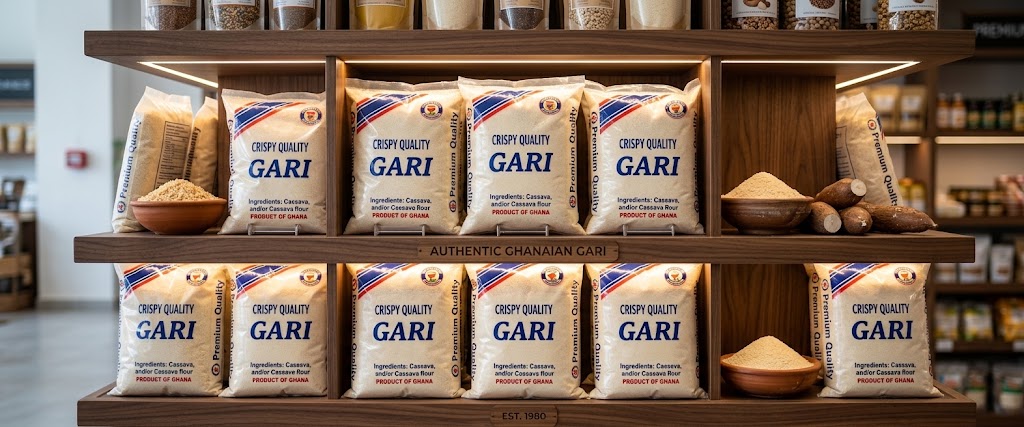
The Ministry of Trade, Agribusiness and Industry has announced measures to position locally manufactured products, including gari, garments and processed agricultural goods, for increased exports under the African Continental Free Trade Area.
The initiative is intended to help Ghanaian businesses take advantage of the expanding continental market by improving product quality, strengthening export readiness and connecting local producers directly with buyers across Africa.
The strategy was discussed during a bilateral meeting in Accra between the Minister for Trade, Agribusiness and Industry, Elizabeth Ofosu-Adjare, and the African Union Commissioner for Economic Development, Trade, Tourism, Industry and Minerals, Francisca Tatchoup Belobe.
The meeting focused on practical steps Ghana can take to increase its participation in intra-African trade while supporting small businesses, women entrepreneurs and value-added production.
Government to Help Businesses Meet Export Standards
A major component of the strategy is helping Ghanaian small and medium-sized enterprises comply with the standards required to sell their products in other African countries.
The government is rolling out capacity-building and training programs covering packaging, product certification, manufacturing practices and sanitary and phytosanitary requirements.
For food producers, meeting these standards will be essential to ensuring that products such as packaged gari and other processed agricultural goods can enter regional markets without regulatory difficulties.
Manufacturers in the garment and apparel industry will also receive assistance to improve production quality, consistency, labeling and compliance with the requirements of potential destination markets.
The ministry believes that increasing production alone will not guarantee export growth unless Ghanaian products meet recognized quality and safety standards.
Women-Owned Businesses Prioritized
Women-led enterprises will receive targeted support under the initiative because of their significant involvement in traditional food processing and apparel production.
Women constitute a large proportion of the people producing gari and other processed foods. They are also heavily represented in tailoring, dressmaking and small-scale garment manufacturing.
The planned support will include technical assistance, export preparation, access to financing opportunities and help navigating entry requirements in other African markets.
By strengthening women-owned businesses, the government expects to improve household incomes, expand employment and bring more informal enterprises into structured regional trade.
Ministry Developing Buyer Linkages
The export strategy will extend beyond helping businesses improve their products. The ministry is also developing commercial pipelines to connect qualified Ghanaian producers with off-takers, distributors and retailers across the continent.
Matchmaking platforms are expected to help exporters identify credible buyers and negotiate supply arrangements.
The government also plans to improve access to market intelligence, including information about consumer demand, pricing, competing products and regulatory requirements in different African countries.
Reliable trade data will enable producers to determine which markets offer the strongest opportunities and adapt their products to local preferences.
Such information could help businesses avoid producing goods without confirmed demand or entering markets without understanding distribution costs and import procedures.
Export Plan Aligned With Industrial Policies
The initiative forms part of the government’s broader industrial strategy covering textiles and apparel, pharmaceuticals, component manufacturing and agro-processing.
These sectors have been identified as having the potential to create jobs, expand exports and reduce Ghana’s dependence on imported finished goods.
The ministry plans to align its programs with trade facilitation efforts led by the AfCFTA Secretariat. The approach is intended to ensure that Ghanaian businesses benefit from simplified customs procedures, reduced tariff barriers and emerging continental value chains.
Closer coordination among government agencies, private businesses and the AfCFTA Secretariat is also expected to address practical challenges involving logistics, payments, certification and cross-border documentation.
Ghana Seeks to Lead AfCFTA Implementation
As the host country of the AfCFTA Secretariat, Ghana is seeking to demonstrate how African economies can turn the agreement into practical opportunities for local producers.
The continental trade arrangement aims to create a single African market for goods and services by reducing barriers among participating countries.
For Ghana, the agreement provides an opportunity to move away from dependence on raw commodity exports and increase the production of standardized, value-added goods.
Rather than exporting agricultural commodities in their unprocessed form, businesses can earn more by converting them into packaged foods and other consumer products.
The same principle applies to textiles. Transforming fabric and other inputs into finished garments can generate additional revenue and create employment throughout the production chain.
Initiative Expected to Support Jobs and Foreign Exchange
The government expects increased exports of processed goods to support industrial employment, strengthen small businesses and generate additional foreign exchange earnings.
Successful implementation could also increase Ghana’s share of continental trade and reduce its vulnerability to fluctuations in global commodity prices.
However, achieving these objectives will require dependable production capacity, competitive pricing, efficient transportation and consistent product quality.
Through training, market intelligence, buyer linkages and targeted support for women-owned enterprises, the ministry aims to build a stronger pipeline of Ghanaian companies capable of competing across the African market.
The program positions gari, garments and other locally manufactured products not only as domestic goods but as potential export brands within Africa’s growing integrated economy.
Source: Omanghana