Omanghana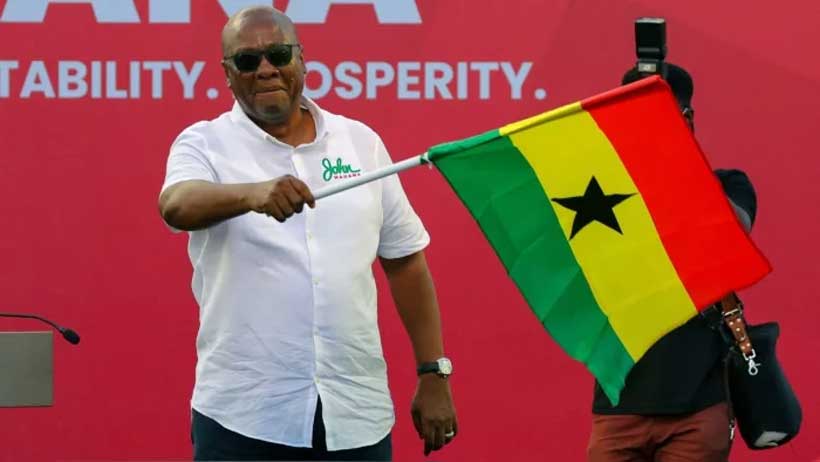
Ghana’s persistent corruption crisis continues to impede national development despite repeated promises by successive governments to protect public resources and promote accountability.
Although the country has established several institutions to investigate and prevent corruption, bribery, political interference, weak enforcement systems and partisan divisions remain major obstacles. Critics argue that the gap between official anti-corruption rhetoric and meaningful action has allowed the problem to become deeply rooted in public institutions.
Financial Irregularities Drain Public Resources
Reports from the Auditor-General have highlighted financial irregularities estimated at nearly €15 billion. The scale of the reported losses has intensified concerns about the management of public funds, particularly as several essential infrastructure projects remain incomplete or fail to deliver the expected results.
Billions are believed to be lost annually through procurement violations, mismanagement, unauthorized payments and other forms of financial misconduct. These losses reduce the government’s ability to invest in roads, schools, hospitals, sanitation and other critical development projects.
The consequences are also visible in the delivery of basic public services. When state resources are diverted or misused, public health facilities struggle with medicine shortages, utilities come under pressure and vulnerable citizens are left without adequate support.
Bribery Remains a Daily Challenge
Petty corruption continues to affect ordinary citizens seeking essential government services. Data from the Ghana Statistical Service Governance Series indicates that almost 18% of surveyed household heads reported paying bribes to access routine public services.
The findings suggest that corruption is not limited to major contracts or high-level political scandals. It also appears in everyday interactions between citizens and public officials, creating additional financial burdens and weakening public confidence in state institutions.
NPP and NDC Trade Accusations
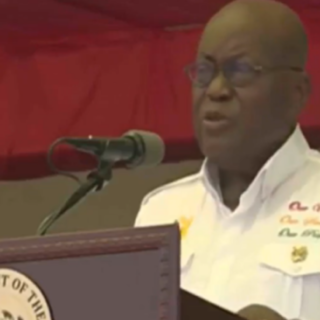
Ghana’s two leading political parties, the New Patriotic Party and the National Democratic Congress, have repeatedly accused each other of mismanaging public funds and looting state resources.
However, governance experts and political observers argue that the continuous exchange of accusations has produced limited accountability. Decades of unfulfilled promises to fight corruption have left many citizens questioning whether the political establishment has the commitment required to address the crisis.
Concerns have also been raised about selective justice. Civil society organizations and governance watchdogs frequently allege that anti-corruption investigations are used against political opponents while suspected misconduct involving members of the governing party receives less attention.
Such perceptions weaken trust in anti-corruption institutions and create the impression that accountability depends on political affiliation rather than evidence and the rule of law.
Independence of Anti-Corruption Bodies Remains Crucial
The government has introduced the National Ethics and Anti-Corruption Action Plan as part of renewed efforts to strengthen integrity, transparency and accountability in public administration.
However, anti-corruption advocates, including Transparency International Ghana, maintain that Ghana’s main problem is not the absence of laws, institutions or policy frameworks. Instead, the challenge lies in implementation and the ability of oversight bodies to operate independently without political or presidential interference.
For Ghana to make meaningful progress, experts say anti-corruption agencies must be adequately funded, professionally managed and legally protected from partisan influence. Investigations and prosecutions must also be conducted fairly, regardless of the political status or affiliation of the people involved.
Until political promises are supported by consistent enforcement and institutional independence, corruption is likely to continue depriving Ghana of resources needed to improve public services and accelerate national development.
Source: Omanghana