Omanghana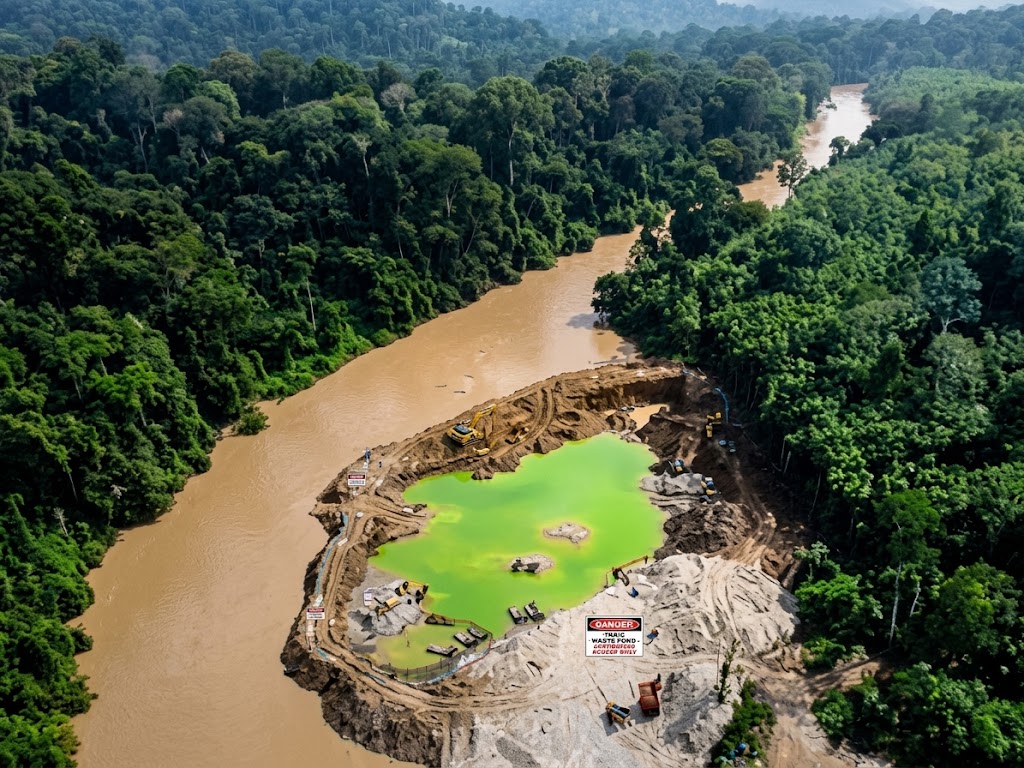
The Member of Parliament for Manhyia North, Akwasi Konadu, has warned that Ghana’s rivers and other water resources are approaching irreversible collapse because of the continued destruction caused by illegal small-scale mining.
He said the country could no longer rely on cosmetic interventions or what he described as “failed political experiments” while major rivers become increasingly polluted.
Konadu identified the Pra, Birim, Ankobra and Offin rivers as some of the water bodies facing severe degradation from illegal mining, commonly known as galamsey.
The operations have increased turbidity levels and introduced dangerous substances into river systems that supply water to households, farms and industries.
Mercury and other heavy metals associated with gold extraction can remain in the environment for extended periods, contaminating water, soil, fish and agricultural products.
The MP warned that the pollution is threatening the ability of Ghana Water Company Limited treatment plants to obtain and process raw water.
When turbidity rises beyond manageable levels, treatment facilities require larger quantities of chemicals and more complex procedures to make the water safe for consumption. This increases operational costs and may reduce production capacity.
In severely polluted areas, treatment plants could be forced to suspend operations entirely if available technology can no longer process the raw water.
Konadu argued that Ghana’s response to illegal mining has been weakened by the repeated renaming of programs, task forces and enforcement initiatives without addressing the institutional failures that allow the activity to continue.
He maintained that new slogans and rebranded operations would achieve little unless authorities prosecute offenders, expose financiers and ensure that seized mining equipment is properly accounted for.
According to him, inconsistent policies and changing political messages have prevented Ghana from developing a sustainable, long-term strategy to protect its natural resources.
The legislator also raised concerns about the alleged political protection enjoyed by some illegal miners.
He said operators continue to work openly near rivers, forest reserves and critical public infrastructure despite the presence of regulatory and security agencies.
Konadu argued that such visible violations create the impression that some miners are protected by influential political figures or individuals with connections to state institutions.
He warned that selective enforcement undermines confidence in the anti-galamsey campaign and encourages operators to disregard mining and environmental regulations.
The MP called for the fight to be conducted on a non-partisan basis, with offenders prosecuted regardless of their political affiliation, financial influence or social status.
Beyond water pollution, Konadu highlighted the growing number of deaths linked to abandoned and unstable mining pits.
Children, farmers and other residents have drowned after falling into water-filled craters, while miners have been killed when poorly supported pit walls collapsed.
Abandoned excavations also destroy farmland, obstruct footpaths and collect stagnant water that can become a breeding ground for mosquitoes and other disease-carrying organisms.
Konadu called for immediate reclamation of abandoned mining sites, particularly those located near schools, homes, farms and frequently used community routes.
He also proposed real-time surveillance of mining zones to detect illegal operations before extensive environmental damage occurs.
Such a monitoring system could include satellite imagery, drones, digital tracking of excavators and closer coordination among the Minerals Commission, Environmental Protection Authority, Forestry Commission, Water Resources Commission and security agencies.
The MP further demanded strict enforcement of prohibitions against mining in forest reserves, river channels and protected buffer zones.
He said equipment found in restricted areas should be seized, while owners, financiers and operators should face prosecution.
Konadu maintained that Ghana’s rivers must be treated as critical national security assets rather than resources that can be sacrificed for short-term gold production.
He warned that failure to act decisively could leave communities without safe drinking water and force the government to spend enormous sums restoring water systems that might already be beyond recovery.
The Manhyia North MP’s comments add to mounting pressure on the government to adopt a consistent and transparent strategy against illegal mining.
Source: Omanghana