Omanghana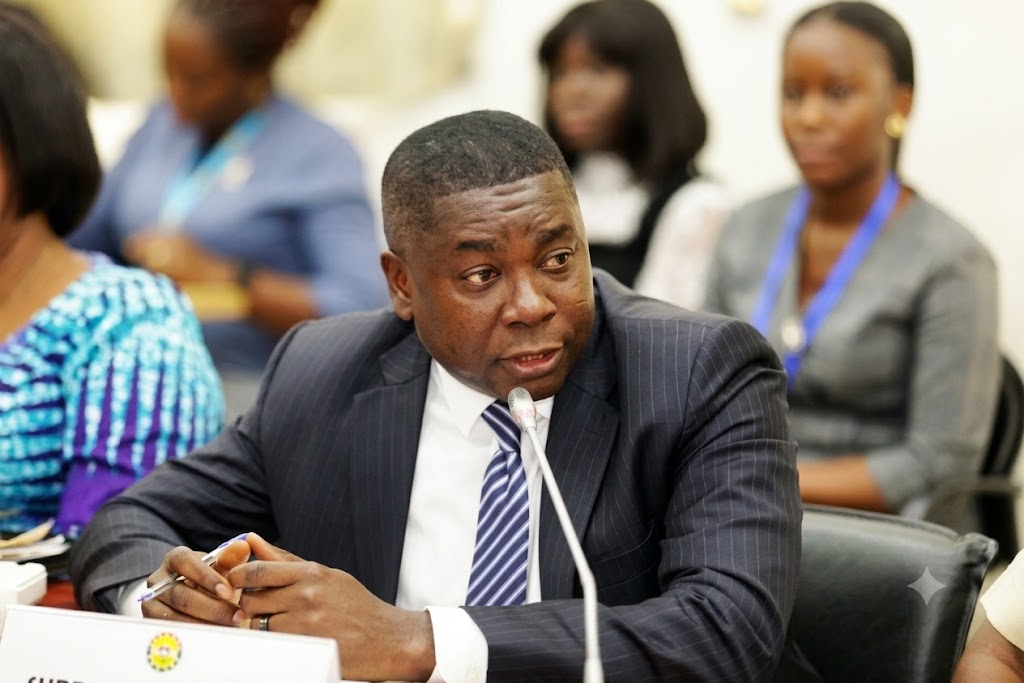
Member of Parliament for Tano North, Dr. Gideon Boako, has challenged the government’s positive assessment of Ghana’s economic recovery, arguing that an economy cannot be considered healthy when the state depends on borrowing to finance salaries and other recurrent expenditure.
Dr. Boako, who serves as Deputy Ranking Member on Parliament’s Finance Committee, made the comments during a discussion of the 2026 Mid-Year Budget Review on Peace FM’s Kokrokoo program.
He argued that improvements in headline economic indicators do not necessarily mean the country’s underlying fiscal problems have been resolved.
According to him, the government’s continued reliance on loans to support the public-sector wage bill and programs such as Free Senior High School exposes persistent weaknesses in domestic revenue mobilization.
Borrowing for Routine Expenses Raises Concern
Dr. Boako said governments may reasonably borrow to finance infrastructure and other projects that can generate long-term economic benefits.
He maintained, however, that borrowing to cover routine operational expenses is a warning sign because such spending does not necessarily create assets or new revenue streams for repaying the debt.
Public-sector salaries, administrative expenses and recurring program costs must be paid continuously. If domestic revenue cannot cover them, the government may be compelled to return repeatedly to the debt market.
Dr. Boako argued that this pattern could increase Ghana’s debt burden and undermine claims that the economy has achieved lasting stability.
He said a genuinely improving economy should generate enough tax and non-tax revenue to meet its essential obligations before relying on borrowing for development projects.
Revenue Streams Miss First-Quarter Targets
To support his position, Dr. Boako cited fiscal data covering the first quarter of 2026, which he said showed significant shortfalls across several important revenue categories.
Value Added Tax revenue reportedly performed almost 6% below its target, while levies assigned to the National Health Insurance Scheme and the Ghana Education Trust Fund fell 29.9% below projected levels.
Crude oil receipts were also reported to be 37% below expectations. Excise duties missed their target by 23%, while import duties finished 14% below projections.
Dr. Boako said the combined shortfalls demonstrate that the government is struggling to collect the money required to finance its programs.
He warned that when revenue targets are repeatedly missed, authorities may be forced to borrow more, cut planned expenditure or accumulate arrears to contractors and service providers.
“Canopy” Analogy Questions Headline Indicators
Dr. Boako compared Ghana’s current economic indicators to a lush forest canopy that appears healthy when viewed from a distance but conceals decay underneath.
He suggested that indicators such as stronger gross domestic product growth, lower inflation and relative exchange-rate stability may provide an incomplete picture of the economy.
While such improvements can benefit businesses and households, he argued that they should be assessed alongside domestic revenue performance, debt-servicing obligations, public-sector arrears and the government’s ability to finance recurrent expenditure.
In his view, positive headline figures cannot by themselves establish that Ghana has achieved a durable recovery.
The more important test, he said, is whether the state can meet its obligations without creating fresh fiscal pressures.
Government Reportedly Borrowed GH¢17 Billion for Wages
Dr. Boako’s criticism follows an earlier disclosure attributed to Finance Minister Dr. Cassiel Ato Forson that the government borrowed approximately GH¢17 billion to support public-sector salary payments.
For critics, the figure shows that Ghana’s domestic revenue remains insufficient to meet one of the government’s largest recurring obligations.
The public-sector wage bill reportedly consumes more than 44% of the country’s non-oil tax revenue. That level exceeds the ECOWAS benchmark, which sets a maximum wage-to-tax-revenue threshold of 35%.
A high wage bill leaves the government with less money for infrastructure, healthcare, education, agriculture and other development priorities.
It also reduces fiscal flexibility during emergencies because a large portion of revenue is already committed before other expenditure decisions are made.
Free SHS Financing Also Under Scrutiny
Dr. Boako included the Free SHS program among the recurring commitments that should be financed through reliable domestic revenue rather than continuous borrowing.
The program requires regular spending on food, teaching materials, infrastructure, utilities and other operational needs.
Because the expenditure recurs every academic year, unstable funding can lead to delayed payments and the accumulation of arrears owed to schools, suppliers and contractors.
Dr. Boako did not argue against the program’s objectives. His criticism focused on whether its financing model is sustainable.
He maintained that major social interventions must be supported by predictable revenue sources if they are to remain effective without adding excessive pressure to the public debt.
Domestic Borrowing Could Crowd Out Businesses
The government’s dependence on short-term domestic borrowing has also raised concerns about its effect on private-sector credit.
When the state issues large volumes of Treasury bills, banks and institutional investors may prefer purchasing government securities rather than lending to businesses.
This can reduce the amount of credit available to companies and keep commercial lending rates high. Small and medium-sized enterprises are often the most affected because they have fewer financing options.
Expensive or limited credit can discourage business expansion, restrict job creation and weaken private investment.
Heavy government borrowing may also increase interest costs, forcing an even larger portion of future revenue to be used for debt servicing.
Government Points to Improving Economic Indicators
The government has presented declining inflation, improved growth and greater exchange-rate stability as evidence that its economic policies are producing results.
Supporters of the administration may also argue that temporary borrowing can be necessary to manage cash-flow pressures when expected revenues have not yet been collected.
They could further maintain that stabilizing the economy requires balancing fiscal consolidation with continued funding for salaries, education, healthcare and other essential services.
Dr. Boako’s intervention, however, shifts attention from headline stability to the quality and sustainability of the recovery.
He insists that the key measure of fiscal health is not merely whether the economy is growing, but whether the government can raise enough domestic revenue to meet its basic responsibilities.
The debate over the 2026 Mid-Year Budget Review is therefore expected to focus heavily on revenue shortfalls, wage expenditure, domestic borrowing and the long-term sustainability of government programs.
Source: Omanghana