Omanghana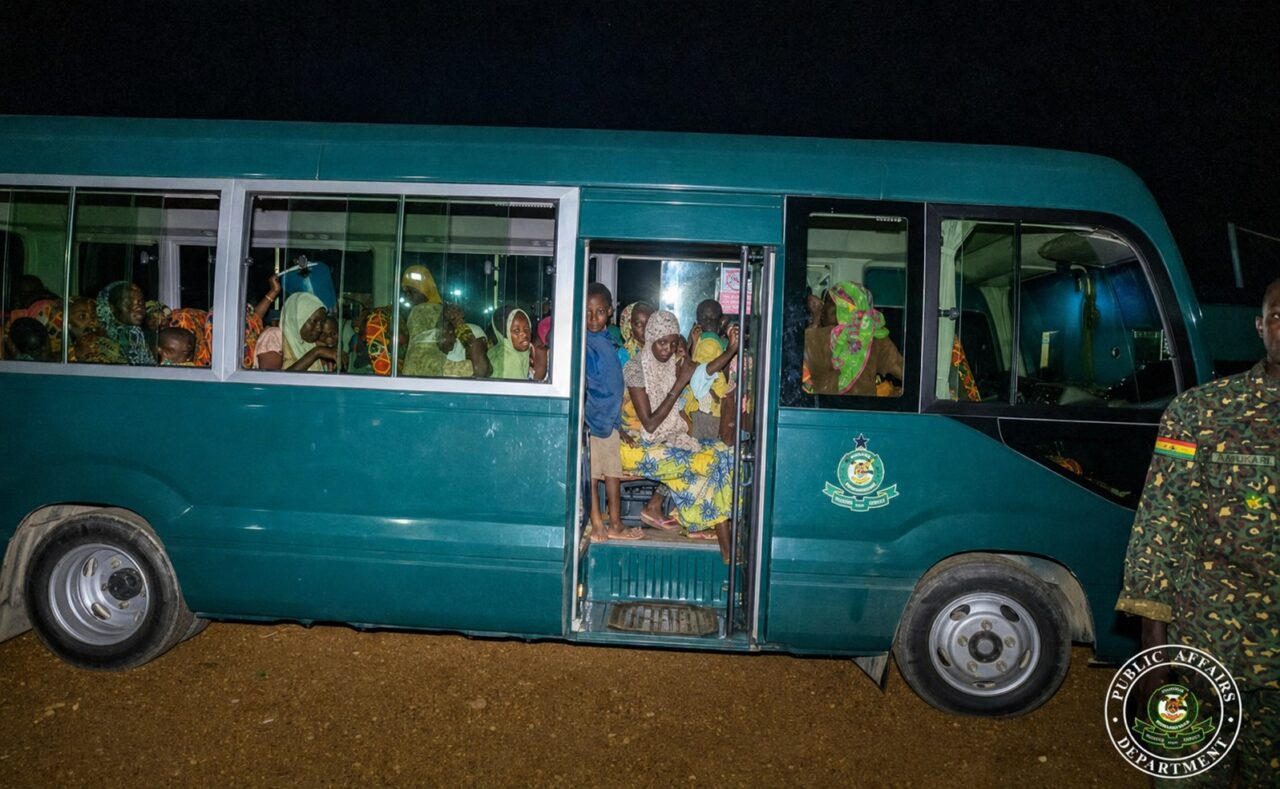
The Ghana Immigration Service has launched an enforcement operation in Accra targeting people suspected of living in the country without valid documentation and individuals engaged in street begging.
As part of the exercise, GIS personnel deployed buses to selected intersections, commercial centers and other busy locations across the capital. Those detained were instructed to gather their belongings before boarding departmental vehicles.
They were subsequently transported to GIS facilities for profiling, security screening and verification of their immigration status.
The operation is intended to distinguish undocumented migrants from people who possess valid permits or other lawful grounds to remain in Ghana. Authorities are expected to determine the appropriate action in each case after completing the required checks.
The latest exercise follows similar government-led operations conducted in Accra and Kumasi. Earlier enforcement activities reportedly resulted in more than 960 migrant beggars and dozens of other undocumented foreign nationals being processed and removed from the two cities in 2026.
Authorities have linked the operations to wider efforts to address public safety concerns, urban congestion, human trafficking and possible security vulnerabilities along heavily used traffic corridors.
Street begging is particularly common at major intersections, where people—including children—move between vehicles to solicit money. Officials and road safety advocates have warned that the practice exposes those involved, as well as motorists and pedestrians, to accidents.
Some residents welcomed the GIS operation, arguing that immigration laws must be enforced and that begging at busy intersections creates safety risks and obstructs traffic.
Others called for the exercise to be conducted humanely and in accordance with Ghanaian law. They stressed that every detained person should be properly screened and given due process rather than being treated as undocumented solely because of their appearance, nationality or presence on the street.
Public commentators have also warned that periodic enforcement exercises may provide only temporary relief unless they are supported by stronger border management and sustained cooperation with neighboring countries.
They have urged the government to improve surveillance at unofficial entry points, strengthen intelligence-sharing and investigate organized networks that may be transporting vulnerable people into Ghana for street begging.
Child protection has also emerged as a major concern. Stakeholders have called for children encountered during the operation to be referred to the appropriate welfare authorities, screened for trafficking or exploitation and protected from unsafe detention or separation procedures.
The latest exercise highlights the challenge of balancing immigration enforcement and public safety with Ghana’s legal and humanitarian obligations.
GIS is expected to continue its documentation checks and determine whether those detained should be released, referred to social welfare agencies or processed for repatriation in accordance with the law.
Source: Omanghana